Cortinarius orellanus
The fool's webcap is a deadly orange-brown mushroom native to Europe. It contains orellanine, a kidney toxin, and poisoning often ends in permanent kidney failure. Its danger was uncovered after 102 people were poisoned in Poland in 1952, 11 of whom died.
Broadleaf woods under beech, hornbeam and oak, often near pines.
Occurs in central and eastern Europe (Poland, Czech Republic, Slovakia); rare in Germany and occasional in southern Britain.
Identification suggestions (from the community or from AI) and the information here may be wrong; this app never confirms that anything is safe to eat. Do not consume wild plants, mushrooms or seafood without expert confirmation. Nothing here is medical advice.
It smells faintly of radish when cut.
Contains orellanine, a kidney toxin; the resulting kidney failure is often permanent. Symptoms appear days later, so the link to the meal may be missed. In 1952, 102 people were poisoned in Poland and 11 died. It has been mistaken for chanterelles.
Ask an adult
Never eat a wild mushroom without showing it to an expert
No mushroom should be picked for eating based on this app or a photo. Deadly species look very like the ones foragers look for, and symptoms start hours later. If you suspect poisoning, call your local poison centre or emergency number right away (in Türkiye: 114).
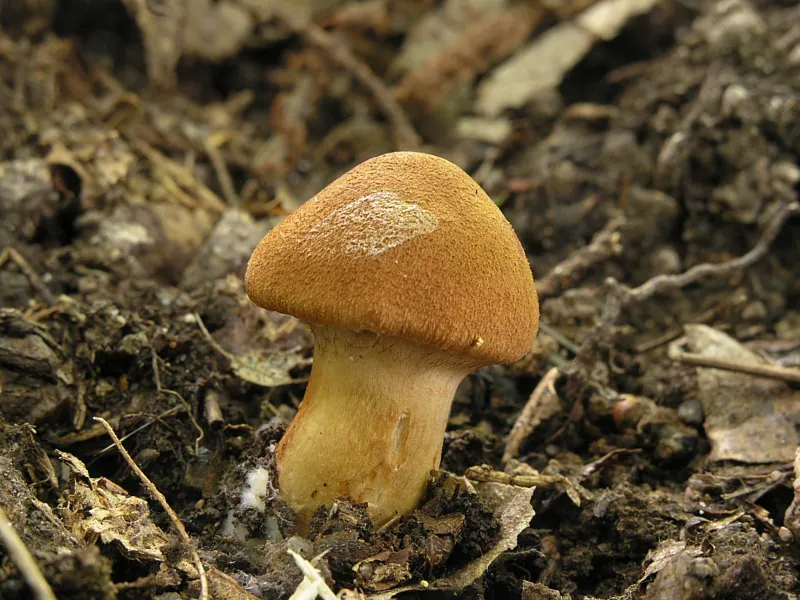
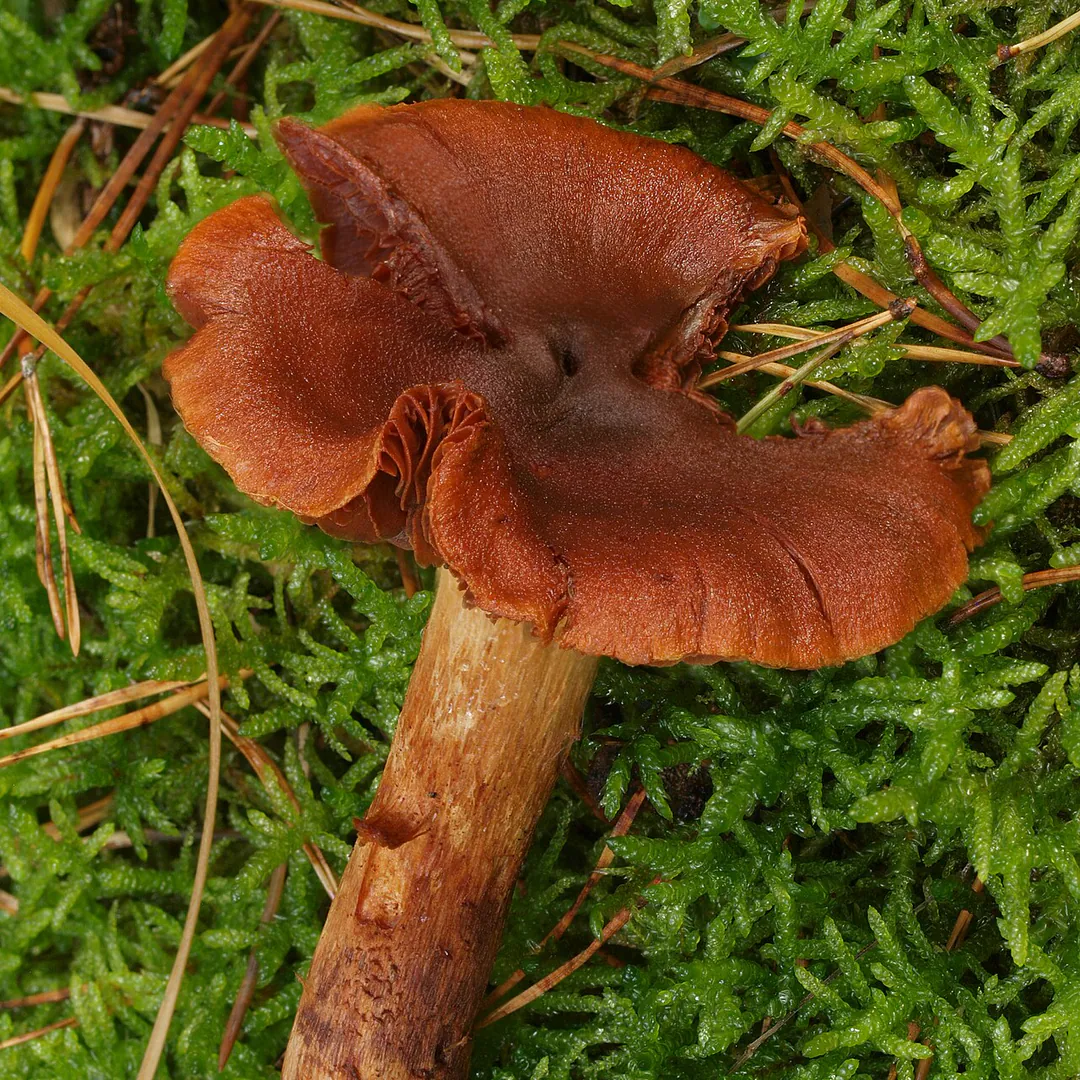
Orange-brown cap with fine fibrous scales, 3-8 cm
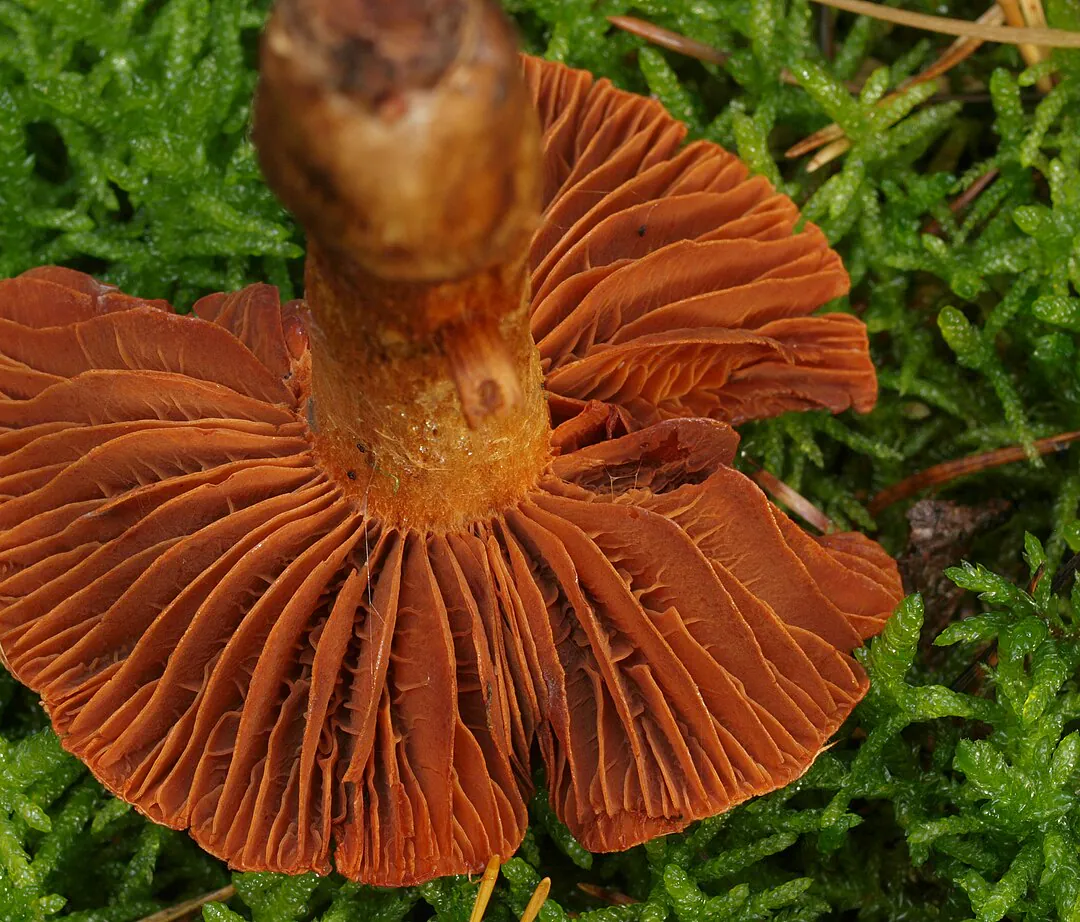
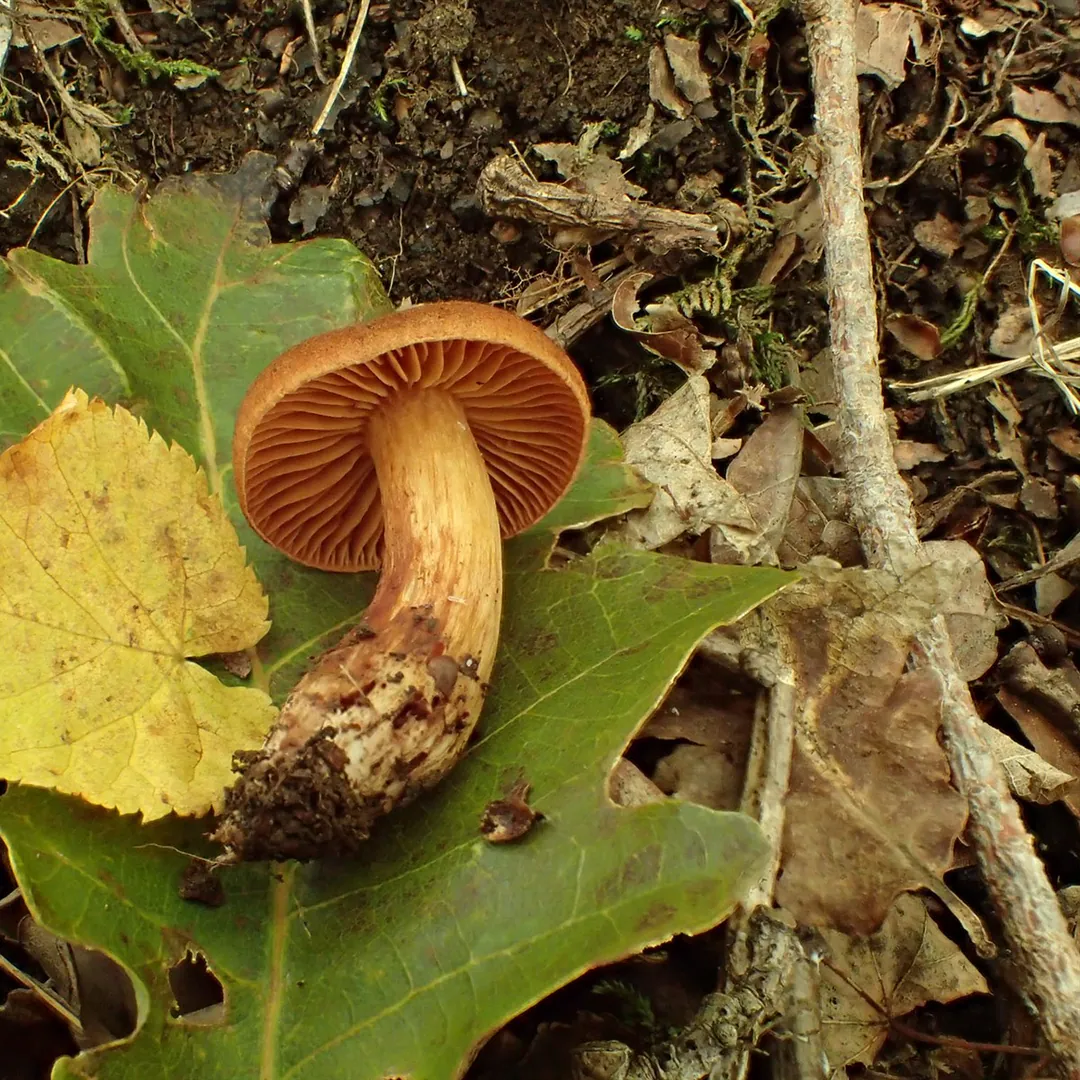
Thick true gills turning from light ochre to rust-brown; chanterelles have blunt ridges instead of gills
Rusty-brown spore print
Occasional yellowish cobweb-like veil fibres on the lower stem
The rungs scientists use to place living things by how closely related they are — from broad to narrow.
Deadly poisonous