Bay bolete
Imleria badia
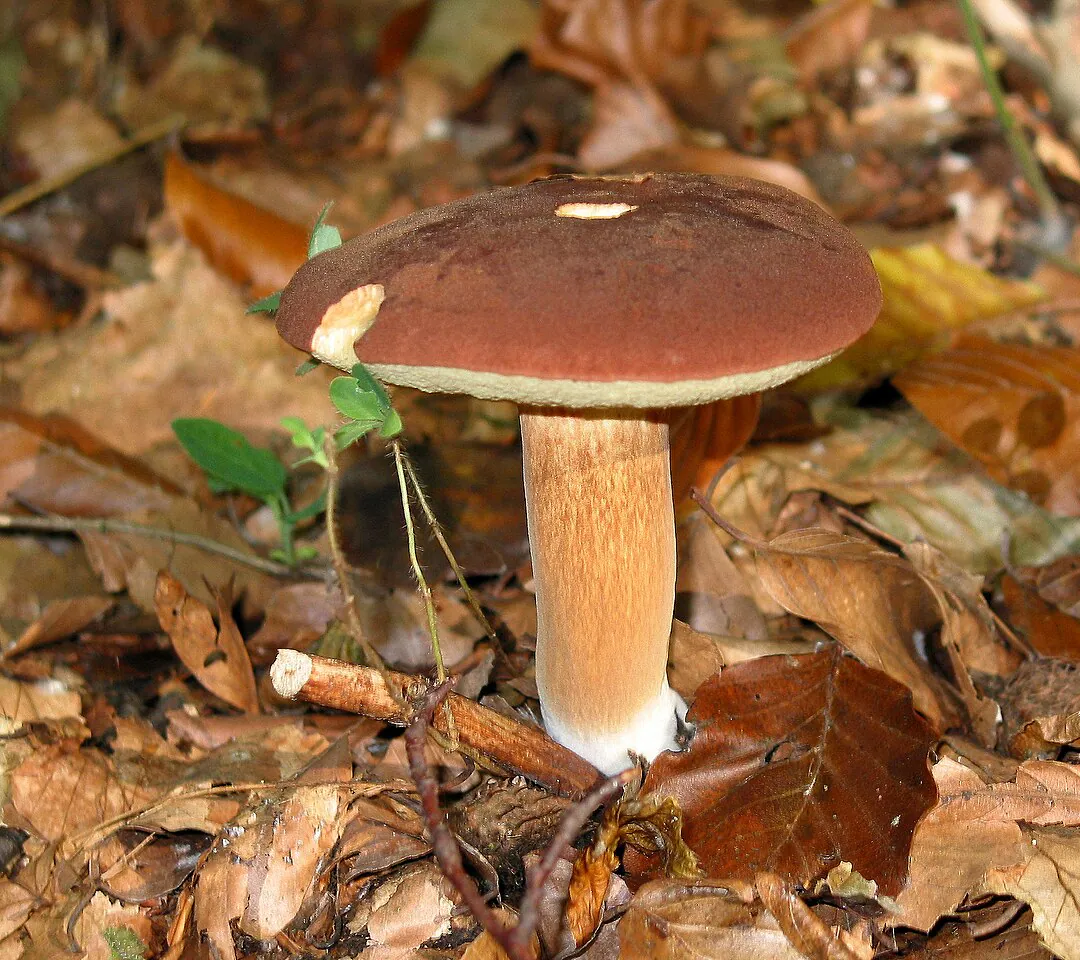
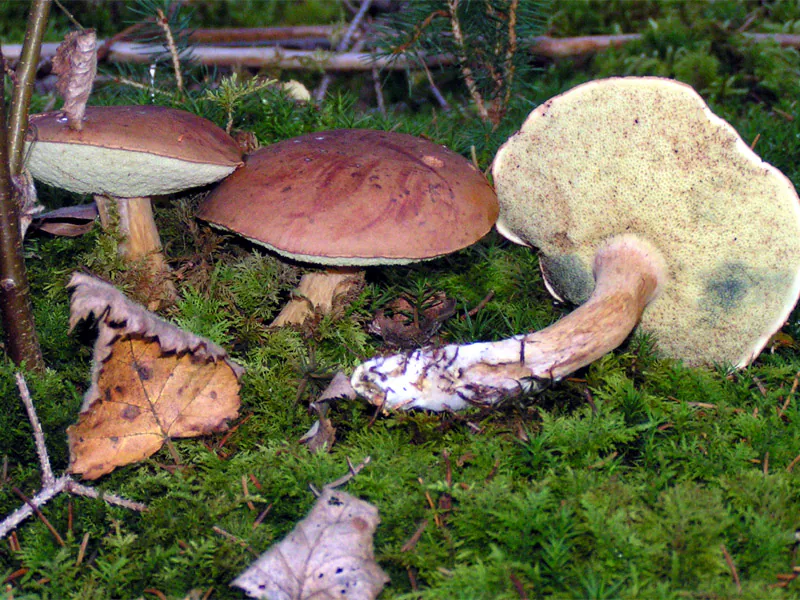
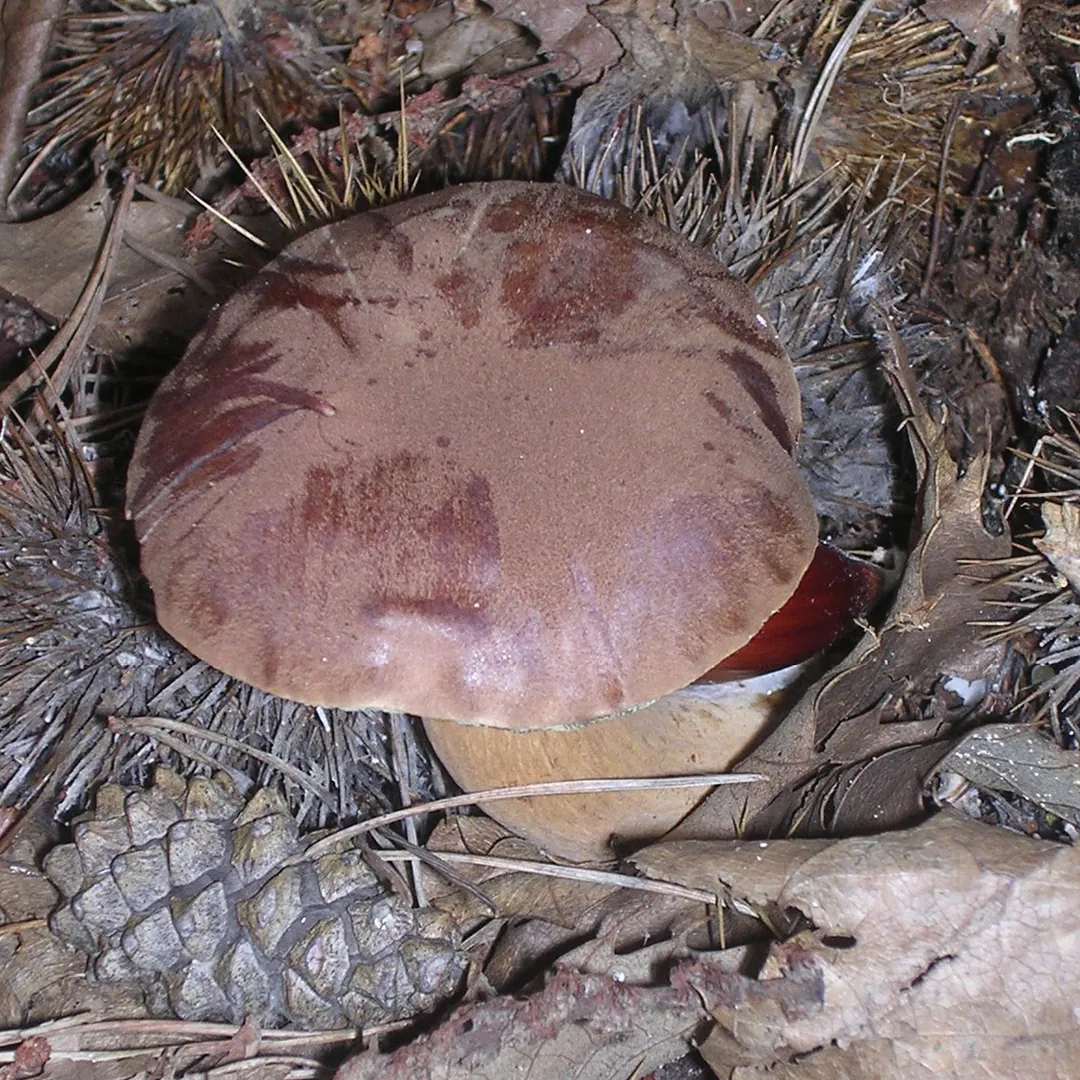
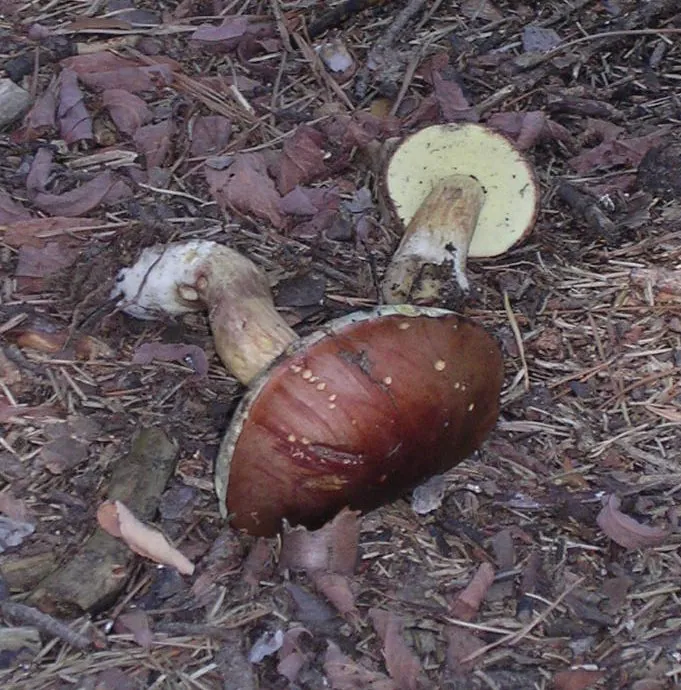
The bay bolete is named after its bay or chestnut-coloured cap, almost spherical when young and up to 15 cm across later. The yellowish pores stain blue-grey when bruised, and the stem is smooth, without a net.
Where it's found
Grows in coniferous or mixed woods on the ground or on decaying stumps, often hidden by pine needles and ferns.
Distribution
Common in Europe from the British Isles east to the Black Sea Region of Türkiye; also recorded in Asia and North America.
Similar species
Identification suggestions (from the community or from AI) and the information here may be wrong; this app never confirms that anything is safe to eat. Do not consume wild plants, mushrooms or seafood without expert confirmation. Nothing here is medical advice.