Gypaetus barbatus
Identification suggestions (from the community or from AI) and the information here may be wrong; this app never confirms that anything is safe to eat. Do not consume wild plants, mushrooms or seafood without expert confirmation. Nothing here is medical advice.
Never handle an injured or dead large raptor bare-handed: the talons and bill cause deep wounds, and a carcass feeder can carry pathogens on its bill and plumage. Report the bird to the wildlife authority instead of moving it. Keep well away from breeding cliffs — the species raises a single chick a year and will desert the nest if disturbed.
Ask an adult
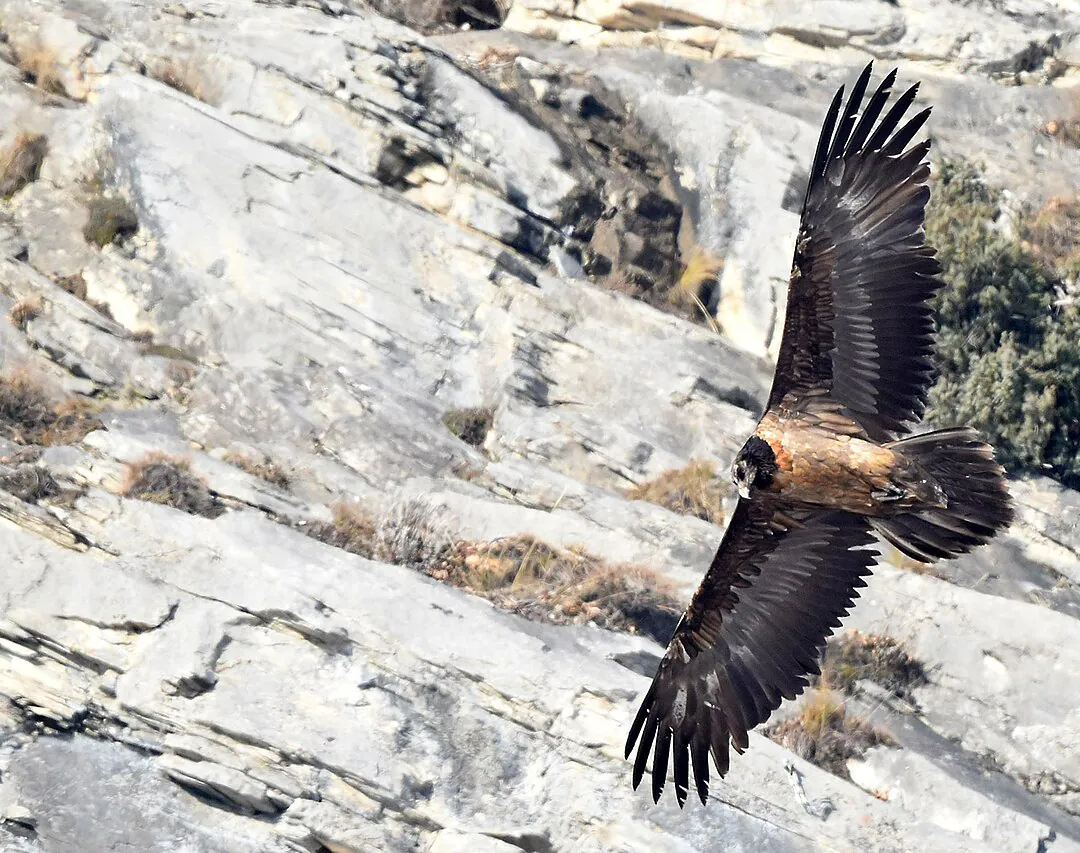
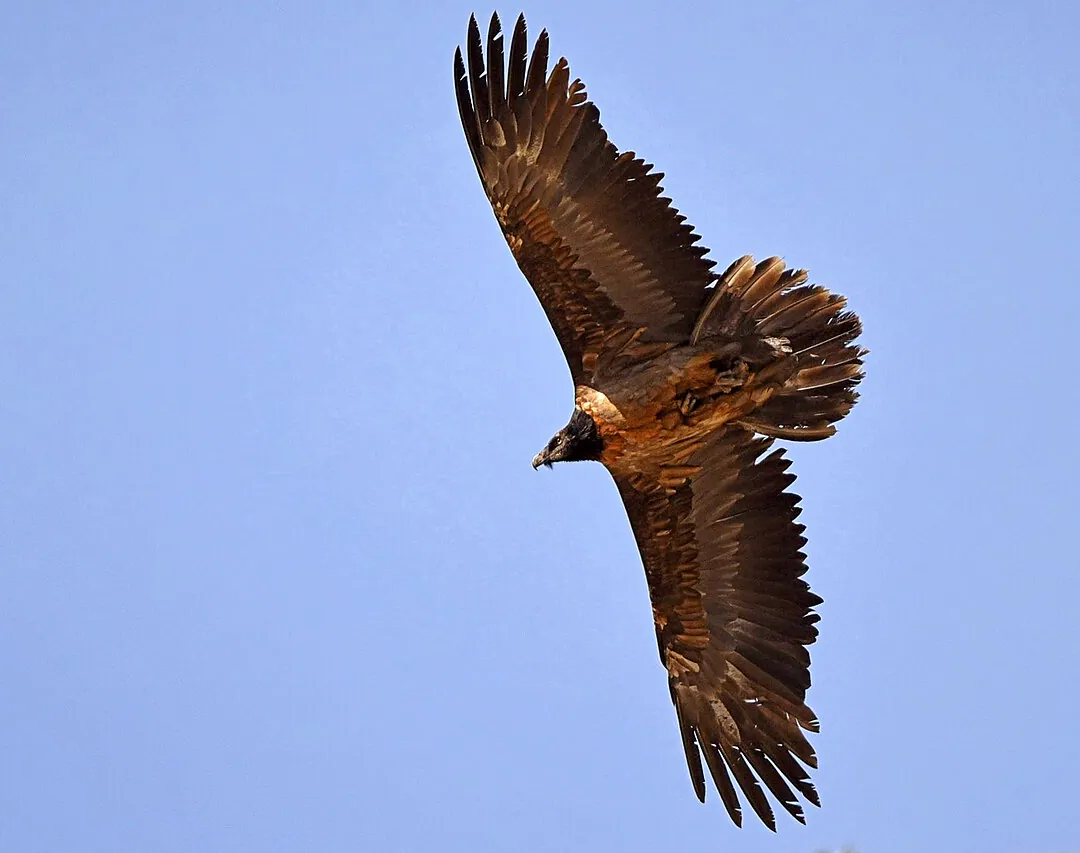
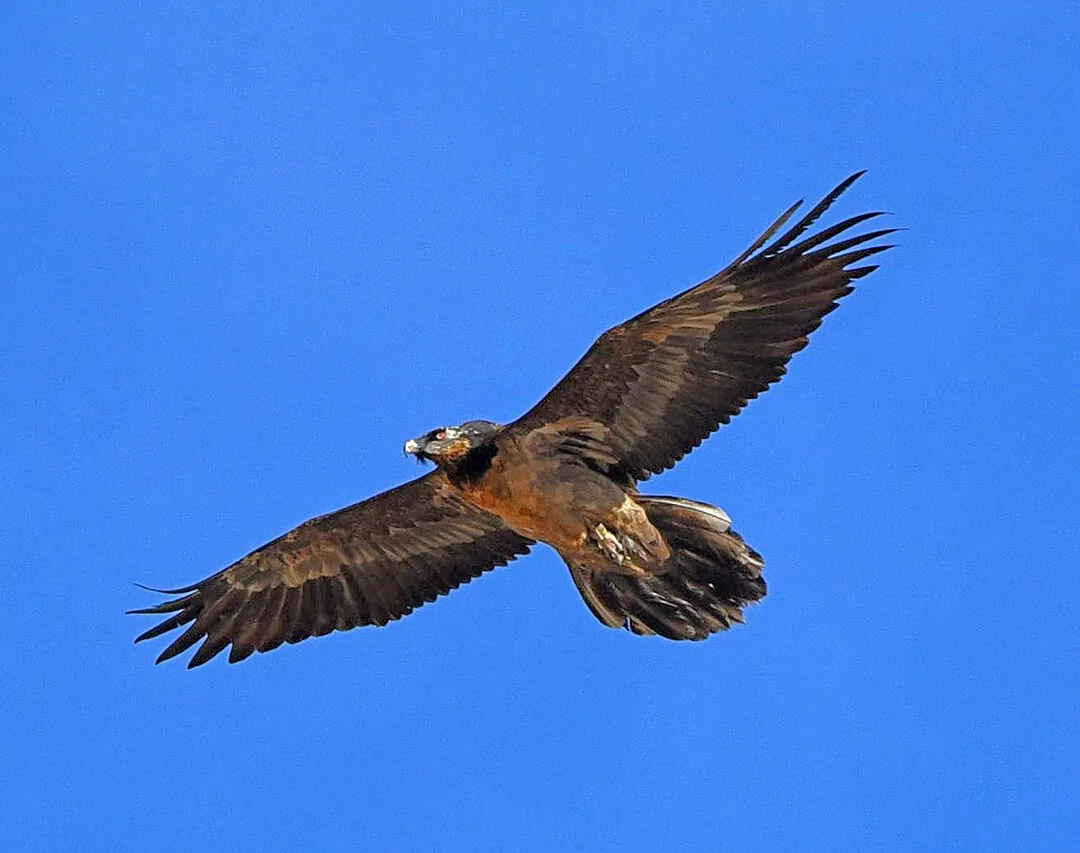
In flight the wings are narrow and pointed and the tail is long and diamond-shaped — other vultures show a short, fan-shaped tail
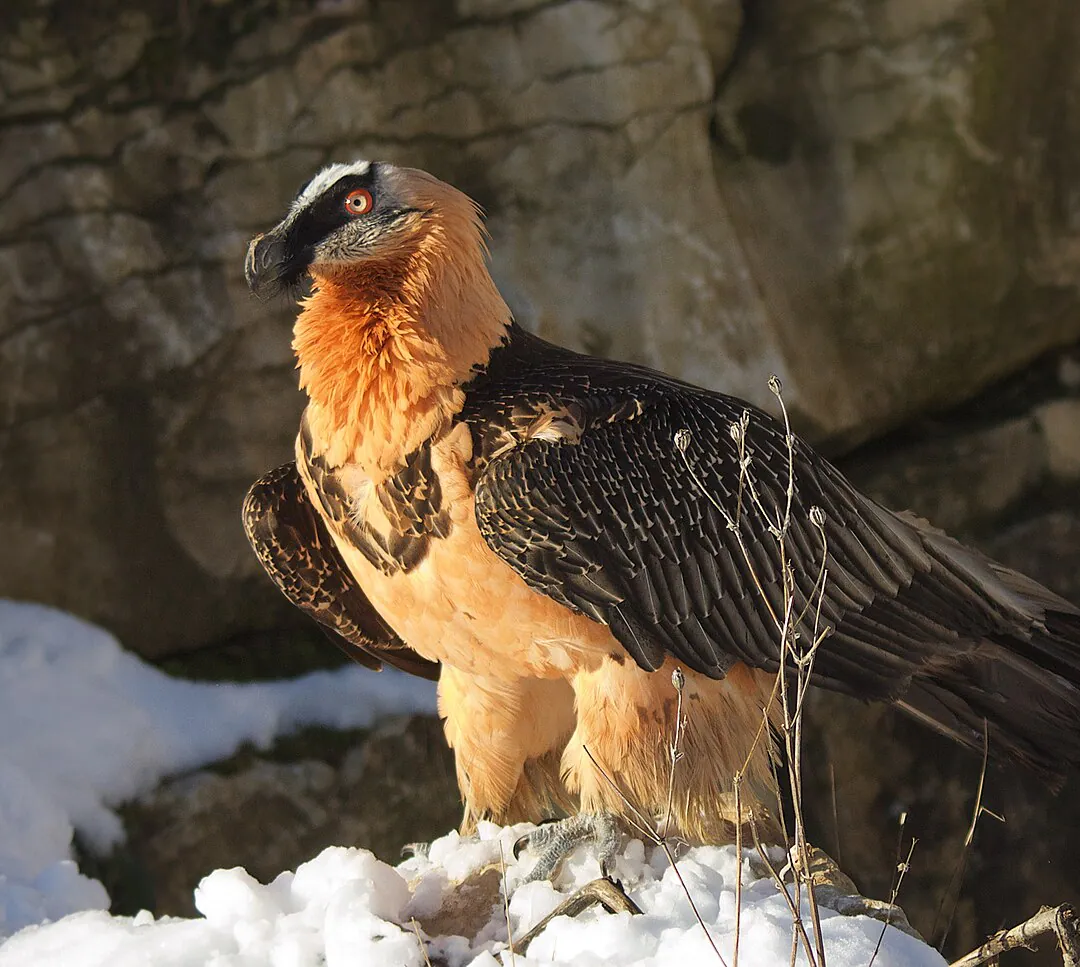
Adult has rusty-orange head, breast and belly contrasting with dark slate back and wings
Black bristle tuft hanging beneath the bill and a black mask through the eye
Head and neck fully feathered, unlike the bare wrinkled neck of griffon and cinereous vultures
Carries bones aloft and drops them onto rock slabs to crack them, then eats the marrow