Satan's bolete
Rubroboletus satanas
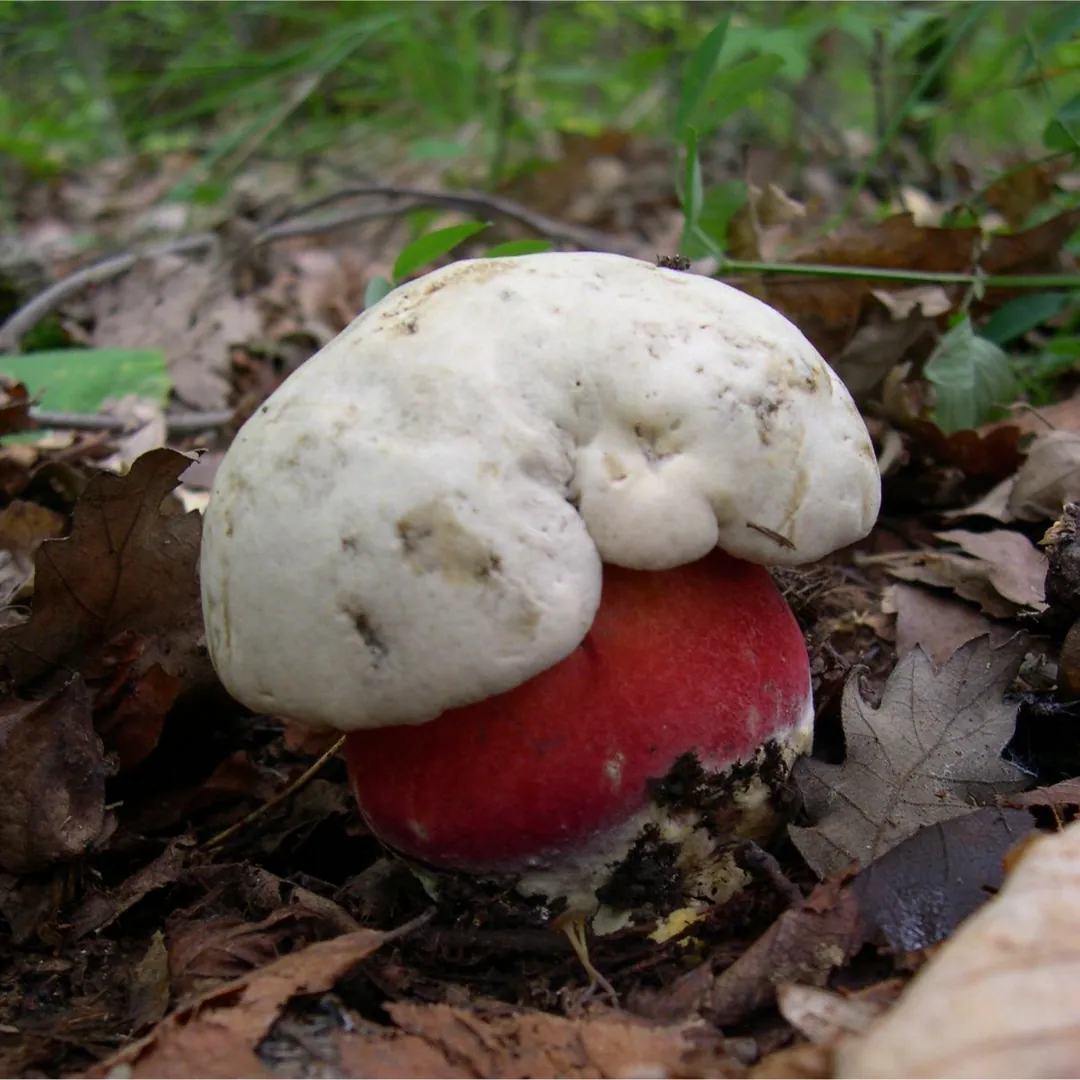
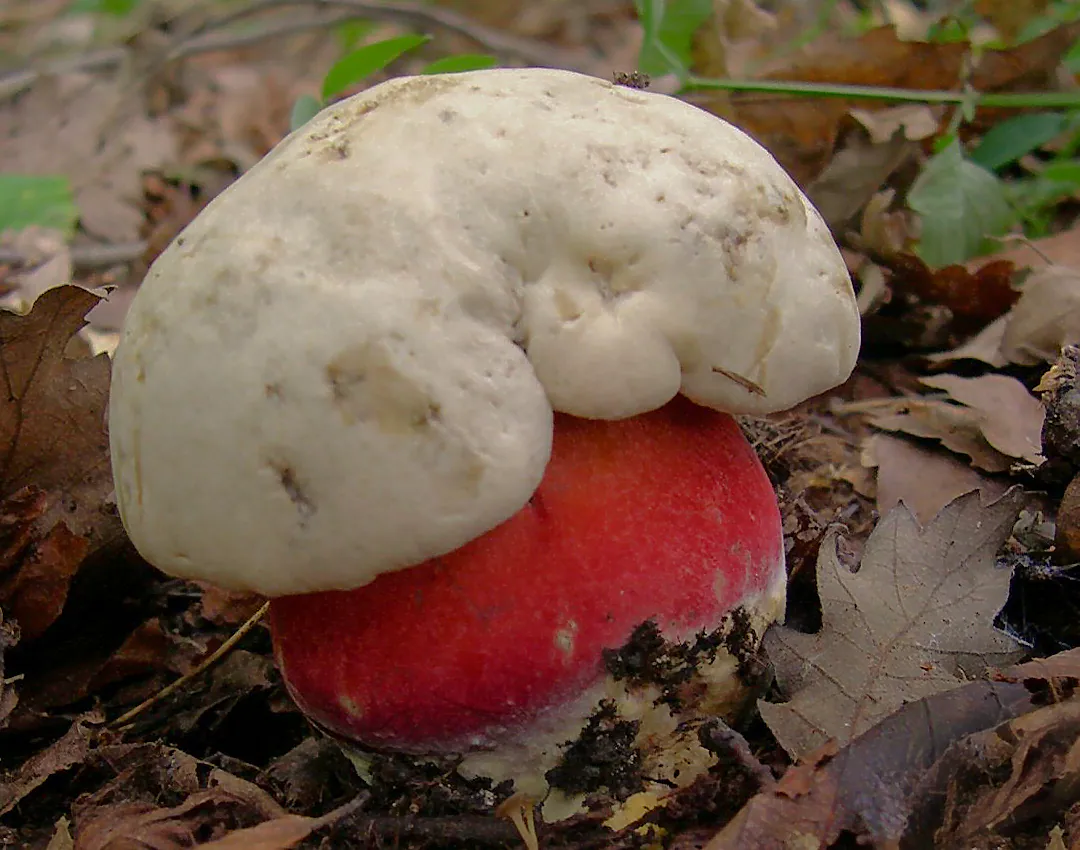
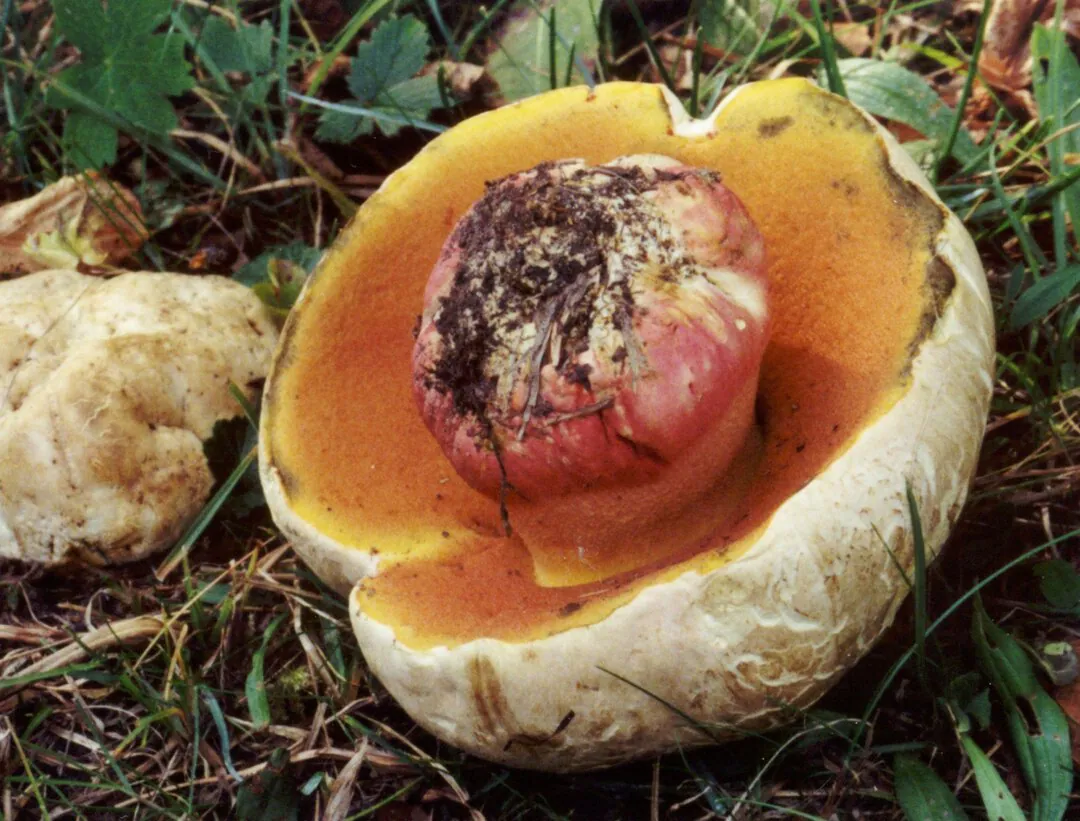
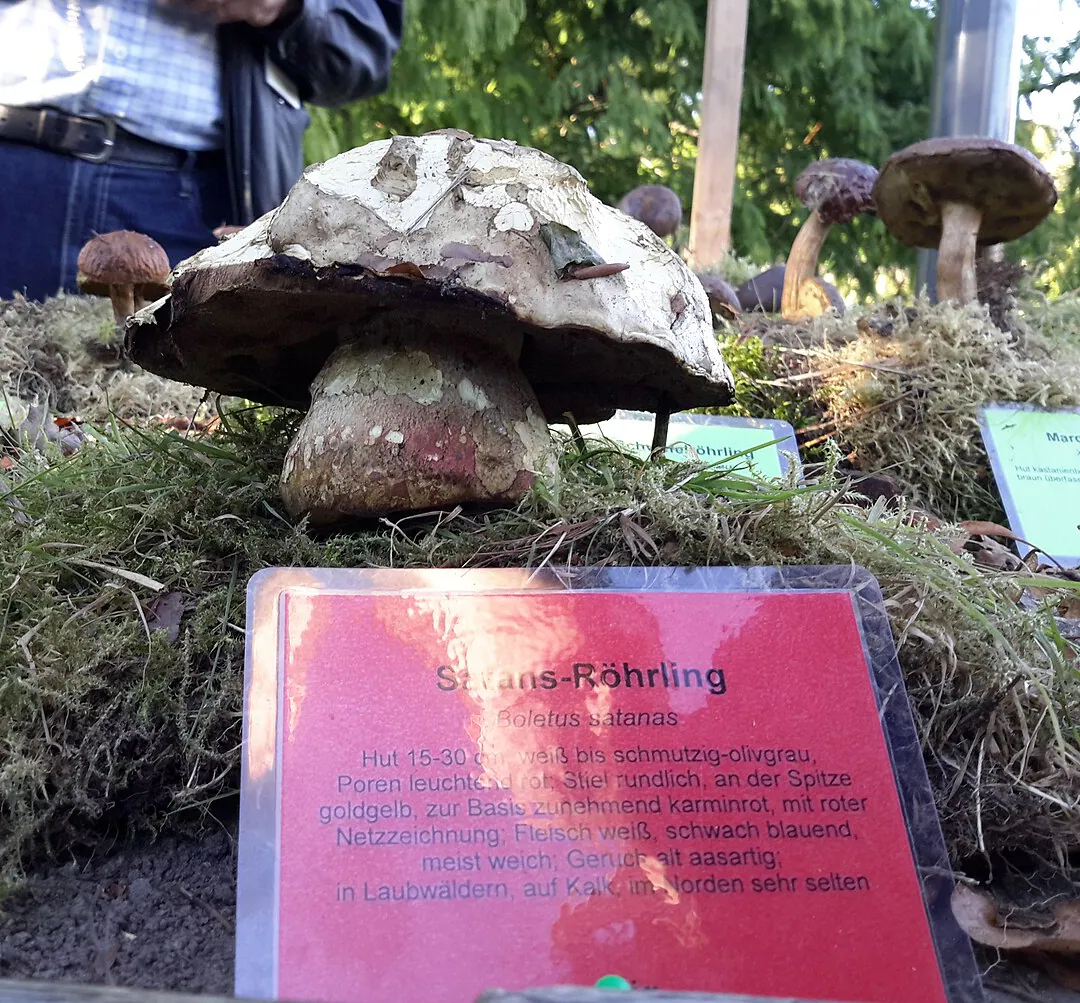
Satan's bolete is a large, poisonous bolete with a pale grey-white cap, red pores and a bulbous red stem. The cap can exceed 30 cm. Its flesh turns blue when cut, old specimens smell unpleasant, and eating it causes violent gastroenteritis.
Where it's found
Fruits in summer and early autumn in warm broad-leaved and mixed woods, with oak and sweet chestnut, preferring chalky soils.
Distribution
Widespread in the temperate zone but rare in most places, mainly in southern Europe; it has been recorded from the Black Sea and eastern Anatolia regions of Türkiye.
Similar species
Identification suggestions (from the community or from AI) and the information here may be wrong; this app never confirms that anything is safe to eat. Do not consume wild plants, mushrooms or seafood without expert confirmation. Nothing here is medical advice.