Collared earthstar
Geastrum triplex
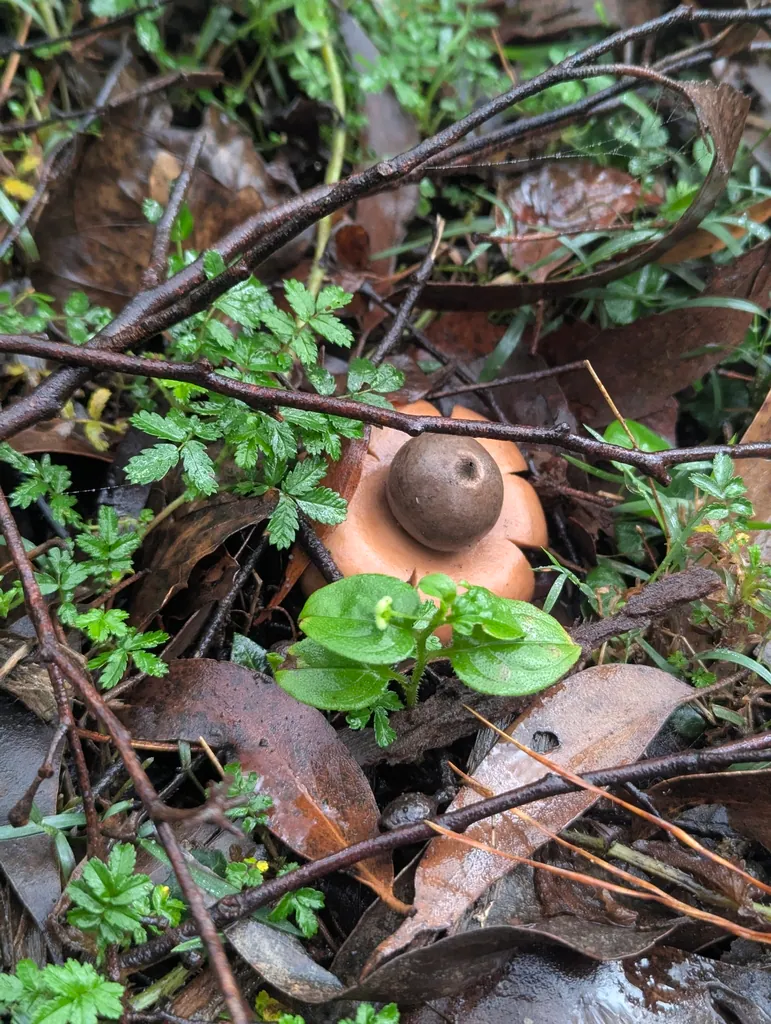
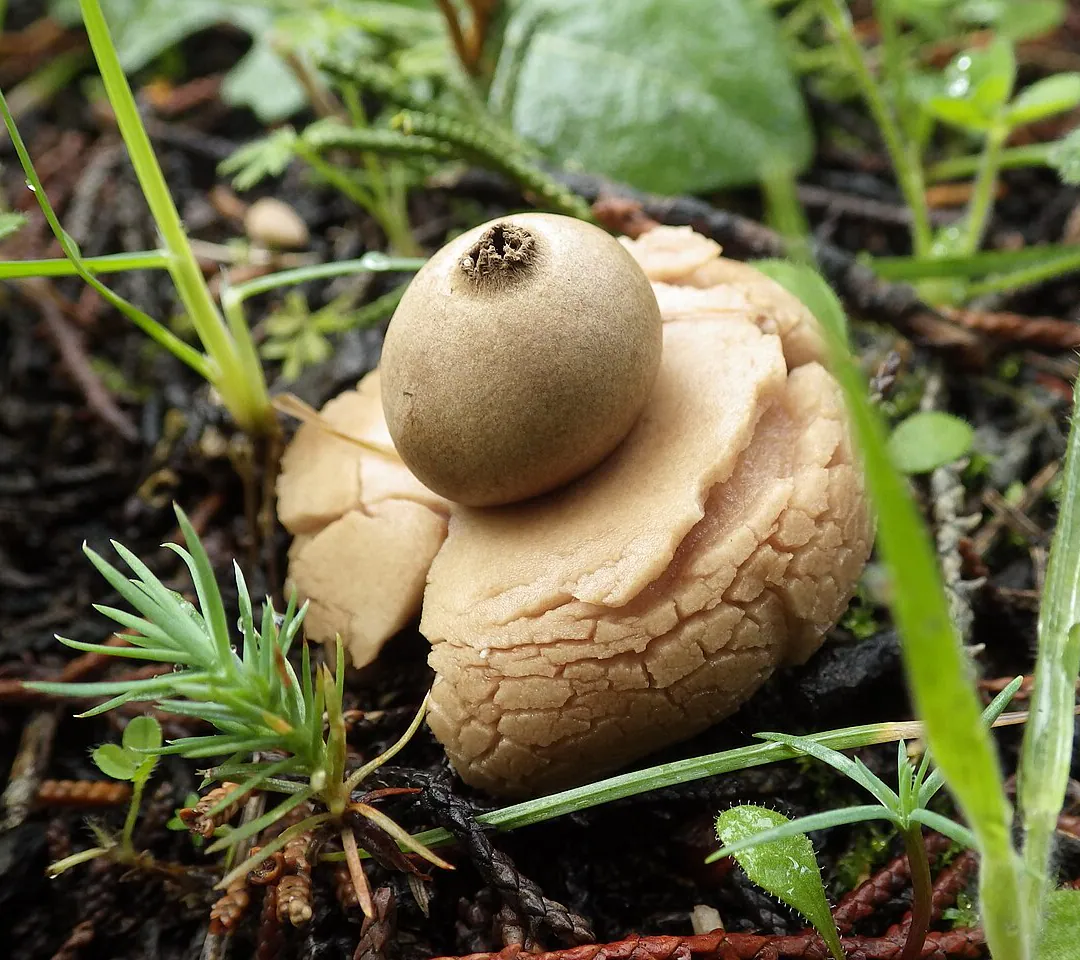
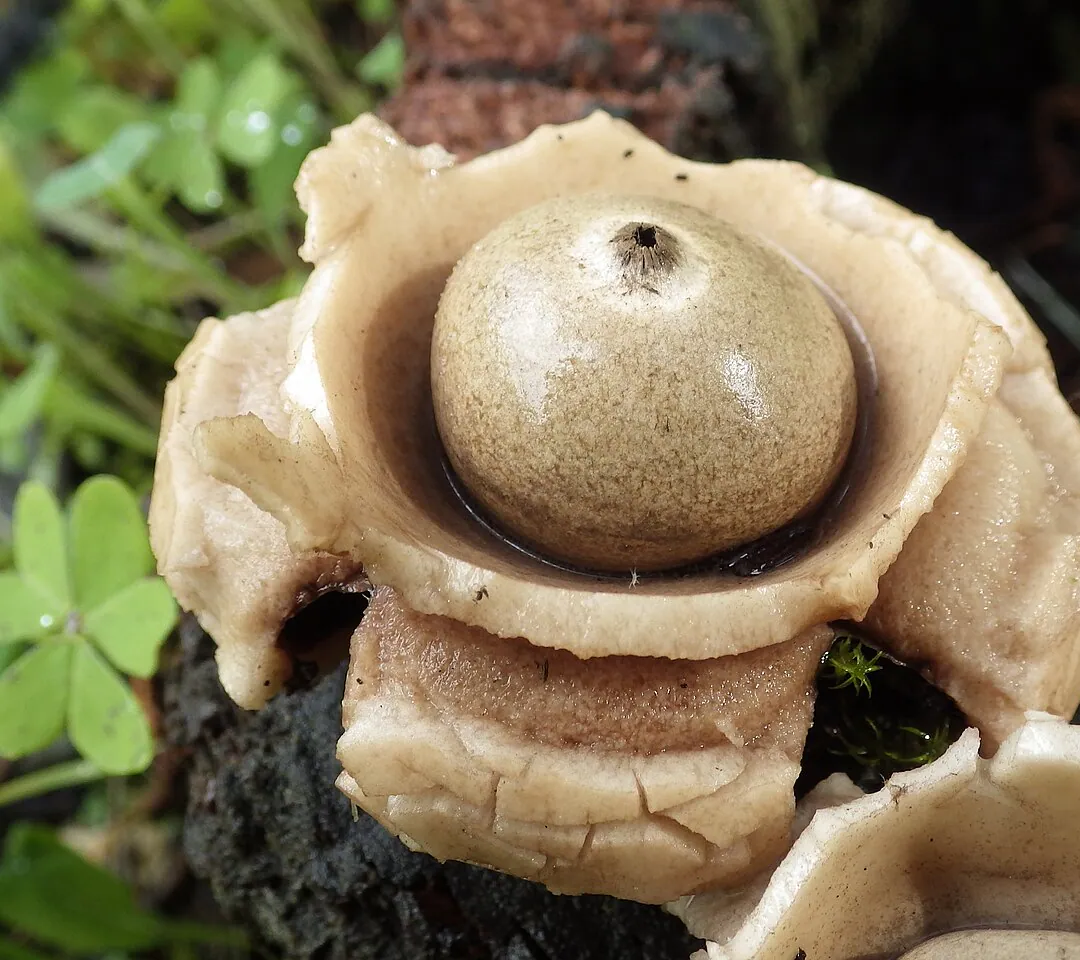
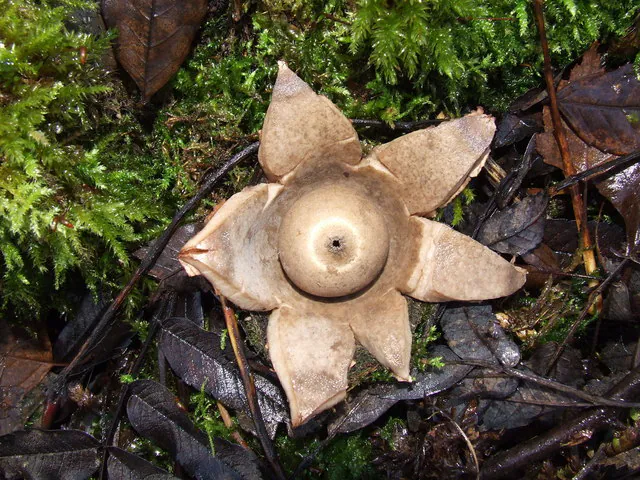
The collared earthstar is the largest earthstar, up to 11.5 cm across when open. Young fruit bodies look like buried puffballs with pointed beaks; at maturity the outer layer splits into four to eight rays, exposing a spore sac that often sits in a saucer-like collar.
Where it's found
Found singly or in groups in hardwood forests where humus has accumulated, often around well-rotted stumps.
Distribution
Widespread in Eurasia, Australasia and the Americas, and described as common in North America and Europe.
Similar species
Identification suggestions (from the community or from AI) and the information here may be wrong; this app never confirms that anything is safe to eat. Do not consume wild plants, mushrooms or seafood without expert confirmation. Nothing here is medical advice.