

Penny bun
Boletus edulis
Local namesporçini
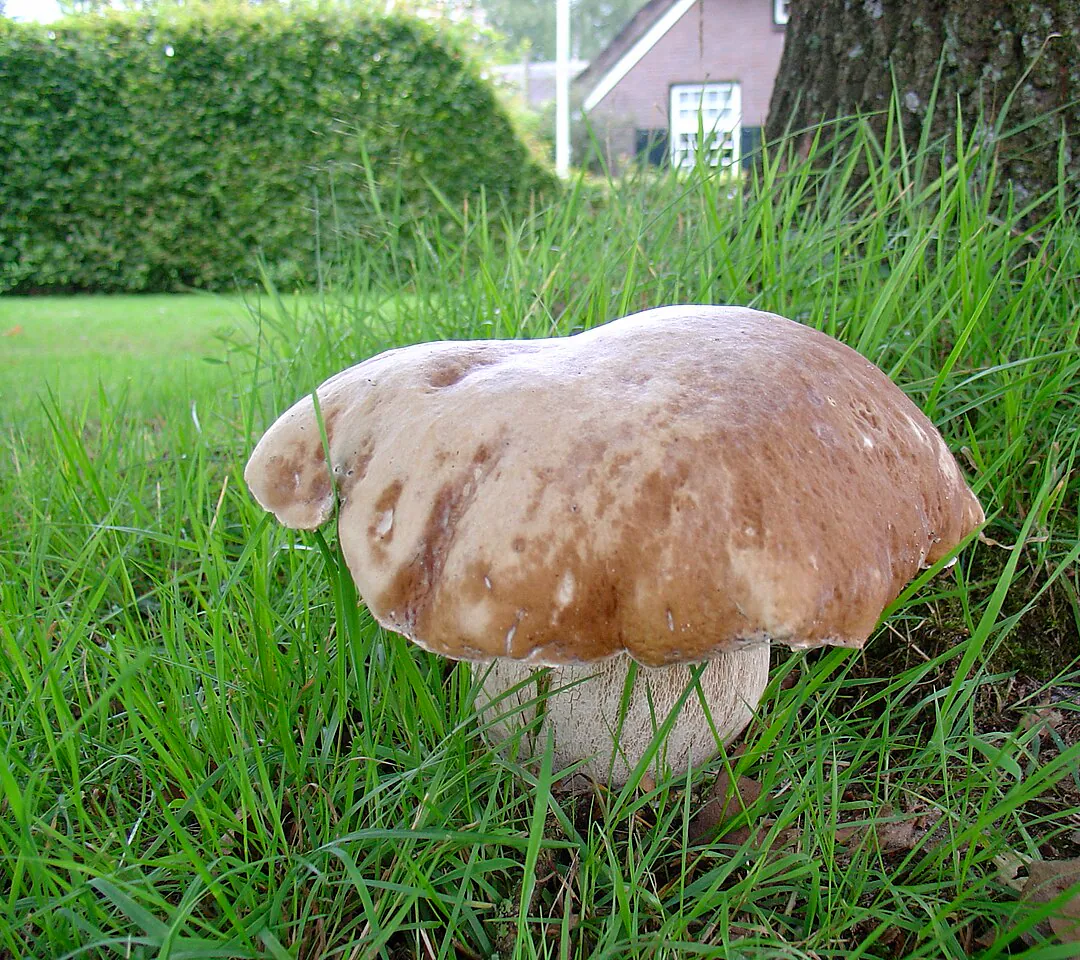
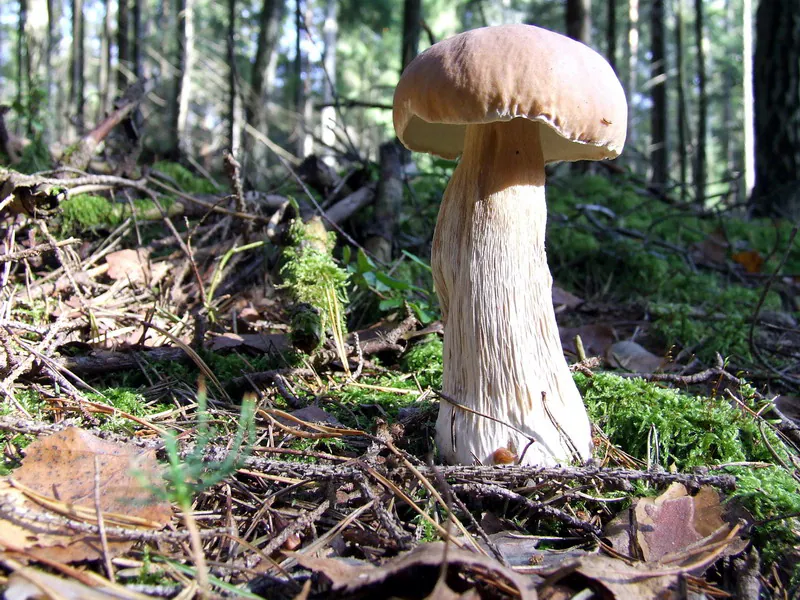
The penny bun is a large bolete whose bun-like brown cap can reach 30 cm across. Instead of gills it has tubes and pores, whitish when young and greenish-yellow later. The stout stem is partly covered with a fine, pale, net-like pattern.
Where it's found
Grows singly or in small groups in deciduous and coniferous forests, with pine, spruce, fir, oak, beech and chestnut, forming partnerships with tree roots.
Distribution
Widespread in the Northern Hemisphere across Eurasia and North America; it does not occur naturally in the Southern Hemisphere but has been introduced there.
Similar species
Identification suggestions (from the community or from AI) and the information here may be wrong; this app never confirms that anything is safe to eat. Do not consume wild plants, mushrooms or seafood without expert confirmation. Nothing here is medical advice.