Clathrus ruber
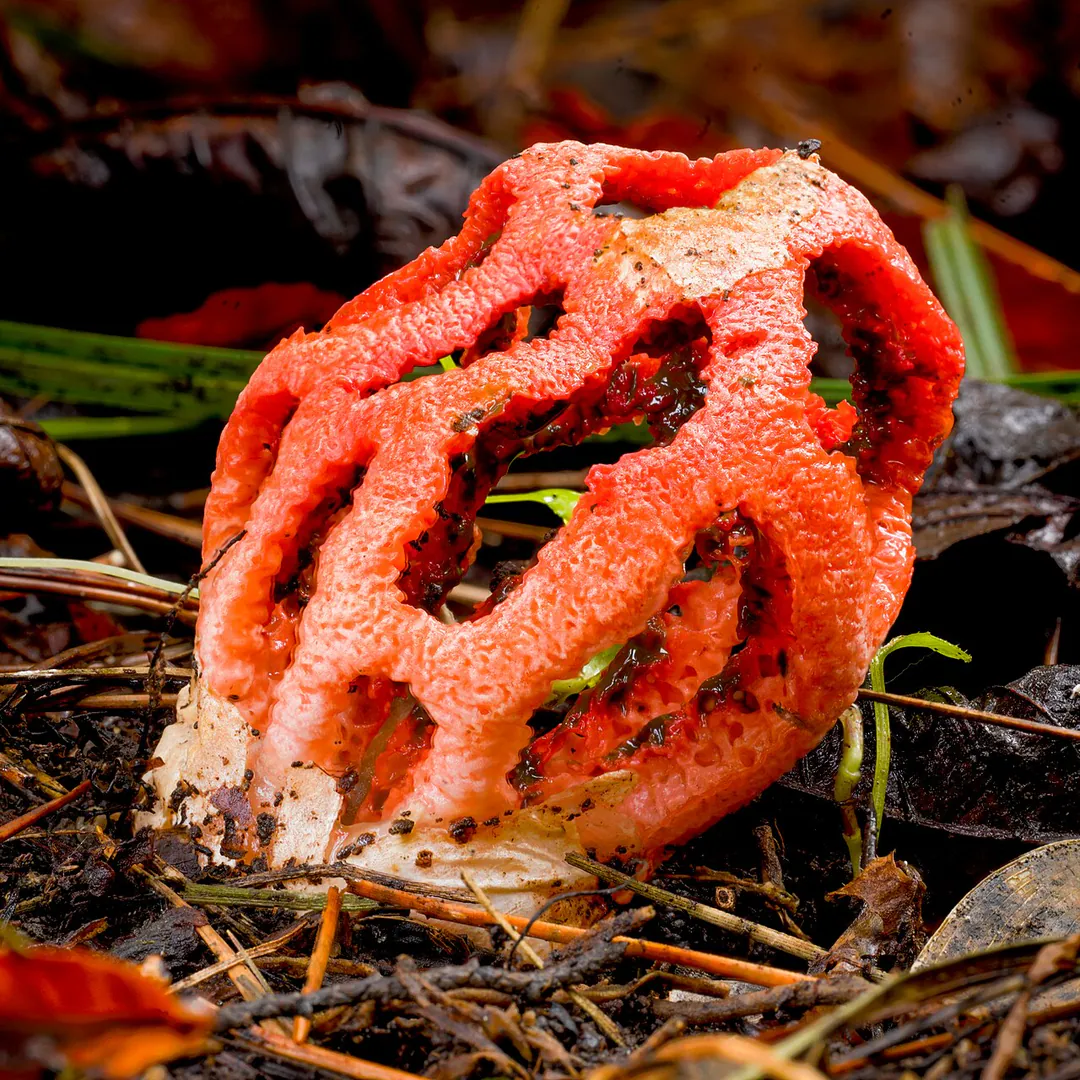
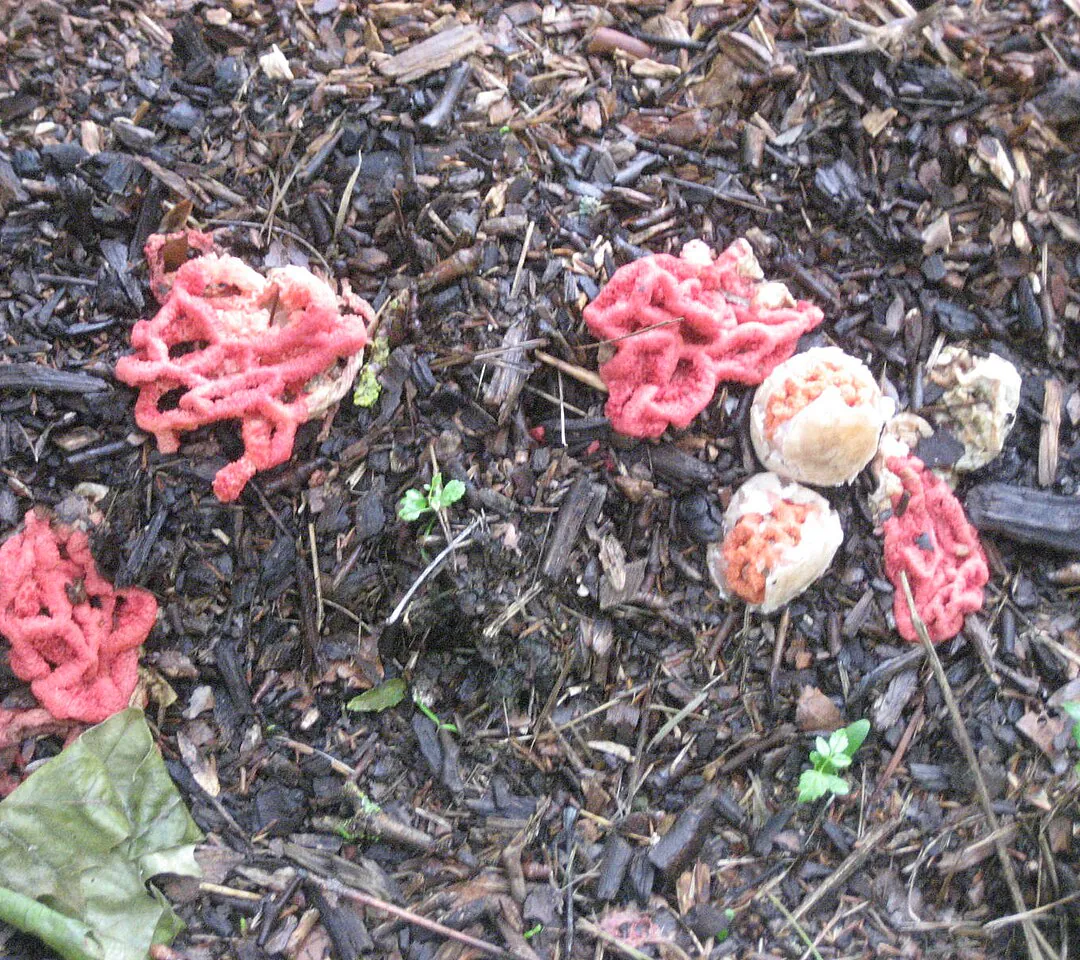
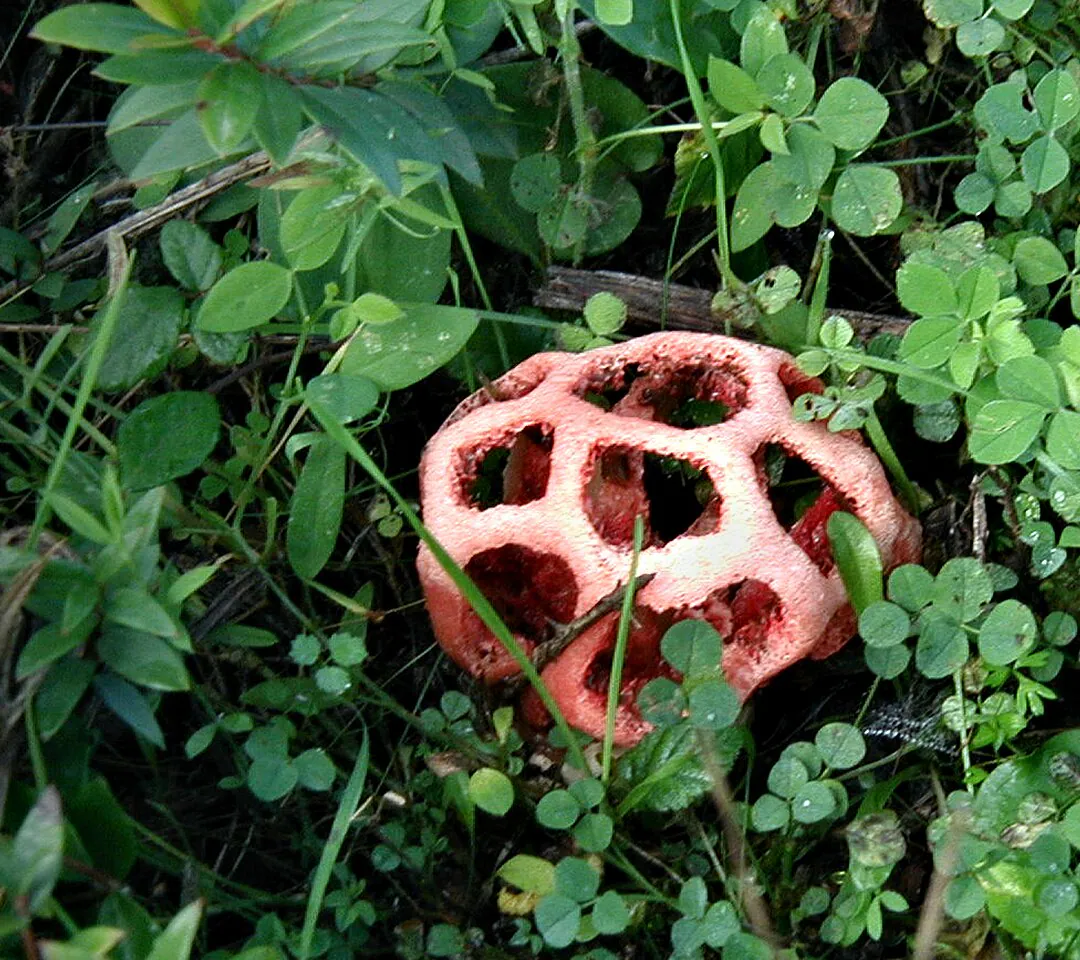
The red cage starts as a whitish 'egg' half-buried in the ground. When it bursts, a red, hollow, latticed ball with polygonal meshes emerges. The olive slime inside smells of rotting meat and attracts flies, which spread the spores.
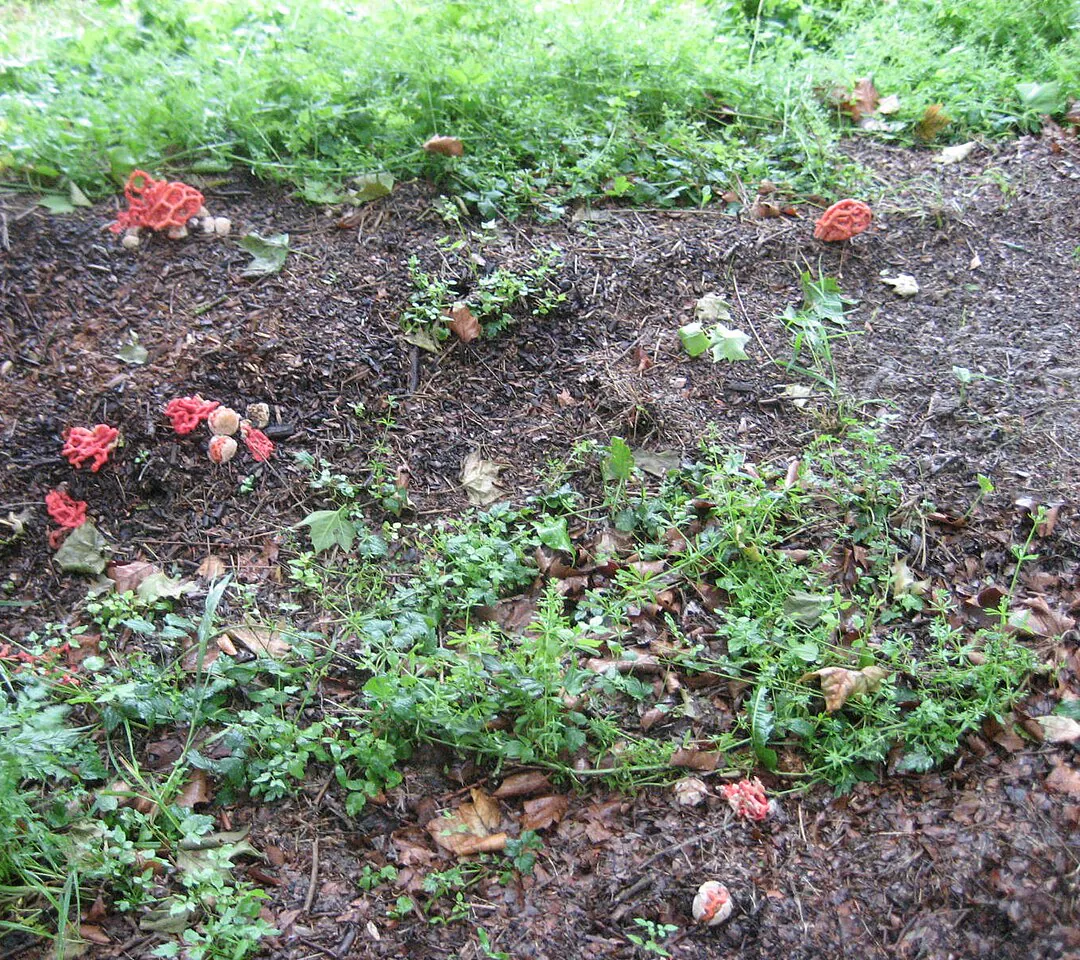
A decomposer found alone or in clusters near woody debris, in mulch beds, lawns, gardens and cultivated soil.
Native to southern and central Europe, Macaronesia, western Türkiye, North Africa and western Asia; introduced elsewhere with imported mulch.
Identification suggestions (from the community or from AI) and the information here may be wrong; this app never confirms that anything is safe to eat. Do not consume wild plants, mushrooms or seafood without expert confirmation. Nothing here is medical advice.
Its red colour comes mainly from lycopene, the same pigment found in tomatoes.
Possibly poisonous: an 1854 report describes a young person who ate a piece of the mature fungus and six hours later had abdominal pain, convulsions and a stupor lasting two days. The egg stage resembles the eggs of deadly Amanita species; do not pick or taste the white eggs.
Ask an adult
Never eat a wild mushroom without showing it to an expert
No mushroom should be picked for eating based on this app or a photo. Deadly species look very like the ones foragers look for, and symptoms start hours later. If you suspect poisoning, call your local poison centre or emergency number right away (in Türkiye: 114).
Hollow red to orange ball-shaped lattice with polygonal meshes
Starts as a half-buried white 'egg'; the egg skin stays as a cup at the base
Dark olive-brown slime inside the lattice smells of rotting meat and attracts flies
In gardens, on mulch and near woody debris, in lawns
Poisonous
The rungs scientists use to place living things by how closely related they are — from broad to narrow.