Amanita citrina
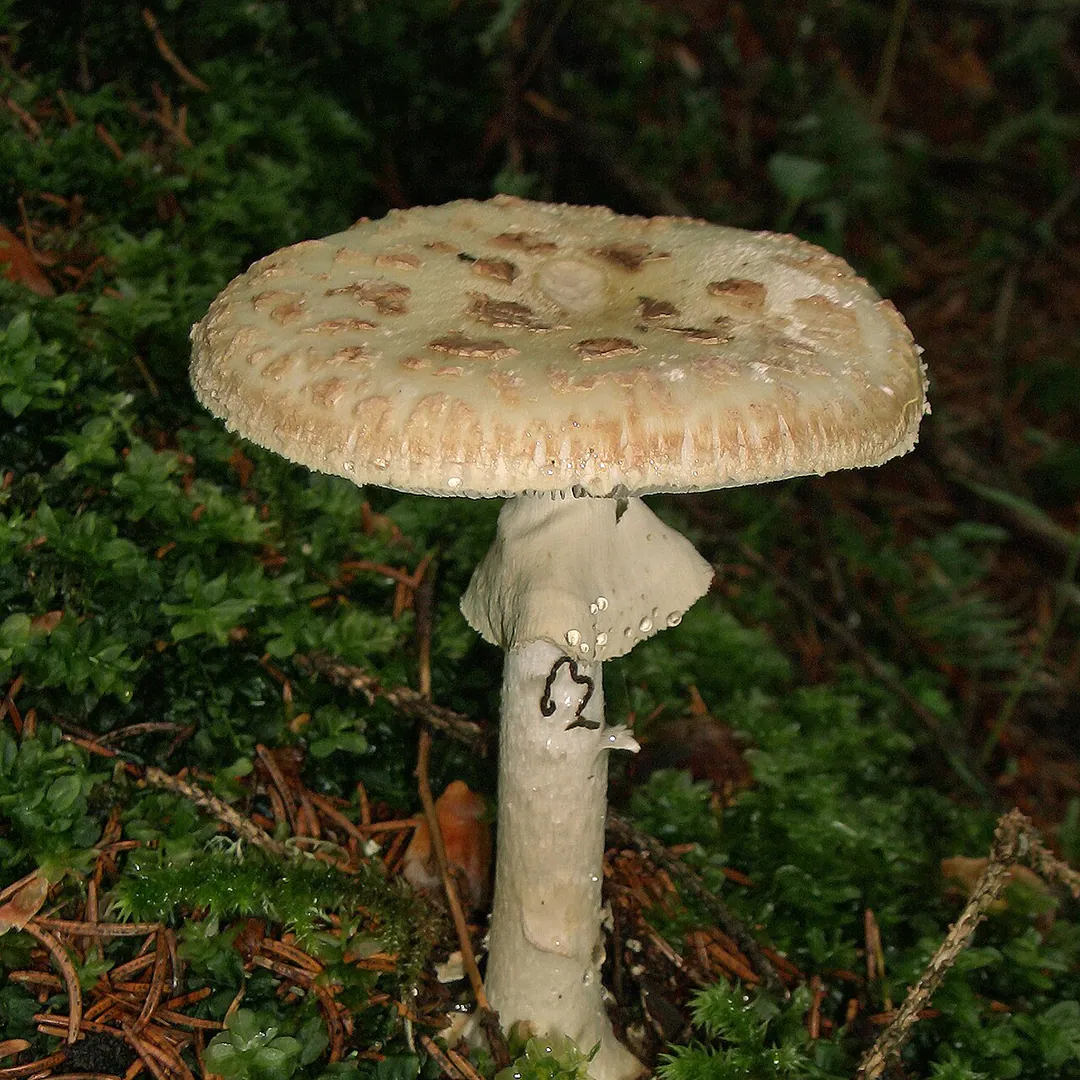
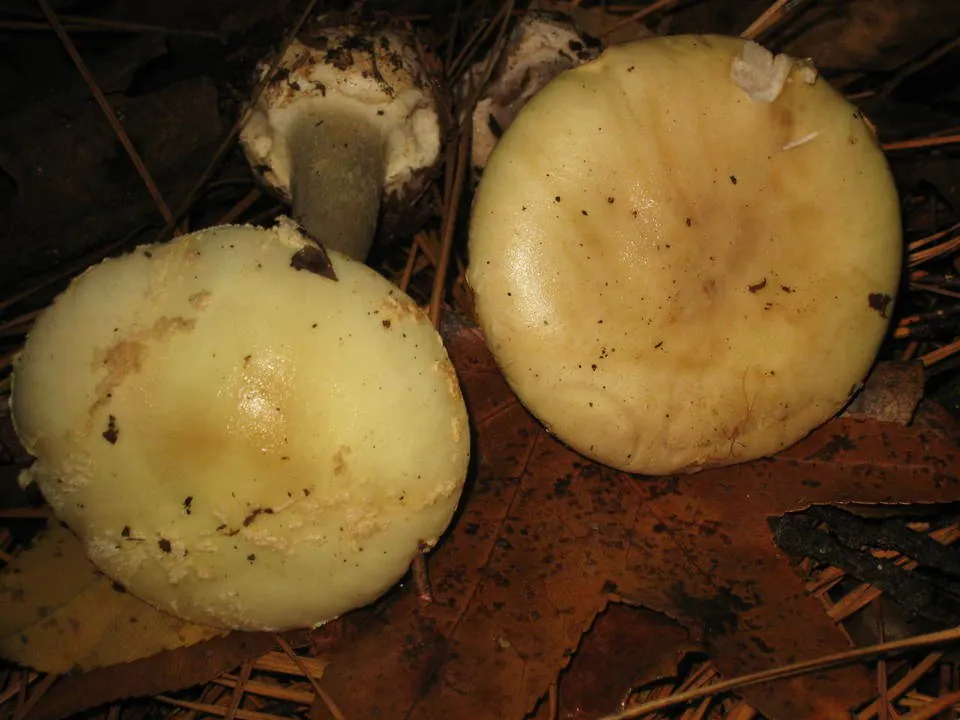
The false death cap is an Amanita with a pale lemon-yellow or white cap, white gills, a ring and a large basal bulb. It contains small amounts of alpha-amanitin and bufotenin. Its main danger is its strong resemblance to the deadly death cap, hence its name.
Silicate soils in broadleaf and conifer woods in summer and autumn.
Found in Europe and also in North American oak and pine forests.
Identification suggestions (from the community or from AI) and the information here may be wrong; this app never confirms that anything is safe to eat. Do not consume wild plants, mushrooms or seafood without expert confirmation. Nothing here is medical advice.
It smells of raw potato or rapeseed.
Contains small amounts of alpha-amanitin and bufotenin. Its main danger is its close resemblance to the death cap: pale yellow and white forms are easily confused with the deadly species, so no Amanita should be picked.
Ask an adult
Never eat a wild mushroom without showing it to an expert
No mushroom should be picked for eating based on this app or a photo. Deadly species look very like the ones foragers look for, and symptoms start hours later. If you suspect poisoning, call your local poison centre or emergency number right away (in Türkiye: 114).
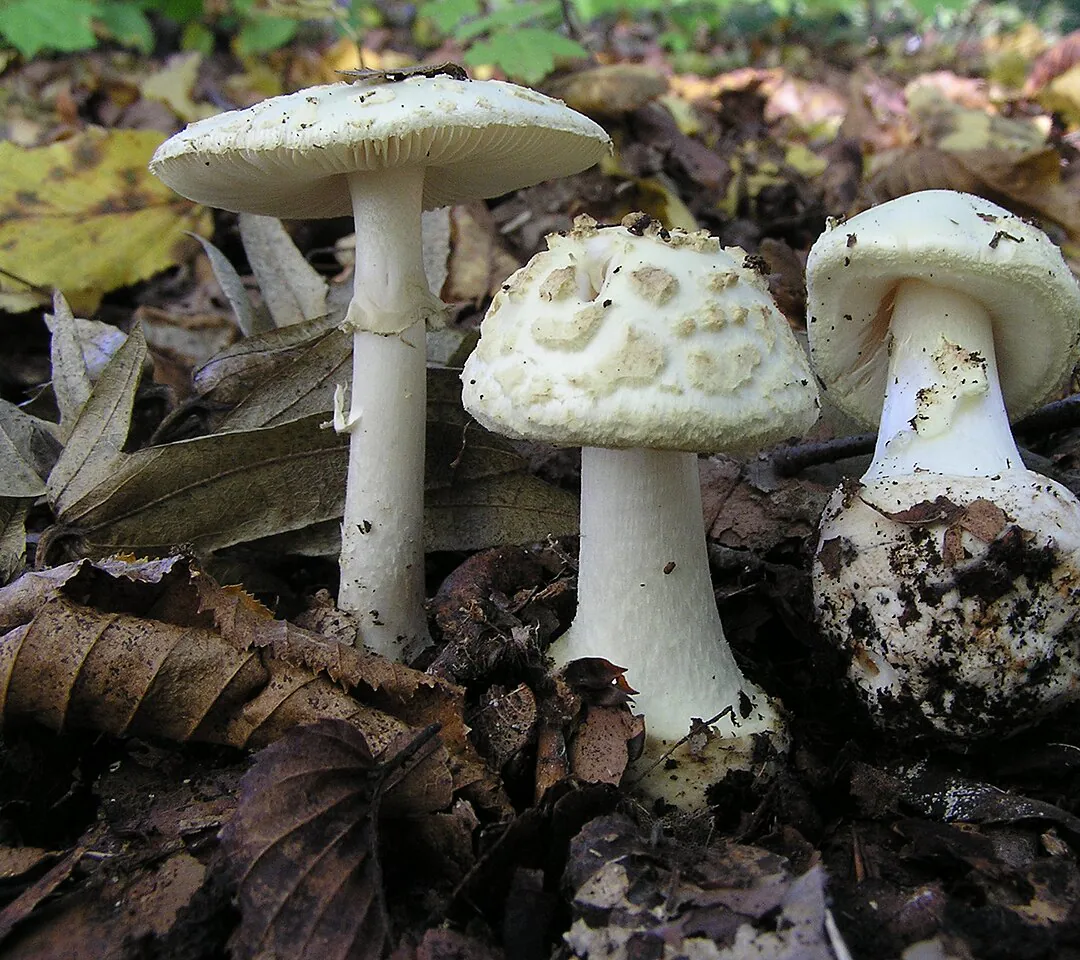
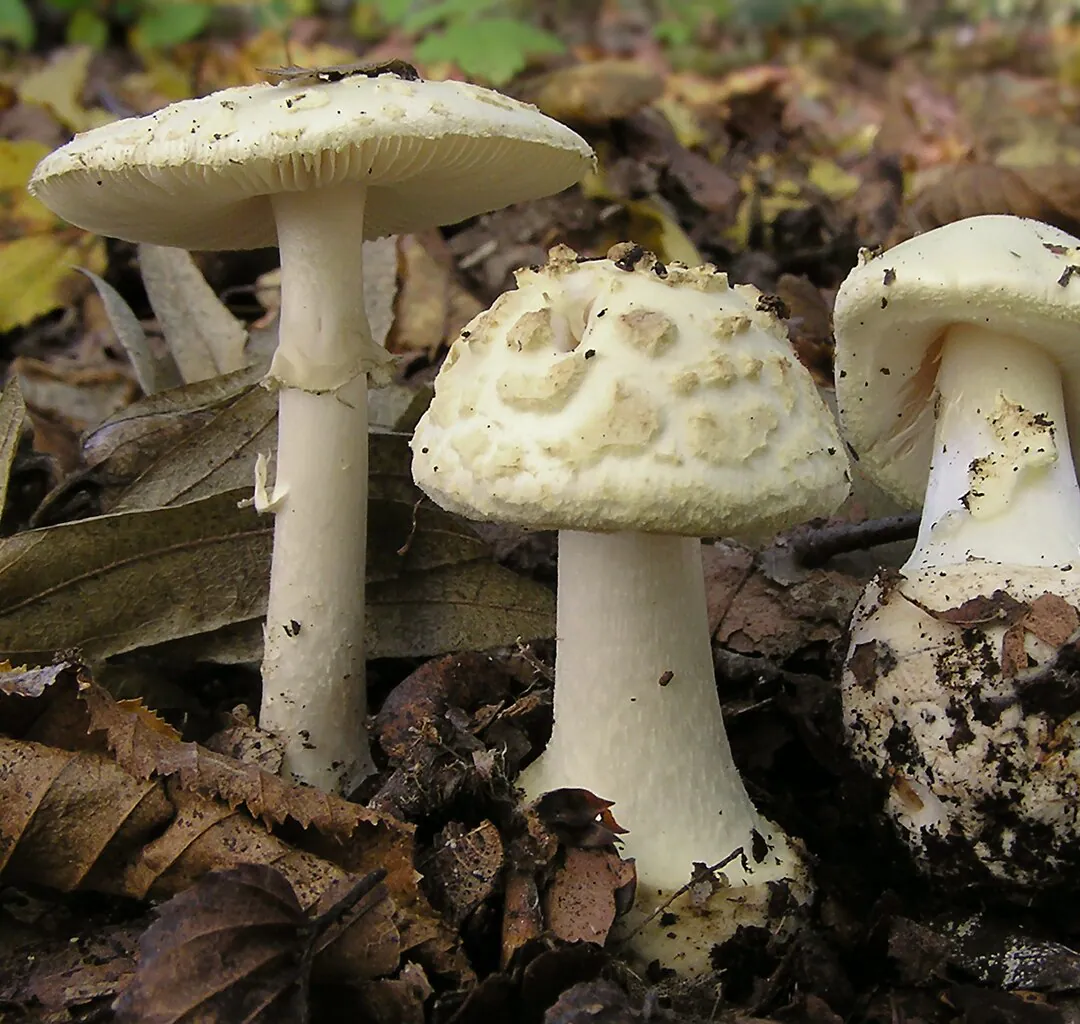
Pale lemon-yellow or white cap with irregular flat veil patches
Distinct smell of raw potato or rapeseed, unlike the sickly-sweet smell of the death cap
A rounded basal bulb with a sharp rim, not a loose sac like the death cap's volva
White gills and a clear white ring on the stem
Poisonous
The rungs scientists use to place living things by how closely related they are — from broad to narrow.