Amanita pantherina
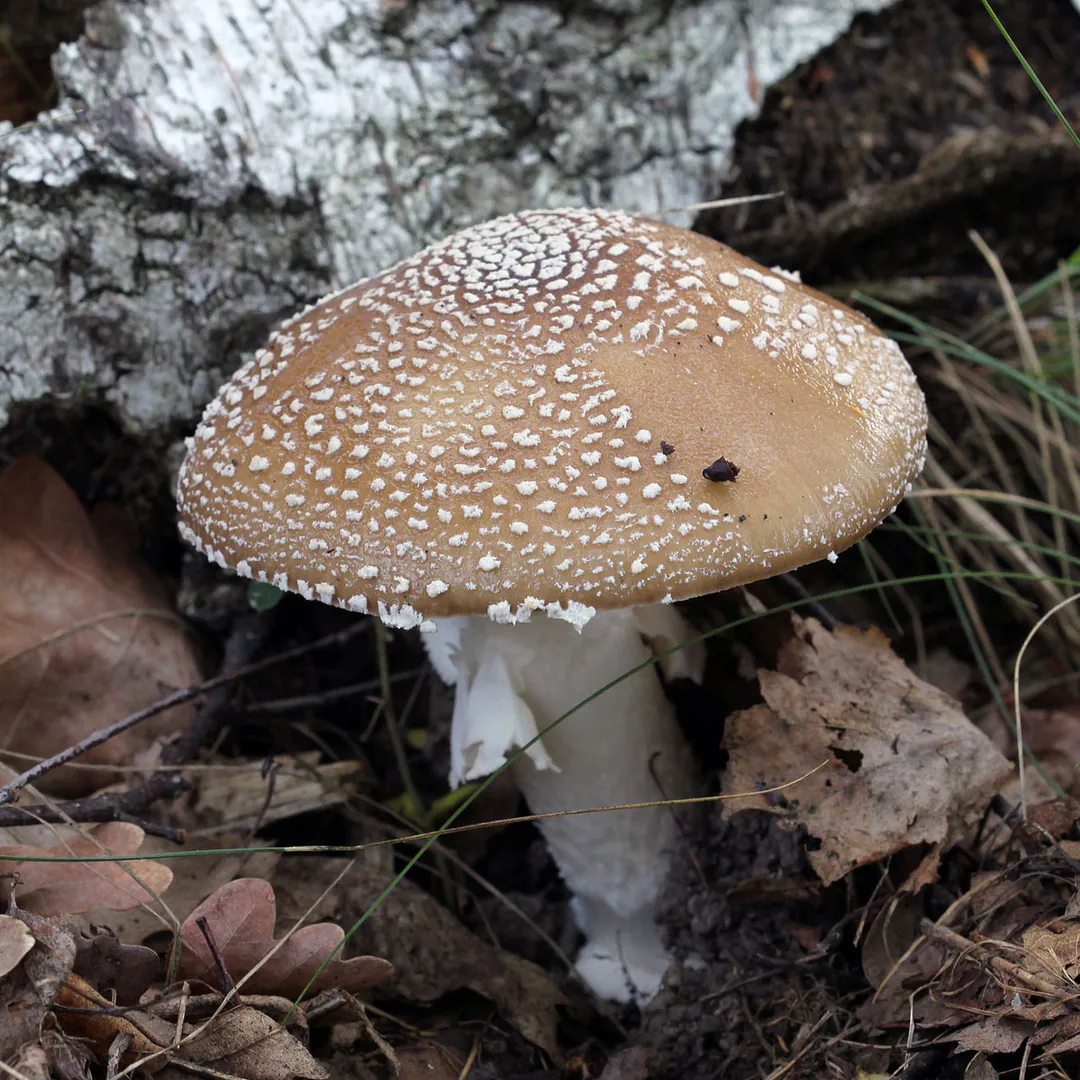
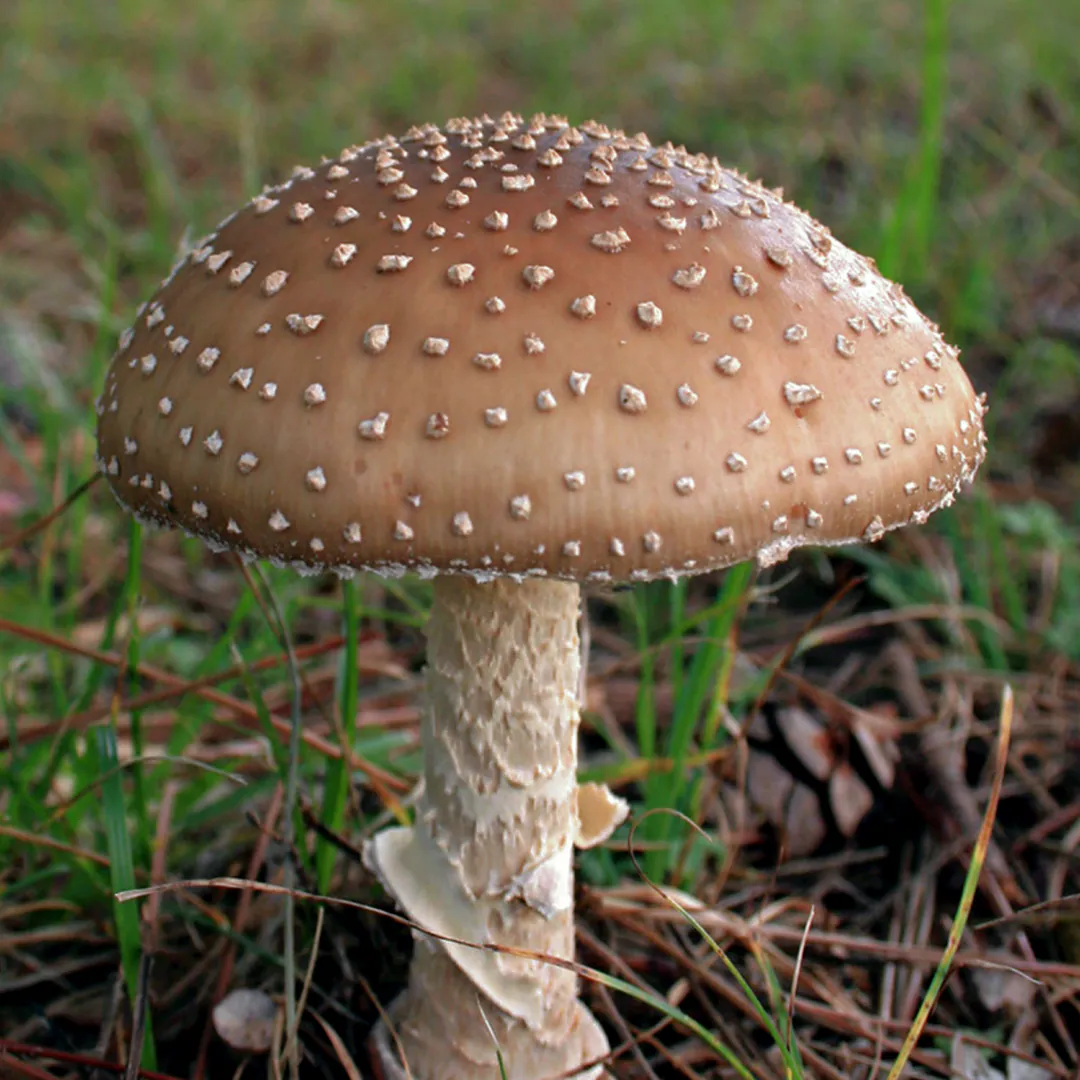
The panther cap is a poisonous Amanita with a brown cap covered in pure white warts. It is more toxic than the fly agaric, causing vomiting, diarrhoea, heavy sweating and hallucinations. Its flesh does not blush when cut, the key feature separating it from the similar blusher.
Broadleaf woods, especially beech, less often conifer woods and rarely meadows, in late summer and autumn.
Found across Europe and western Asia; probably introduced to South Africa with imported trees.
Identification suggestions (from the community or from AI) and the information here may be wrong; this app never confirms that anything is safe to eat. Do not consume wild plants, mushrooms or seafood without expert confirmation. Nothing here is medical advice.
It is also called the false blusher because its flesh does not turn pink like the true blusher's.
More toxic than the fly agaric. Ibotenic acid and muscimol cause vomiting, diarrhoea, heavy sweating, hallucinations and confusion; dehydration can be severe. Its flesh does not blush when cut, which separates it from the blusher, but the two are easily confused.
Ask an adult
Never eat a wild mushroom without showing it to an expert
No mushroom should be picked for eating based on this app or a photo. Deadly species look very like the ones foragers look for, and symptoms start hours later. If you suspect poisoning, call your local poison centre or emergency number right away (in Türkiye: 114).
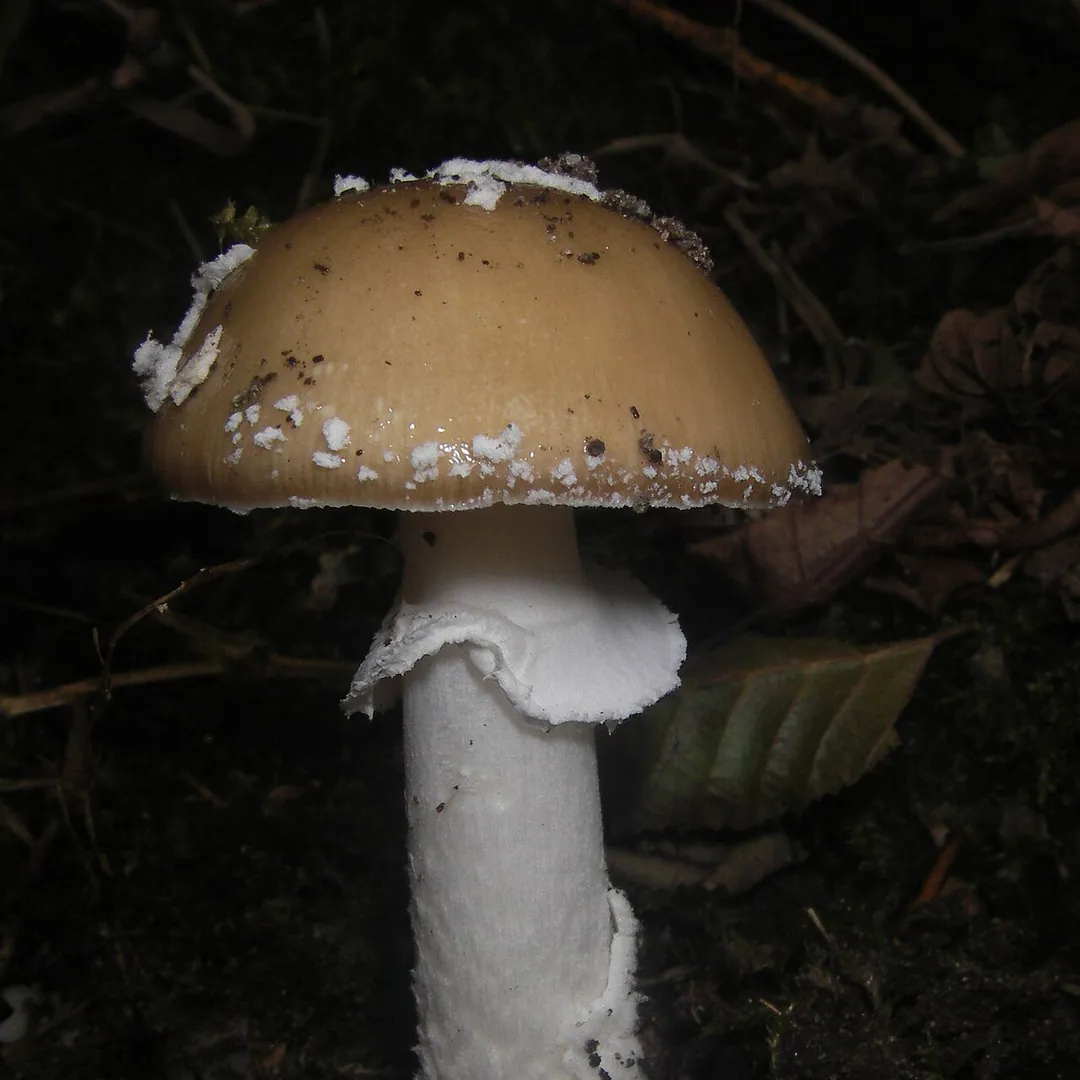
Brown cap covered in pure white warts, with a short striate margin
Cut or bruised flesh stays white and never turns pink — the key difference from the blusher
A collar-like rolled rim of volva at the top of the basal bulb
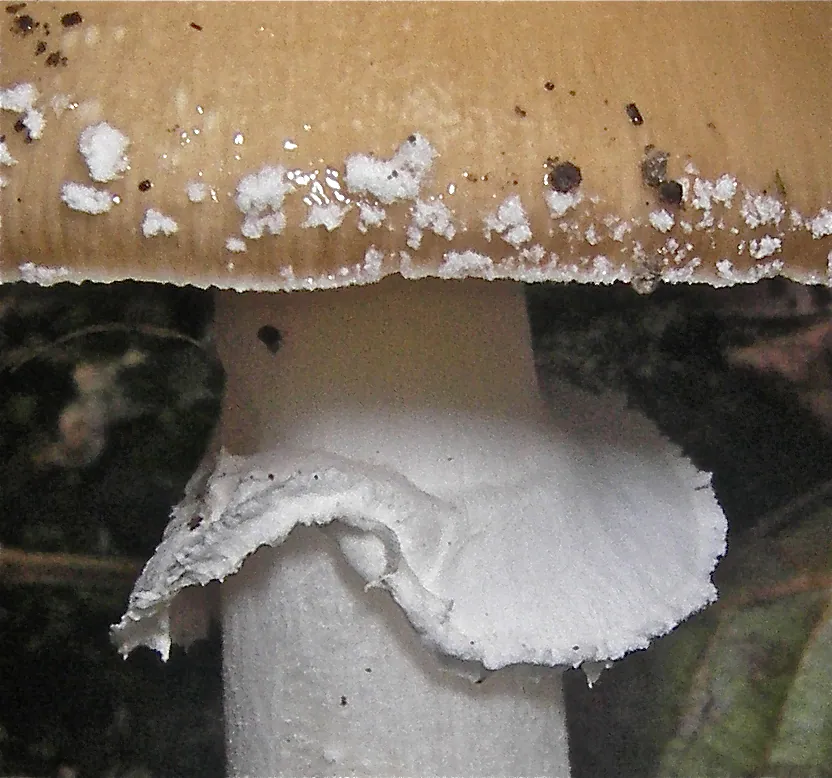
The ring is smooth on top, whereas the blusher's ring is striate
Poisonous
The rungs scientists use to place living things by how closely related they are — from broad to narrow.