Laetiporus sulphureus
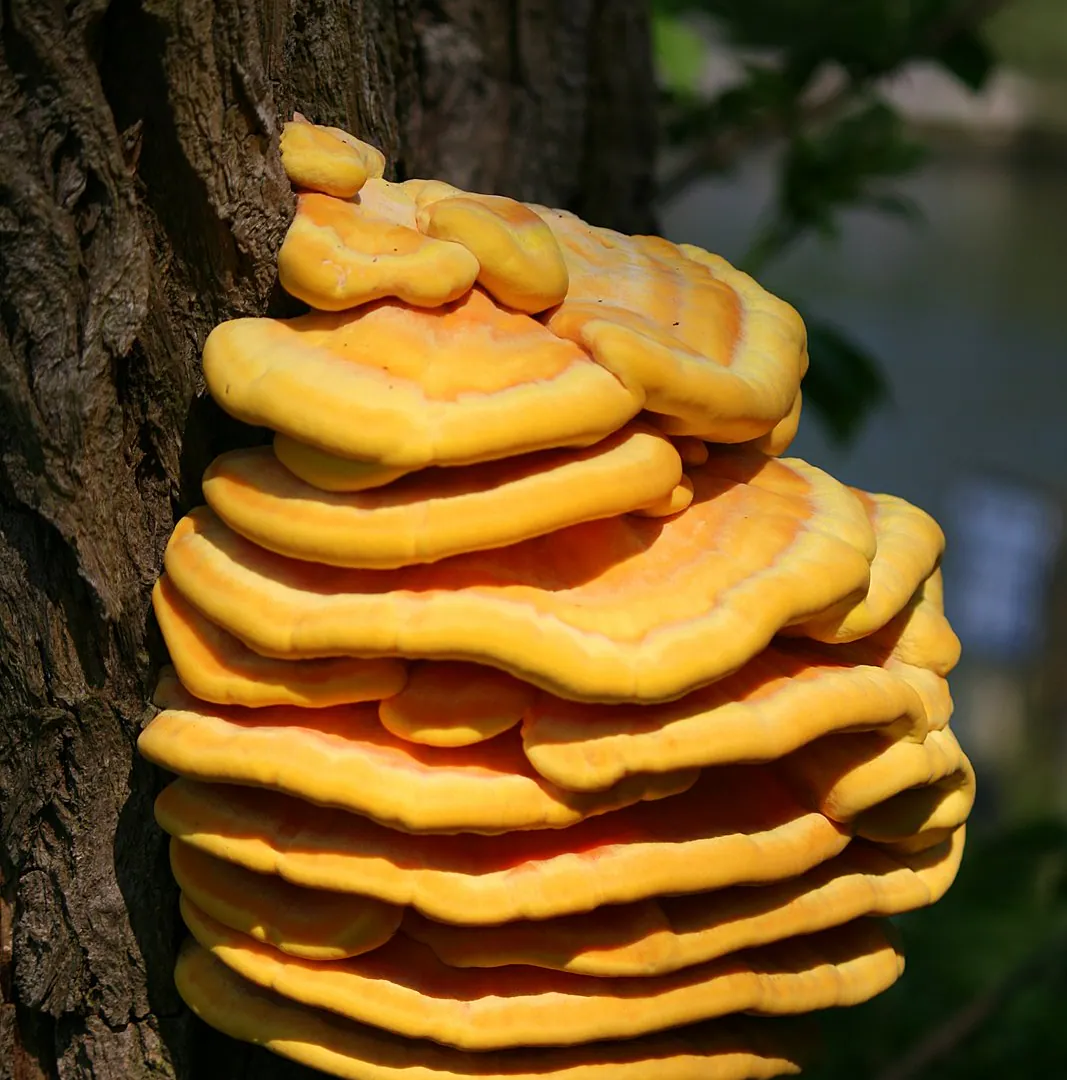
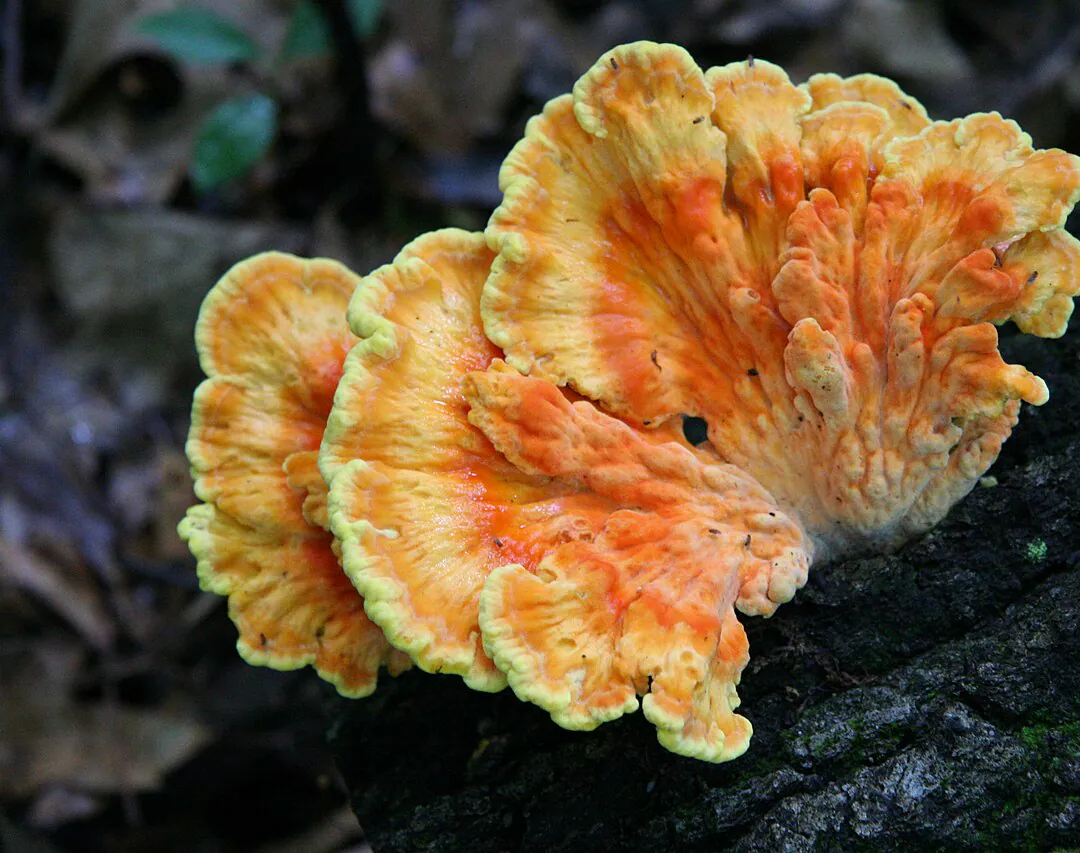
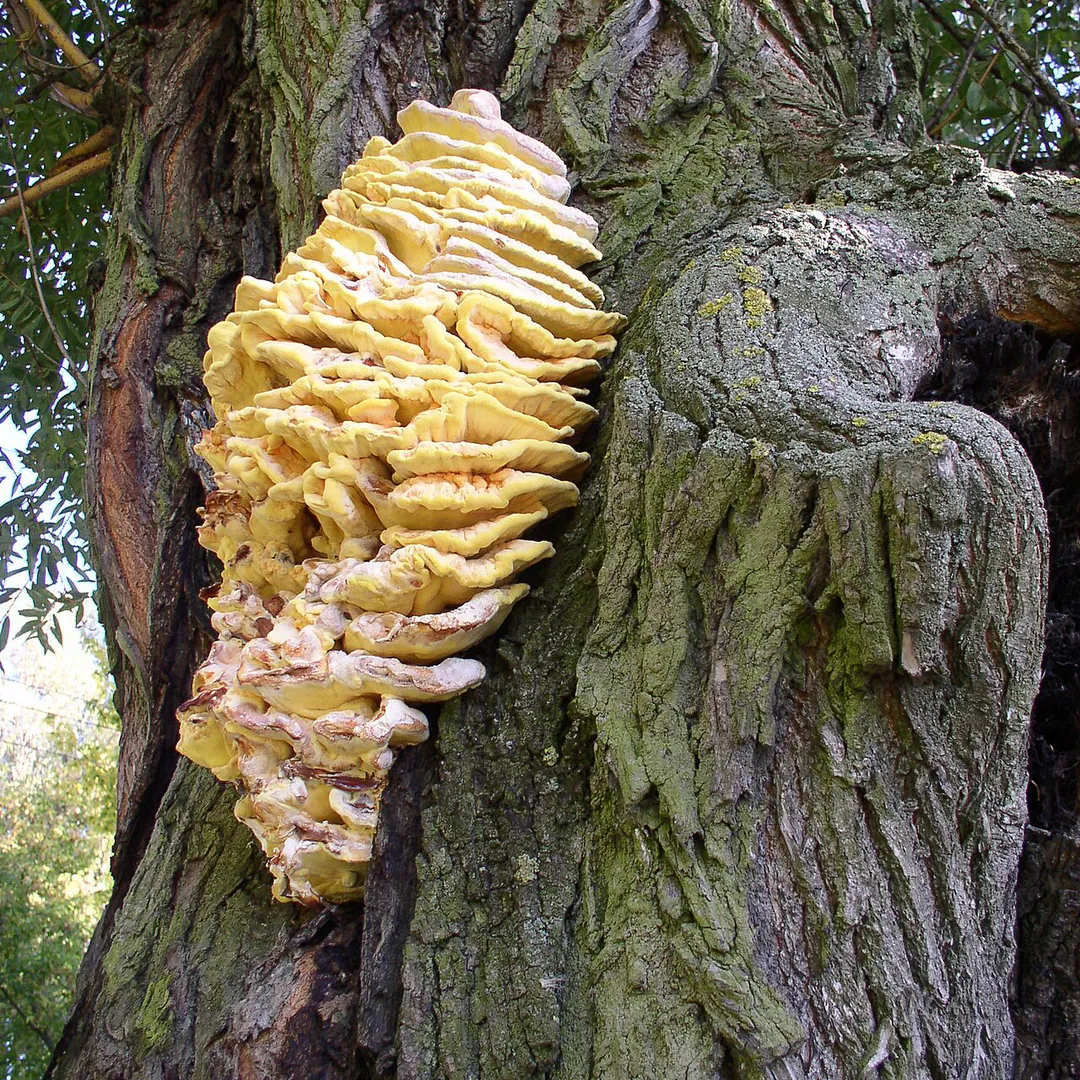
Chicken-of-the-woods forms striking golden-yellow to orange overlapping shelves on tree trunks. The undersurface has pores instead of gills. It causes brown rot in the heartwood of its host, and adverse reactions to eating it have been reported.
Grows on dead or mature hardwoods such as oak, cherry, pear, poplar, willow, black locust and beech; in the Mediterranean usually on carob and eucalyptus.
Widely distributed across Europe and North America.
Identification suggestions (from the community or from AI) and the information here may be wrong; this app never confirms that anything is safe to eat. Do not consume wild plants, mushrooms or seafood without expert confirmation. Nothing here is medical advice.
Certain species of deer feed on this fungus.
Must never be eaten raw; adverse reactions (stomach upset, allergy) have been reported in some people, and the host tree matters too. It can be confused with poisonous species such as the jack-o'-lantern; this app never recommends eating it.
Ask an adult
Never eat a wild mushroom without showing it to an expert
No mushroom should be picked for eating based on this app or a photo. Deadly species look very like the ones foragers look for, and symptoms start hours later. If you suspect poisoning, call your local poison centre or emergency number right away (in Türkiye: 114).
Overlapping sulphur-yellow to orange shelves on a tree trunk
Underside has fine yellow pores, no gills
Juicy and suede-like when fresh, oozing yellowish juice; dry, brittle and pale with age
Grows on old or dead trees (oak, poplar, willow, carob, eucalyptus), not on the ground
Poisonous
The rungs scientists use to place living things by how closely related they are — from broad to narrow.