Hygrophoropsis aurantiaca
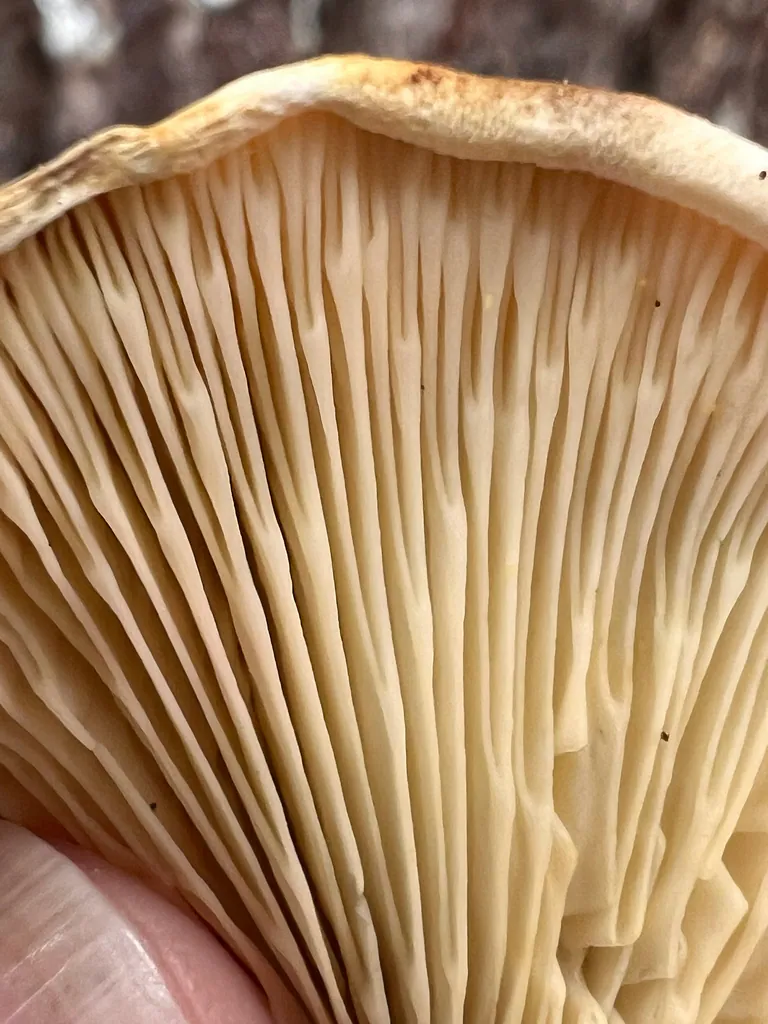
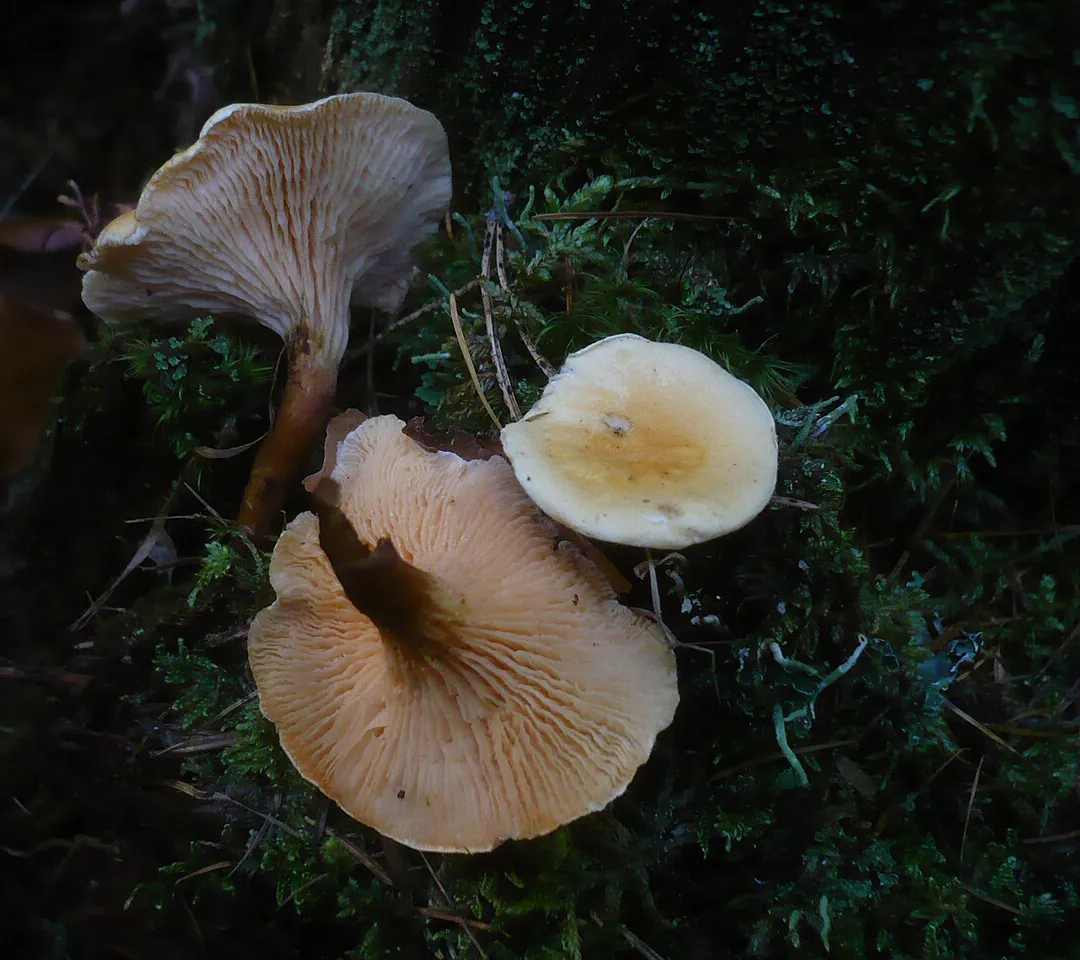
The false chanterelle is an orange mushroom named for its resemblance to the golden chanterelle. It has thin, crowded, forking gills, a velvety cap and often a brown stem base. It is considered poisonous and may cause serious digestive problems.
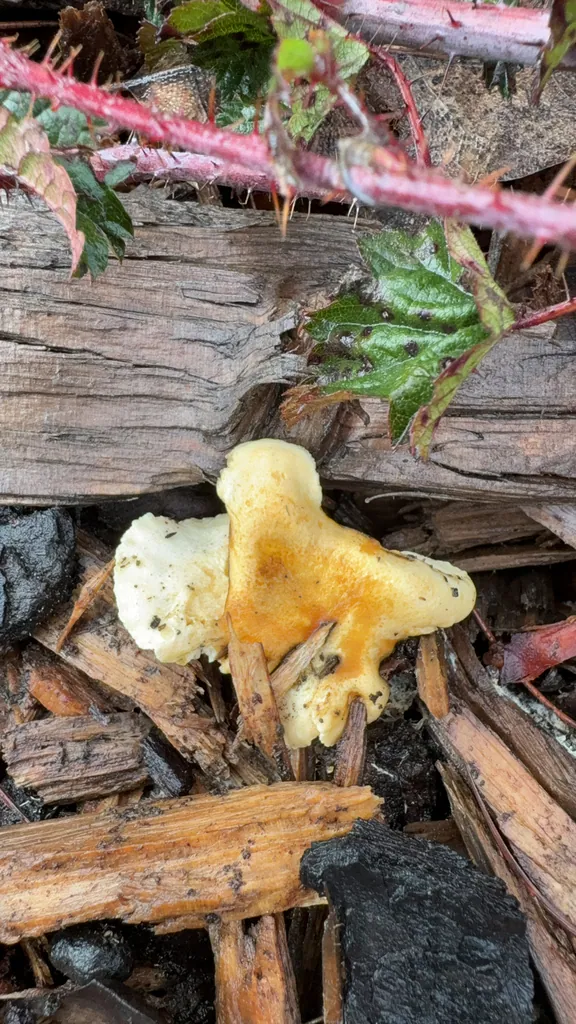
Hardwood and conifer forests and heathland, on the ground or decaying wood, burned areas and garden woodchips.
Widely distributed: Europe, North, Central and South America, northern Asia, Australia and New Zealand.
Identification suggestions (from the community or from AI) and the information here may be wrong; this app never confirms that anything is safe to eat. Do not consume wild plants, mushrooms or seafood without expert confirmation. Nothing here is medical advice.
It is a dry-weather mushroom and can be plentiful when other mushrooms are scarce.
Considered poisonous; it can cause serious digestive upset such as nausea, vomiting and diarrhoea. Confused with the golden chanterelle, and it also resembles the olive jack-o'-lantern (straight, unforked true gills), which causes violent vomiting within half an hour to a few hours.
Ask an adult
Never eat a wild mushroom without showing it to an expert
No mushroom should be picked for eating based on this app or a photo. Deadly species look very like the ones foragers look for, and symptoms start hours later. If you suspect poisoning, call your local poison centre or emergency number right away (in Türkiye: 114).
Thin, crowded, repeatedly forking true gills; the golden chanterelle has blunt thick ridges instead
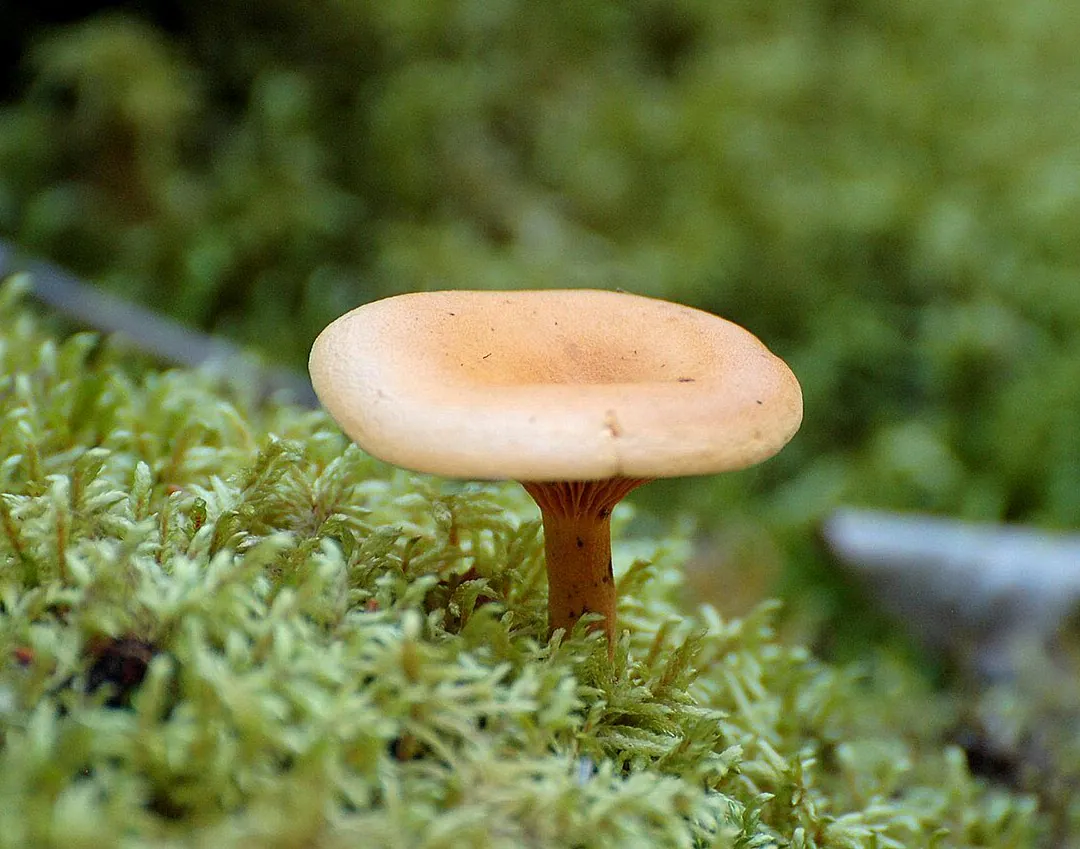
Deep orange, finely velvety cap becoming funnel-shaped; gills a more intense orange than the cap
Thin, soft flesh without the chanterelle's apricot smell
Orange stem often darker brown at the base; no ring
On forest litter, near decaying wood and stumps, and on garden woodchips
Poisonous
The rungs scientists use to place living things by how closely related they are — from broad to narrow.