Verpa bohemica
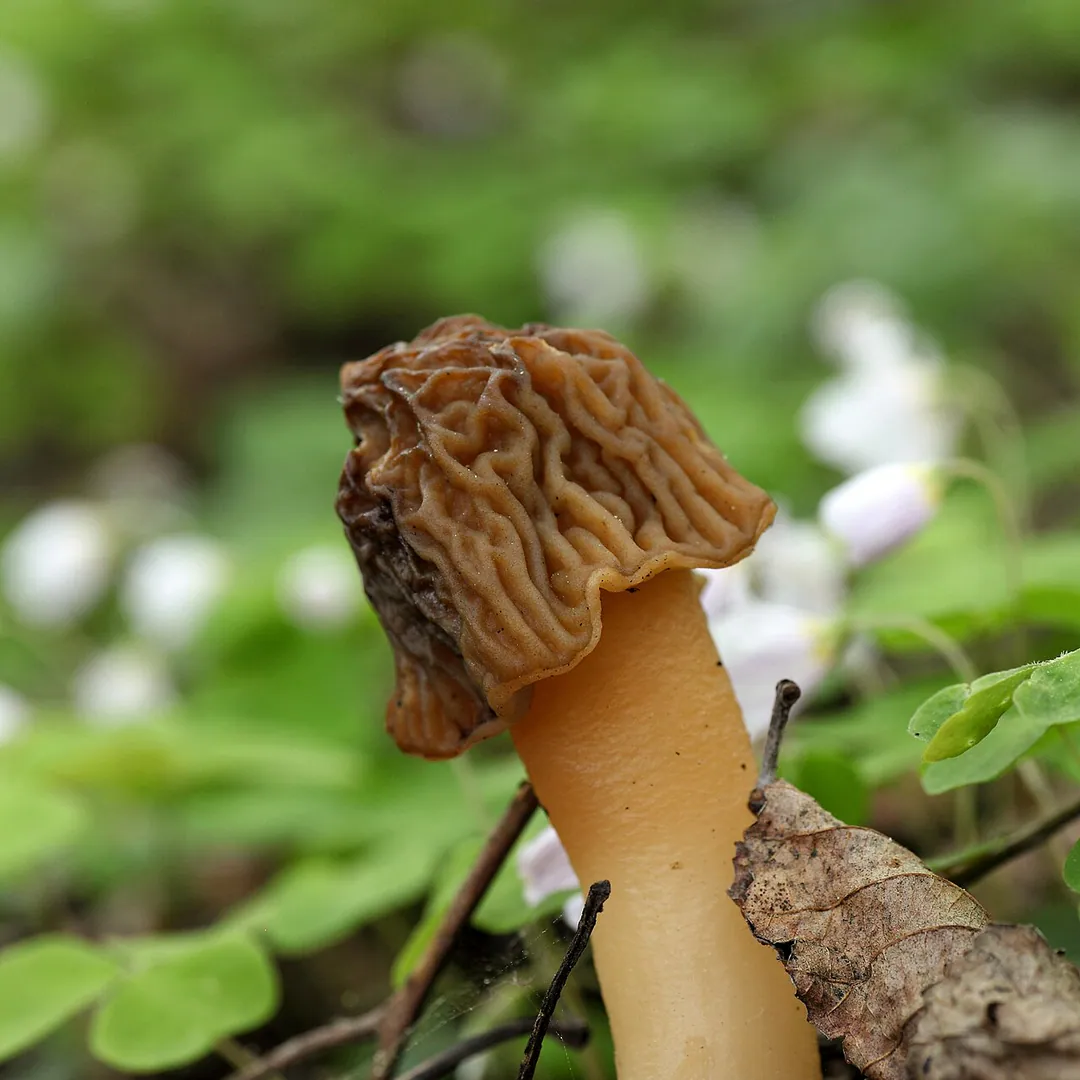
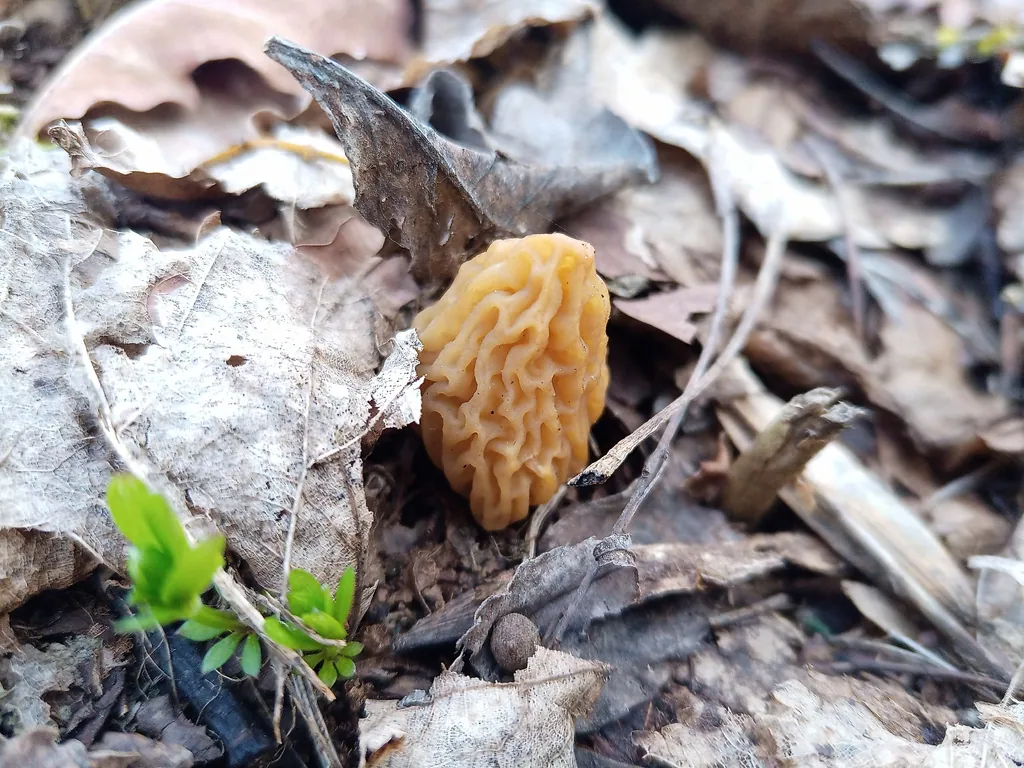
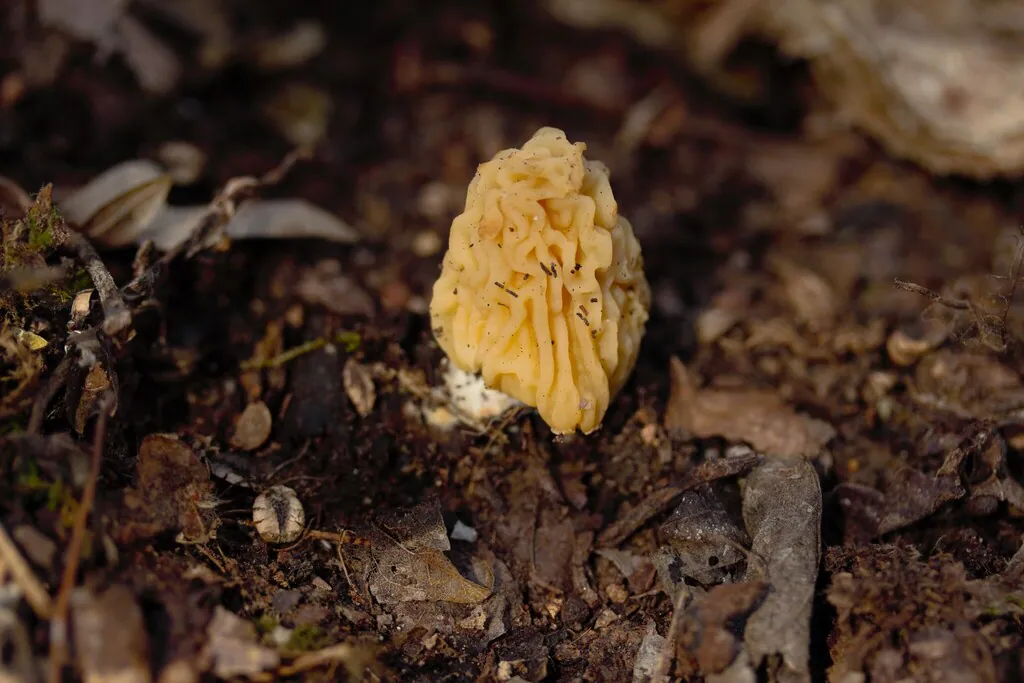
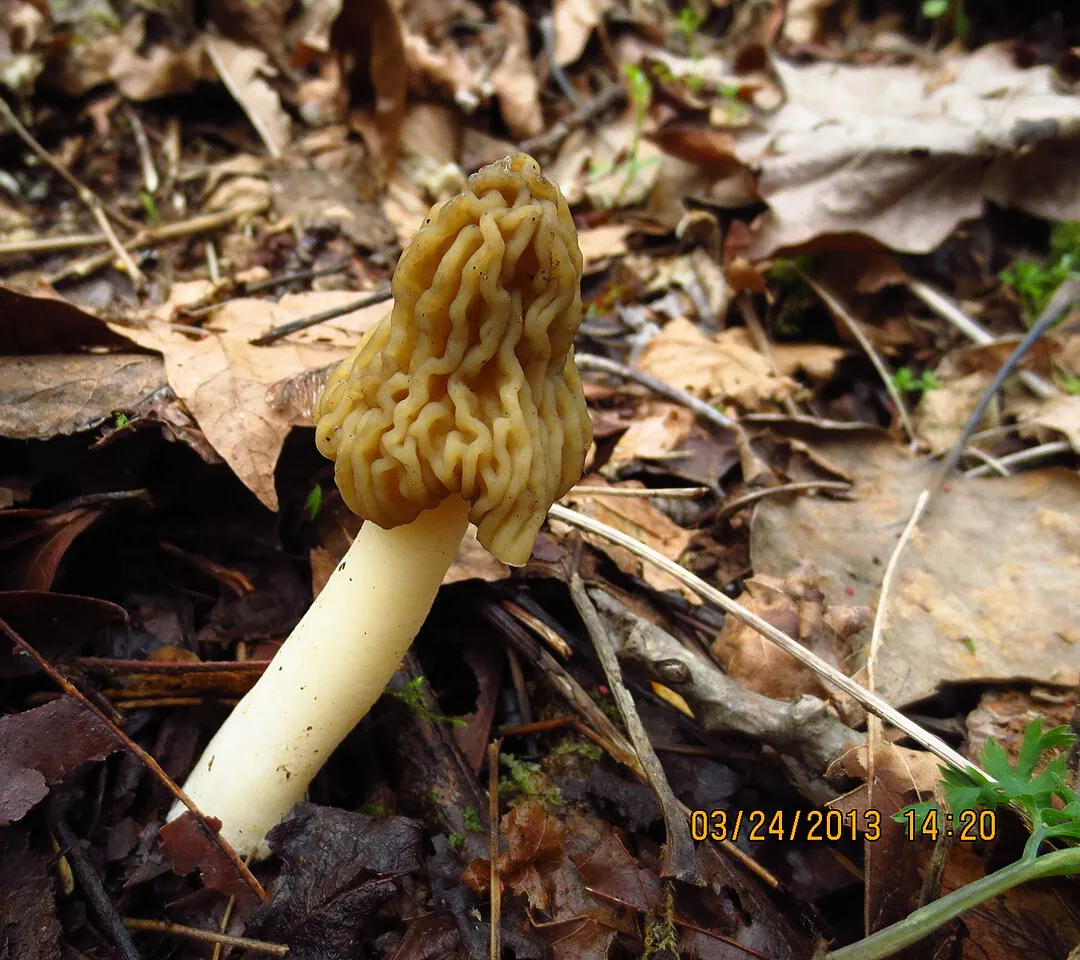
The wrinkled thimble-cap has a small yellow-brown, thimble-shaped cap with brain-like wrinkles that hangs free from the top of the stem, unlike true morels. It fruits in early spring, before true morels, and has caused poisonings.
Fruits in early spring on the ground in woods after snowmelt, often along riverbanks near cottonwoods, willows and aspens, buried in plant litter.
Found in northern North America, Europe and Asia, where it has been recorded from India and Türkiye.
Identification suggestions (from the community or from AI) and the information here may be wrong; this app never confirms that anything is safe to eat. Do not consume wild plants, mushrooms or seafood without expert confirmation. Nothing here is medical advice.
Its spores are very large, and each spore sac holds only two spores instead of the usual eight.
Poisonous. Large amounts or meals on successive days cause stomach upset and loss of muscle coordination; coma has been reported after overconsumption, and it can react with alcohol. It is confused with true morels: a cap attached only at the top and hanging free marks this species.
Ask an adult
Never eat a wild mushroom without showing it to an expert
No mushroom should be picked for eating based on this app or a photo. Deadly species look very like the ones foragers look for, and symptoms start hours later. If you suspect poisoning, call your local poison centre or emergency number right away (in Türkiye: 114).
Small yellow-brown thimble- or bell-shaped cap with lengthwise wrinkles
Cap attached only at the very top and hangs free like a skirt — in true morels the cap is fused to the stem at its lower edge
Long, cream-white, brittle stem stuffed with cottony fibres
Early spring, before true morels; along riverbanks under poplars and willows
Poisonous
The rungs scientists use to place living things by how closely related they are — from broad to narrow.