Armillaria mellea
Honey fungus is a mushroom with a honey-coloured cap and a thick ring on the stem that grows in clusters at the base of trees. It is a plant pathogen that causes root rot. Raw or undercooked it upsets the stomach, and it can be confused with the deadly funeral bell.
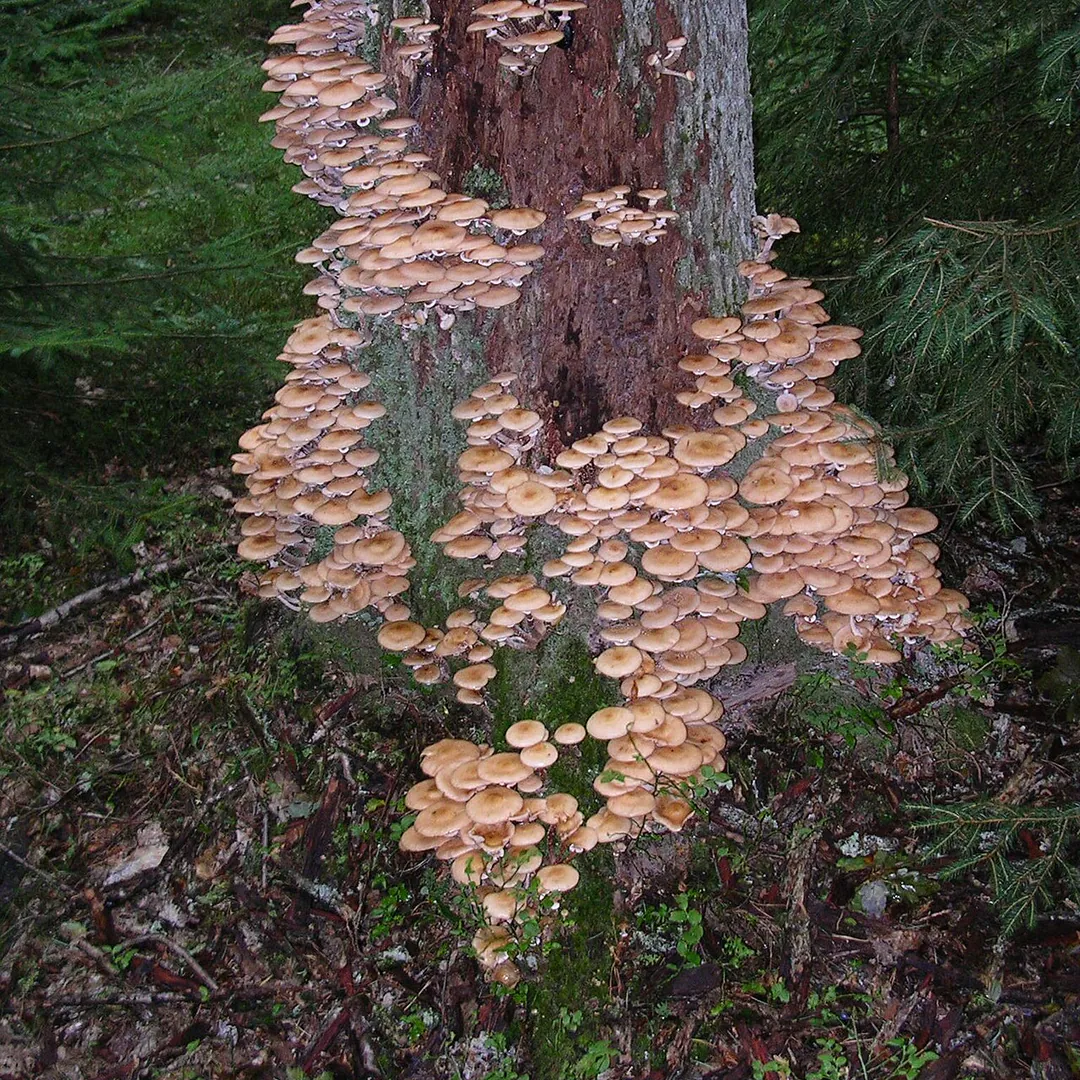
Lives as a parasite on many broadleaf trees, fruiting in dense clusters at the base of trunks and stumps; also in gardens, parks and vineyards.
Widespread in northern temperate zones, including North America, Europe and northern Asia; introduced to South Africa.
Identification suggestions (from the community or from AI) and the information here may be wrong; this app never confirms that anything is safe to eat. Do not consume wild plants, mushrooms or seafood without expert confirmation. Nothing here is medical advice.
The mushroom itself does not glow, but its underground mycelium can give off light.
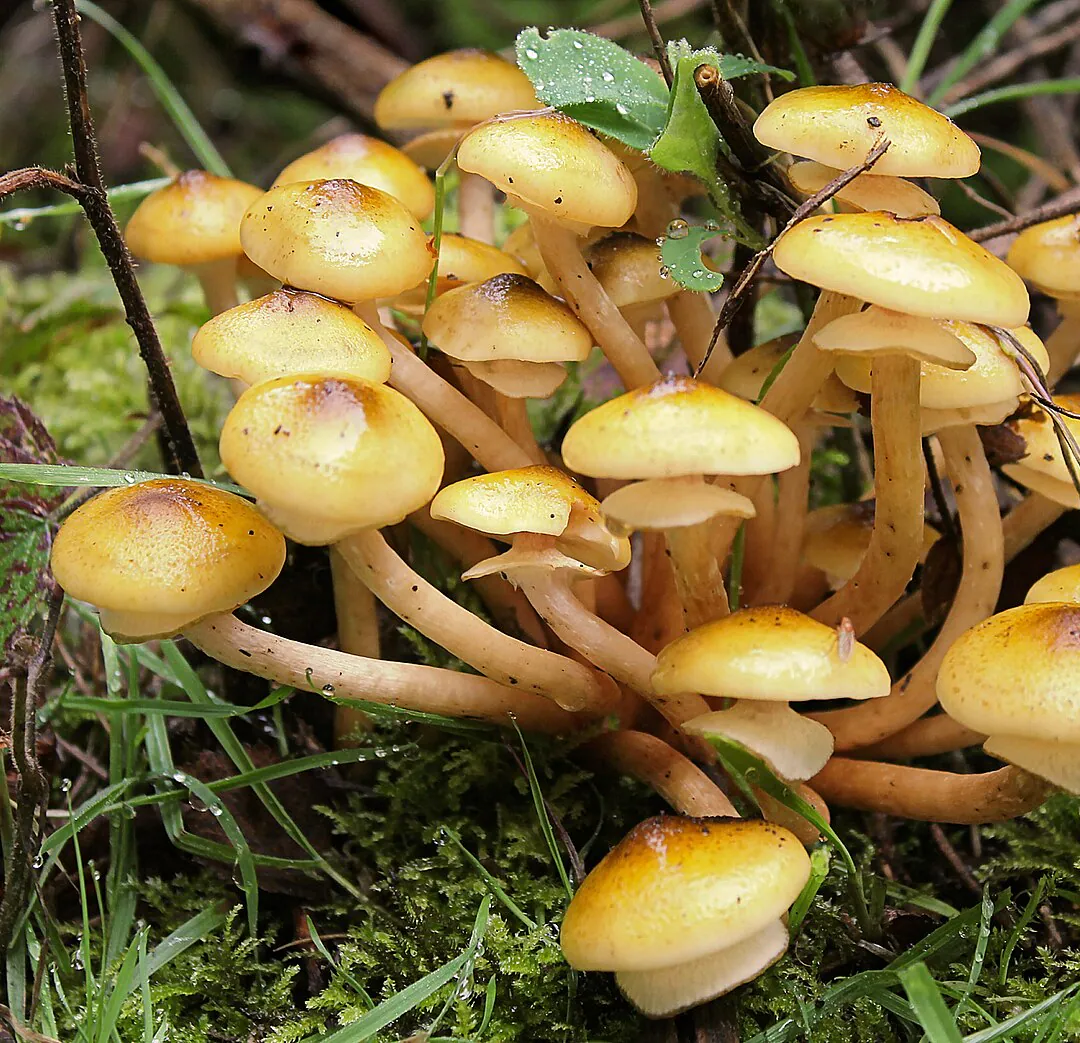
Raw or undercooked it upsets the stomach, and specimens from some trees cause trouble even when cooked. The greatest danger is confusion with the deadly funeral bell and the poisonous sulphur tuft, which also cluster on stumps.
Ask an adult
Never eat a wild mushroom without showing it to an expert
No mushroom should be picked for eating based on this app or a photo. Deadly species look very like the ones foragers look for, and symptoms start hours later. If you suspect poisoning, call your local poison centre or emergency number right away (in Türkiye: 114).
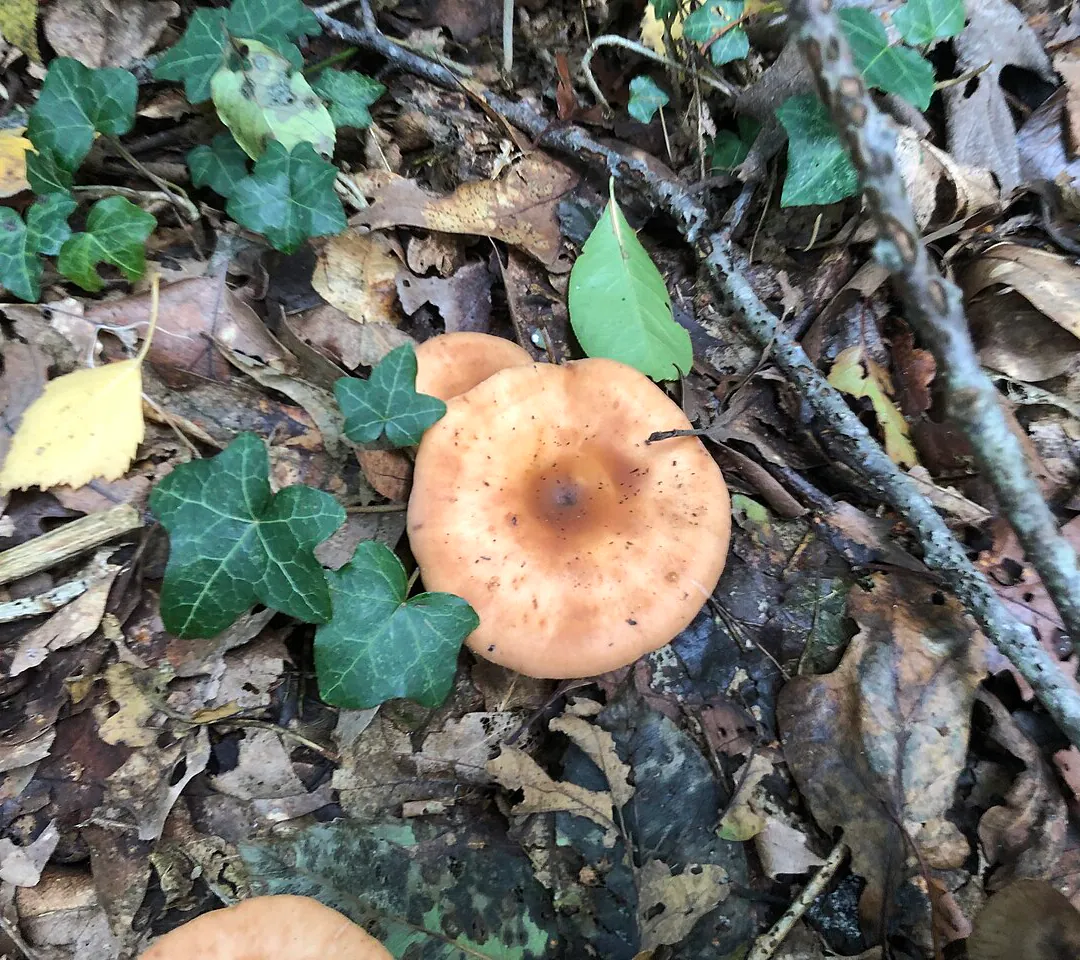
Honey-coloured cap with small dark hairy scales at the centre
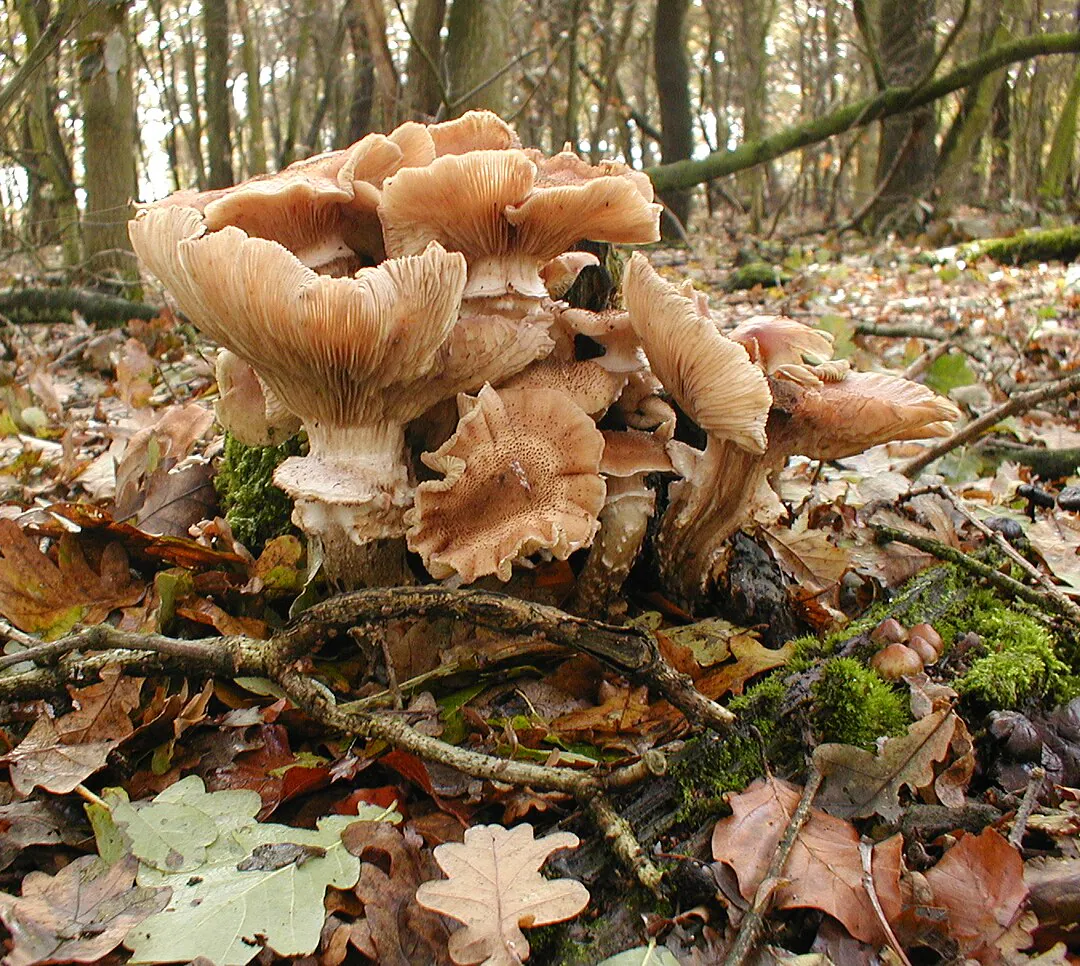
A thick, skin-like, persistent white ring high on the stem
White spore print — funeral bell prints rusty brown, sulphur tuft purple-brown
Dense clumps at tree bases and stumps, with white fan-shaped mycelium and black bootlace cords under the bark
Poisonous
The rungs scientists use to place living things by how closely related they are — from broad to narrow.