Hypholoma fasciculare
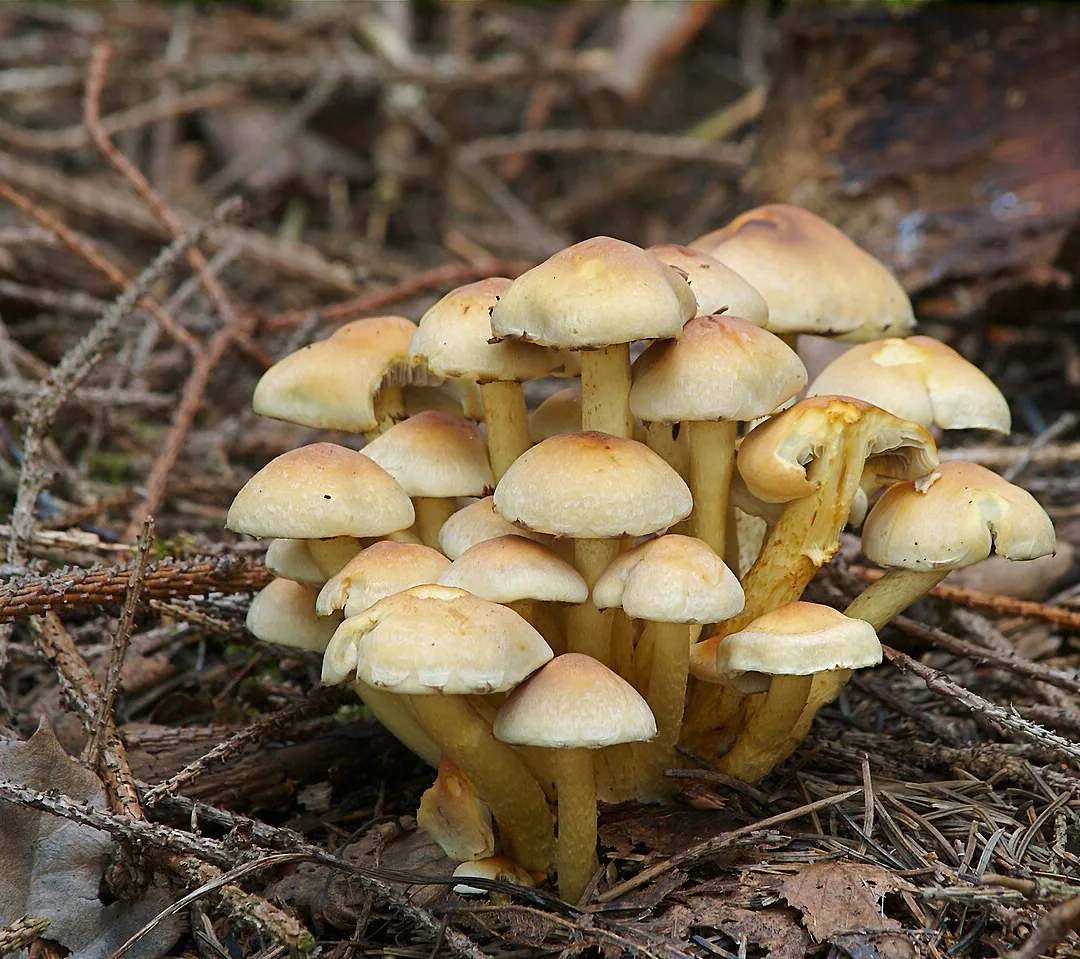
The sulphur tuft is a poisonous mushroom with a sulphur-yellow cap that grows in large clumps on stumps and dead roots. Its gills start yellow and turn greenish, and its spore print is purple-brown. It tastes very bitter. Eating it causes vomiting, diarrhoea and convulsions.
Dead wood of broadleaf and conifer trees, most often rotting broadleaf stumps, from spring to autumn.
Widespread and abundant in northern Europe and North America; recorded from Iran and eastern Anatolia in Turkey.
Identification suggestions (from the community or from AI) and the information here may be wrong; this app never confirms that anything is safe to eat. Do not consume wild plants, mushrooms or seafood without expert confirmation. Nothing here is medical advice.
Its species name is Latin for 'in bundles', referring to the way it grows in clumps.
Bitter and poisonous; cooking removes the bitterness but not the toxin. After 5-10 hours it causes diarrhoea, nausea, vomiting and collapse, and paralysis and impaired vision have been recorded. Can be confused with honey fungus and funeral bell clustering on stumps.
Ask an adult
Never eat a wild mushroom without showing it to an expert
No mushroom should be picked for eating based on this app or a photo. Deadly species look very like the ones foragers look for, and symptoms start hours later. If you suspect poisoning, call your local poison centre or emergency number right away (in Türkiye: 114).
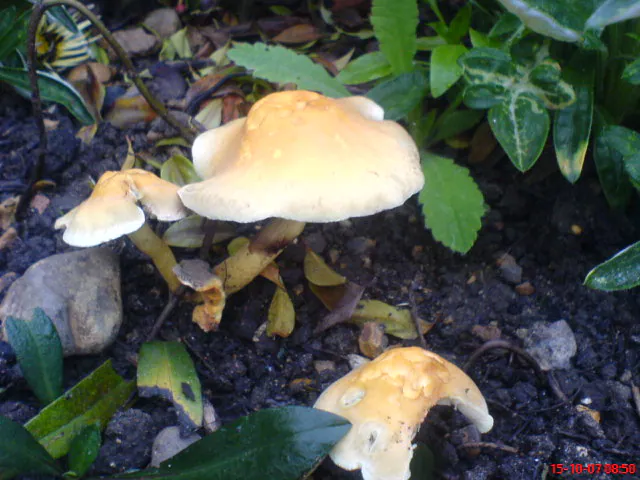
Sulphur-yellow cap with an orange-brown centre and paler margin
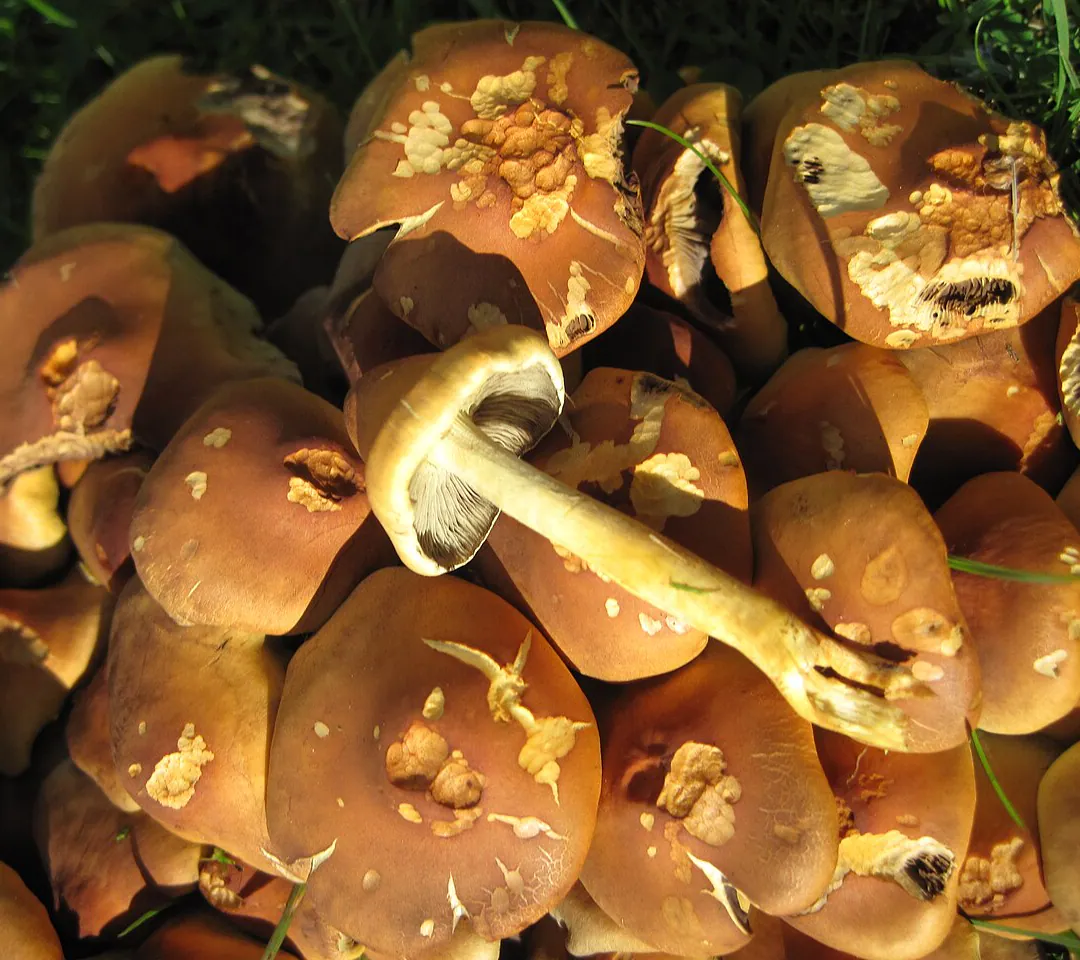
Gills start yellow and turn a distinctive greenish colour with age — the best field mark
Purple-brown spore print — honey fungus prints white, funeral bell rusty
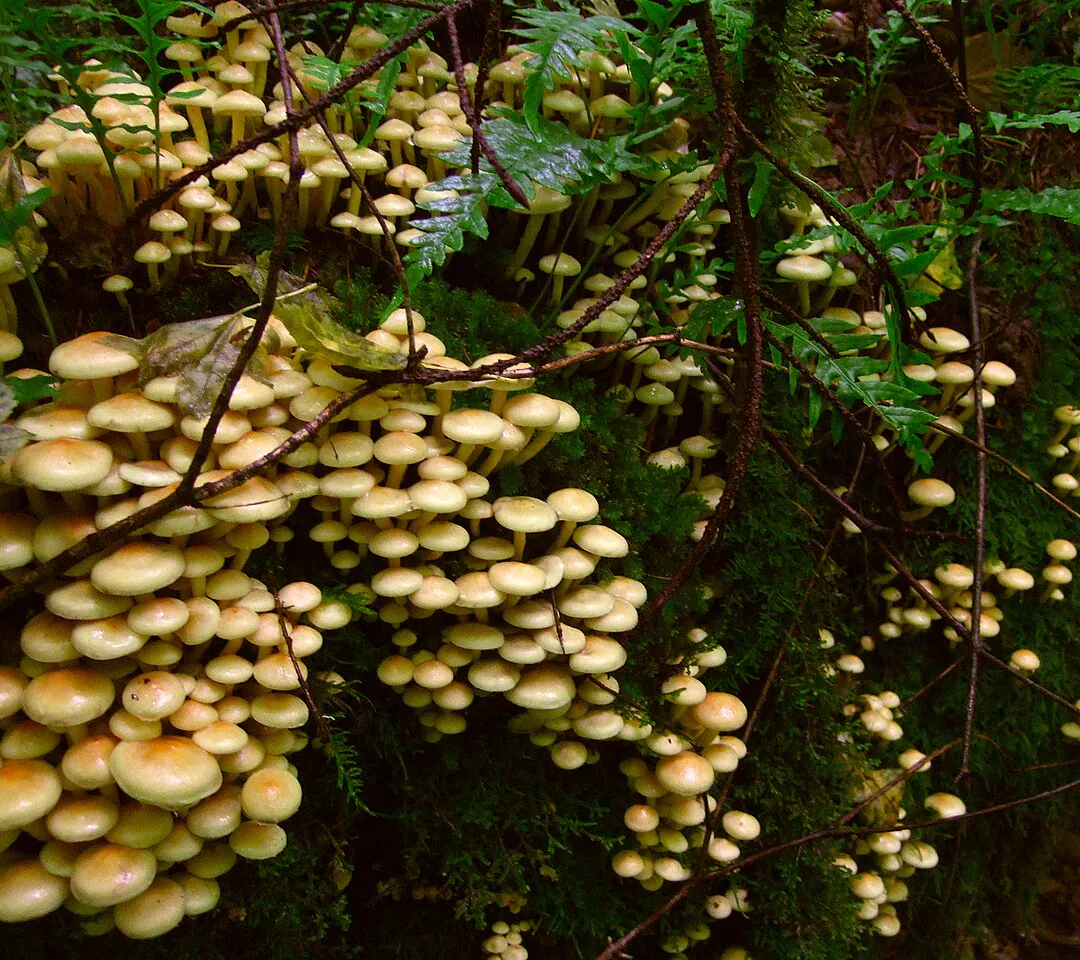
Large dense clumps on stumps, dead roots and rotting trunks
Poisonous
The rungs scientists use to place living things by how closely related they are — from broad to narrow.