Volvopluteus gloiocephalus
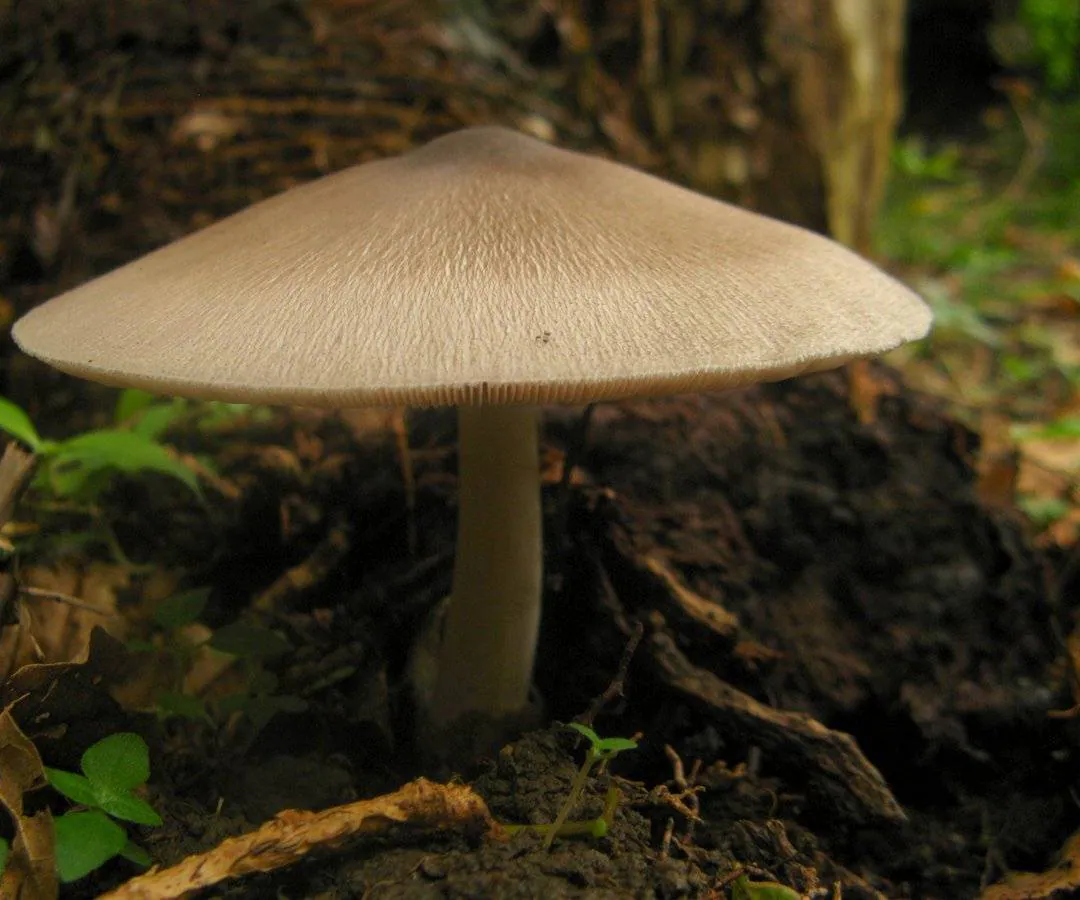
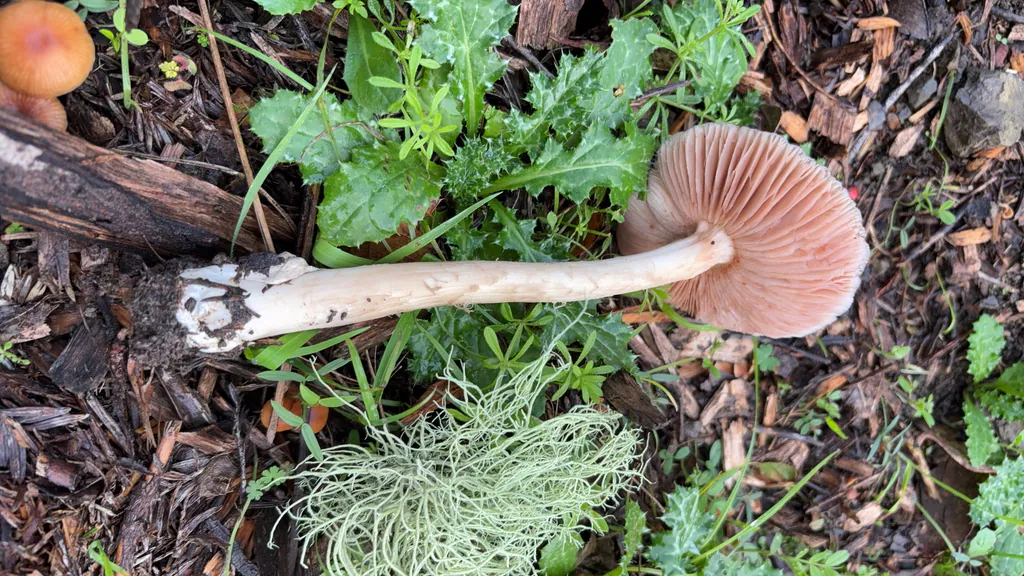
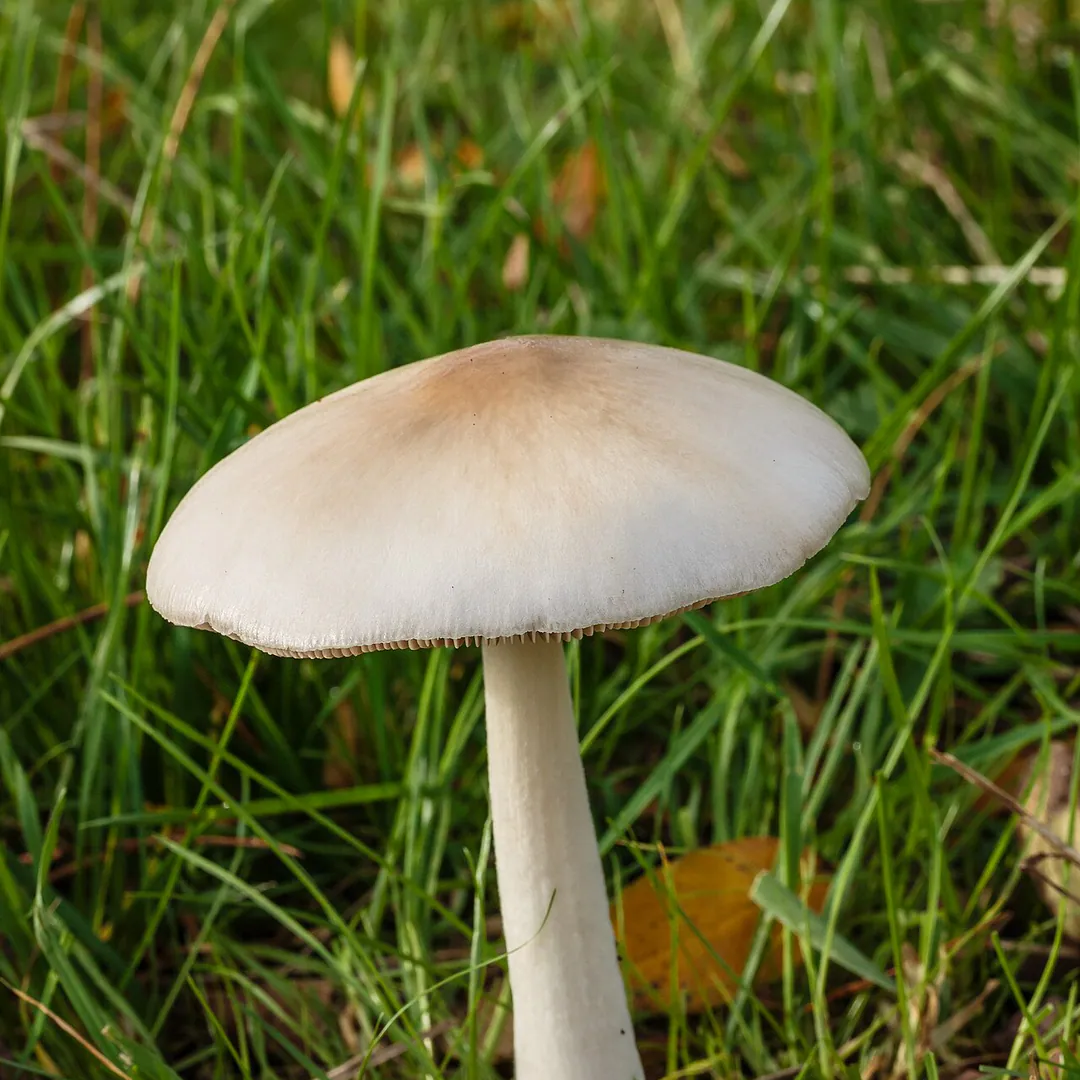
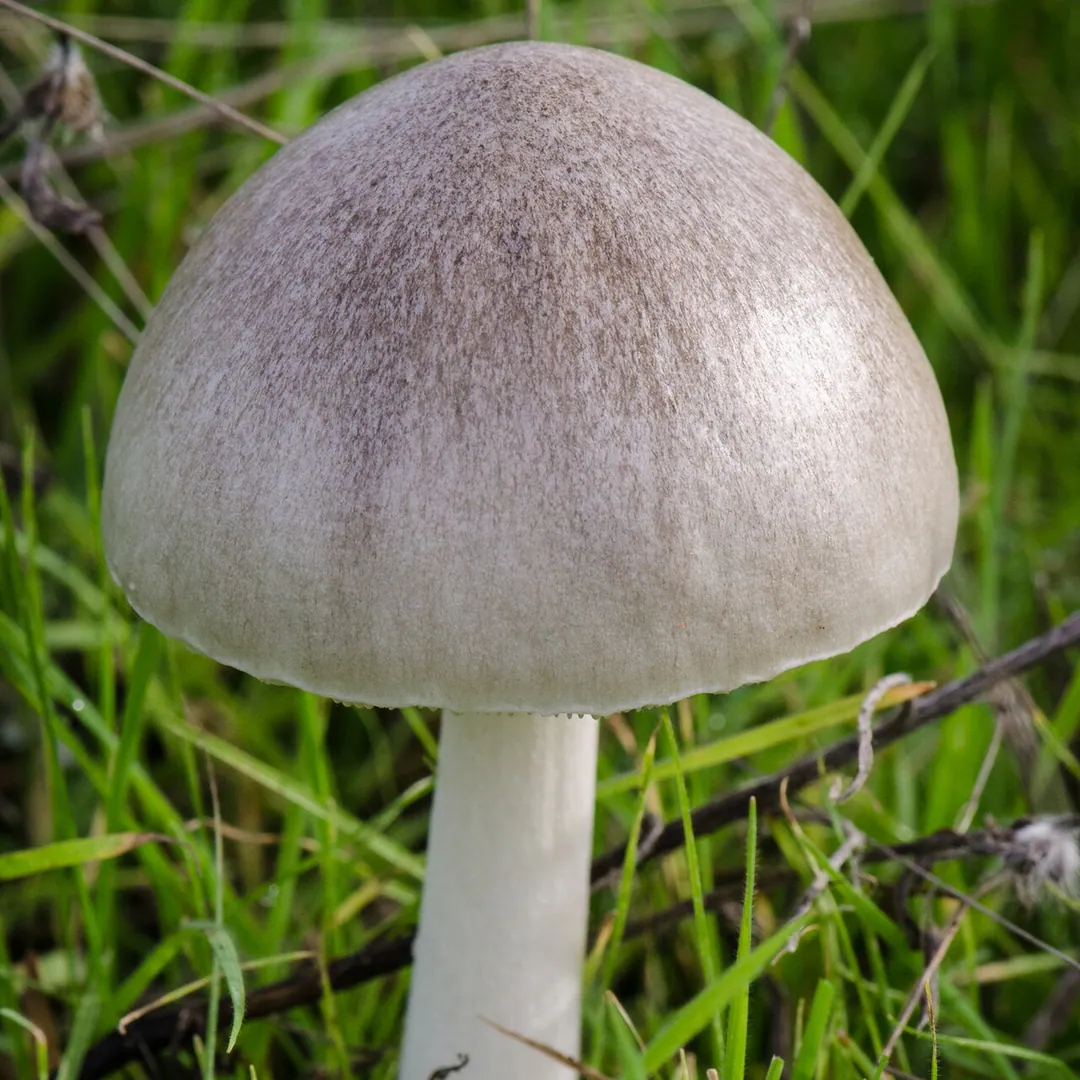
The stubble rosegill has a sticky white to grey cap and a sac-like cup at the base of its stem. Its gills are white at first, then pink. Young specimens can be mistaken for deadly Amanitas, especially the death cap.
Gardens, grassy fields in and outside forests, and compost or woodchip piles, as a decomposer; sometimes in greenhouses.
Reported from every continent except Antarctica; DNA confirms it in Europe and North America.
Identification suggestions (from the community or from AI) and the information here may be wrong; this app never confirms that anything is safe to eat. Do not consume wild plants, mushrooms or seafood without expert confirmation. Nothing here is medical advice.
In the United States, people have been poisoned after mistaking death caps for Volvariella.
Never eat a wild mushroom without showing it to an expert
No mushroom should be picked for eating based on this app or a photo. Deadly species look very like the ones foragers look for, and symptoms start hours later. If you suspect poisoning, call your local poison centre or emergency number right away (in Türkiye: 114).
Gills white when young but soon PINK; pinkish-brown spore print. Deadly Amanitas keep white gills and a white print
White sac-like cup (volva) at the base but NO ring on the stem
Cap 5-15 cm, white to grey or grey-brown, markedly sticky when fresh
In gardens, fields, grassland and on compost or woodchip piles
Not known to be poisonous — still never eat it
The rungs scientists use to place living things by how closely related they are — from broad to narrow.