Common puffball
Lycoperdon perlatum
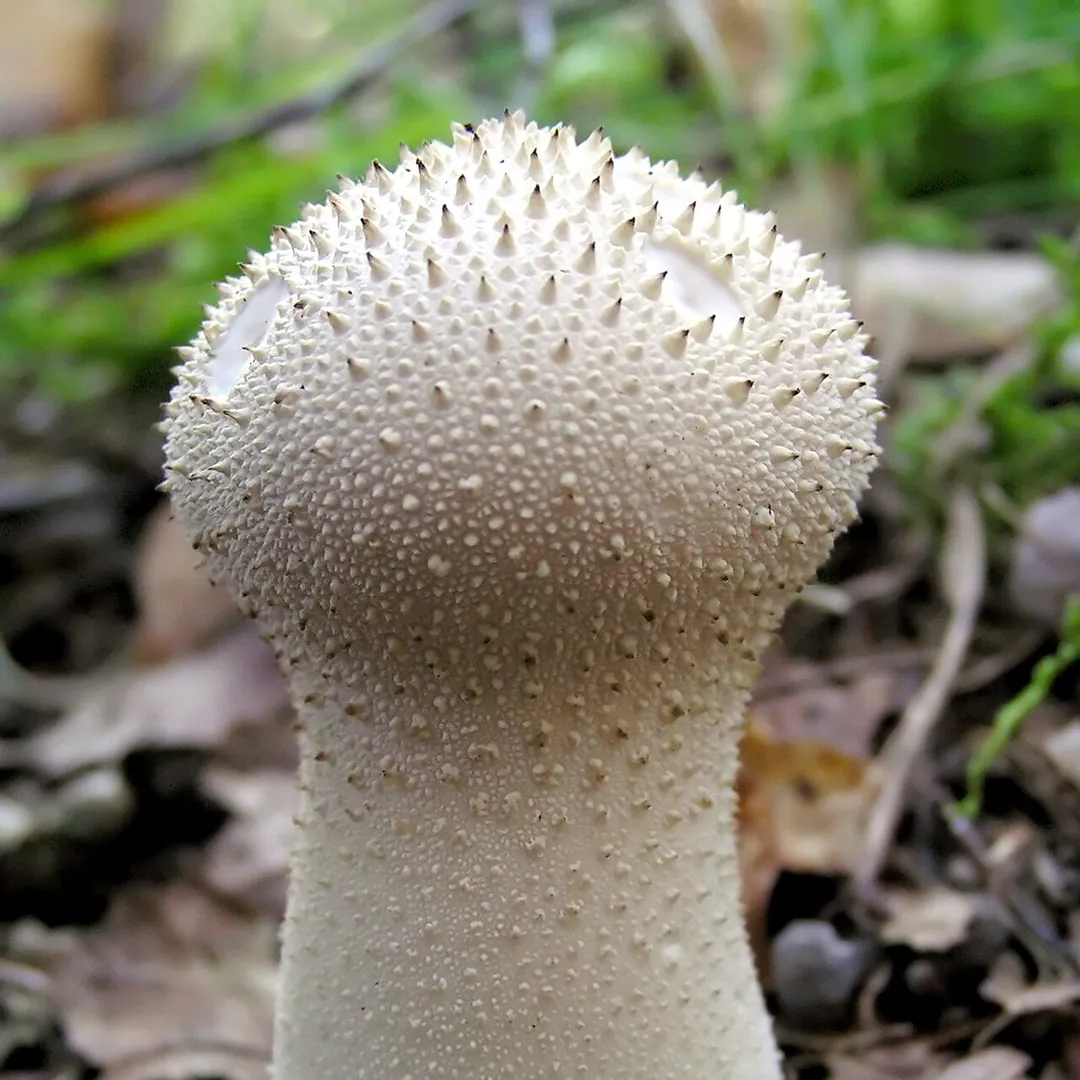
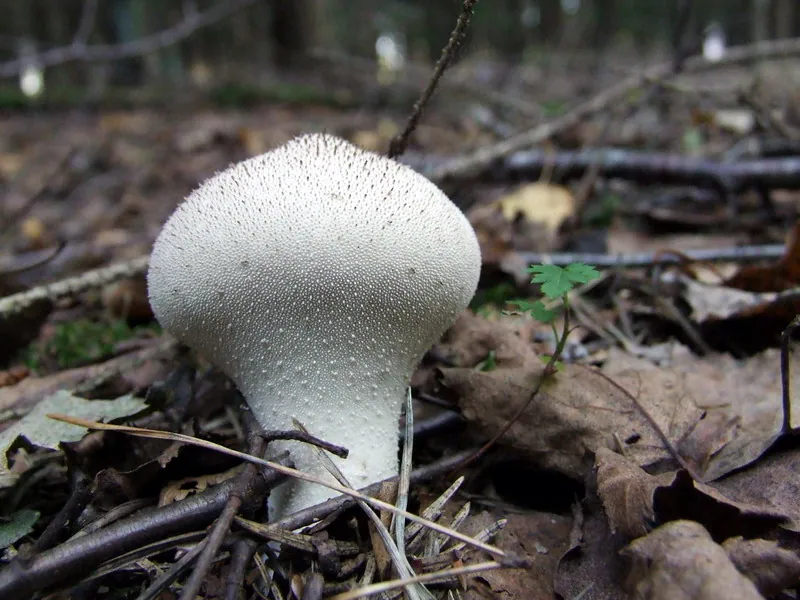
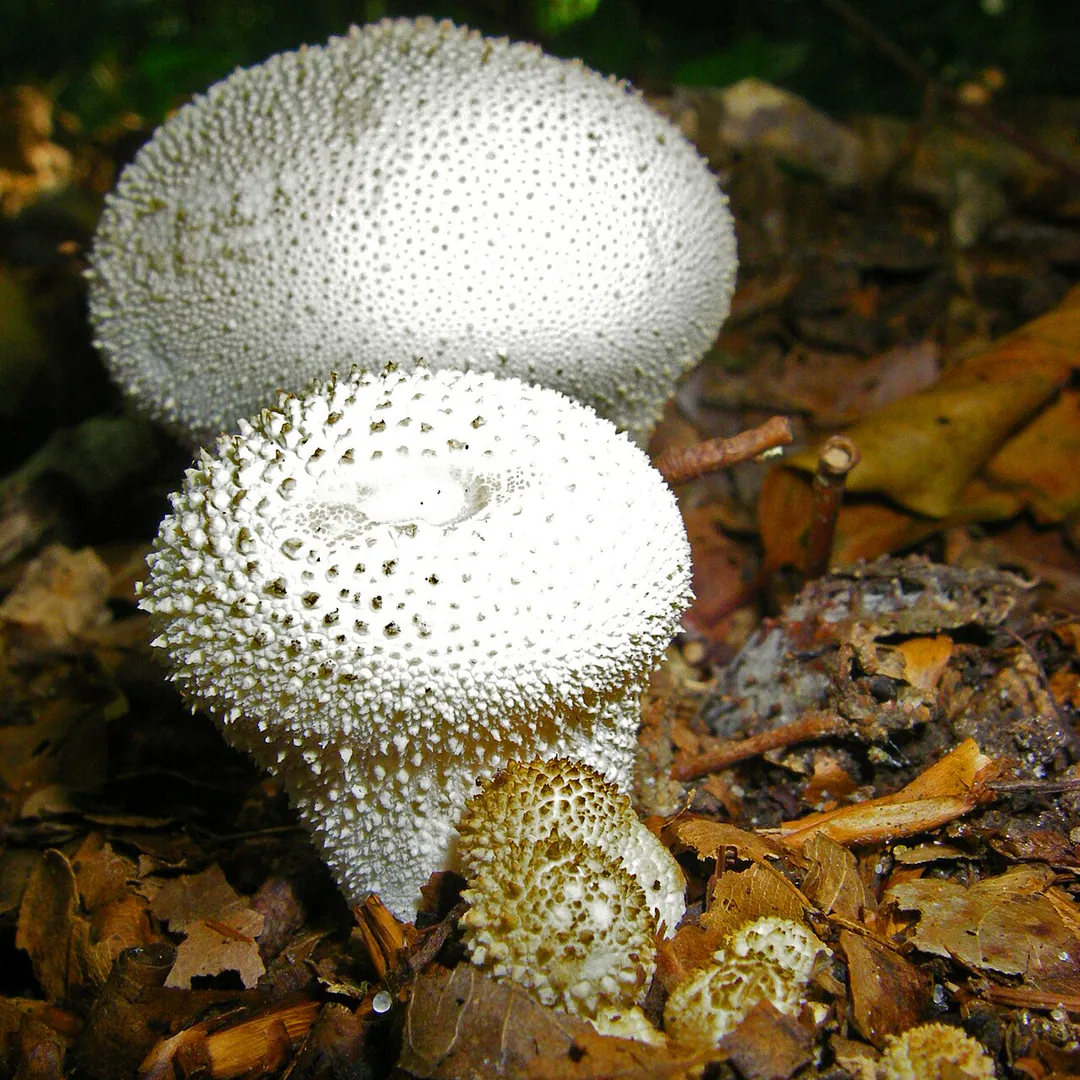
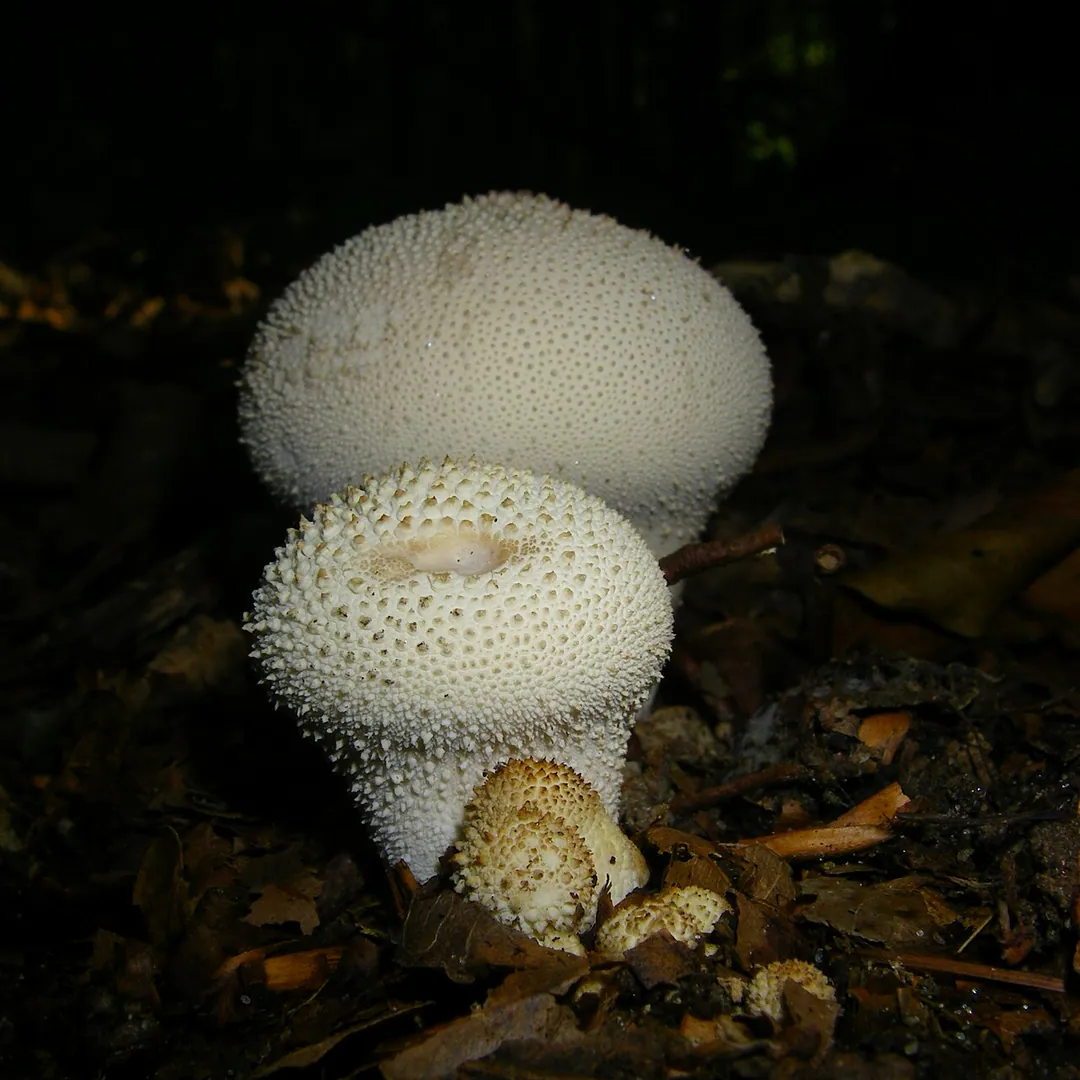
The common puffball is a pear-shaped to round, off-white puffball covered in short spiny 'jewels' that rub off, leaving a net pattern. When mature it turns brown and a hole at the top releases spores in bursts. It can be confused with immature poisonous Amanitas.
Where it's found
Grows on the ground singly, in groups or fairy rings in woods, grassy areas, fields, gardens and along roads.
Distribution
Almost cosmopolitan, reported from Africa, Asia, Australia, Europe, the Americas and even Greenland and Iceland.
Similar species
Identification suggestions (from the community or from AI) and the information here may be wrong; this app never confirms that anything is safe to eat. Do not consume wild plants, mushrooms or seafood without expert confirmation. Nothing here is medical advice.