Agaricus arvensis
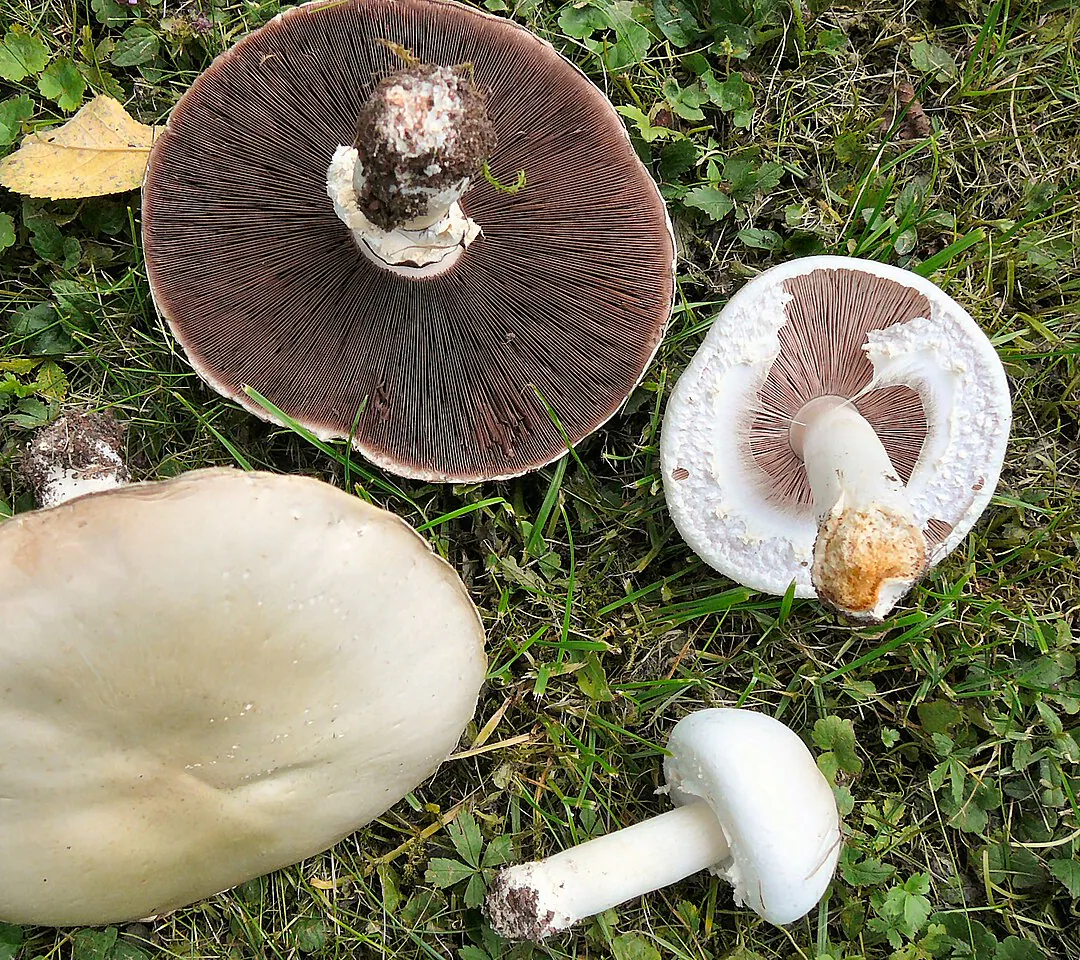
The horse mushroom is one of the largest white Agaricus species in Britain. Its cap grows up to 20 cm and stains yellow when handled. It is known for its almond smell and cogwheel-patterned double ring, and can be confused with the yellow stainer and deadly Amanitas.
Meadows and frequently near stables; it may form fairy rings and is often found growing with nettles.
Recorded in Britain, West Asia (Iran) and North America; common and widespread.
Identification suggestions (from the community or from AI) and the information here may be wrong; this app never confirms that anything is safe to eat. Do not consume wild plants, mushrooms or seafood without expert confirmation. Nothing here is medical advice.
Its almond or marzipan smell comes from benzaldehyde.
Never eat a wild mushroom without showing it to an expert
No mushroom should be picked for eating based on this app or a photo. Deadly species look very like the ones foragers look for, and symptoms start hours later. If you suspect poisoning, call your local poison centre or emergency number right away (in Türkiye: 114).
Smells of almond or aniseed (marzipan); the yellow stainer smells of ink, phenol or hospitals instead
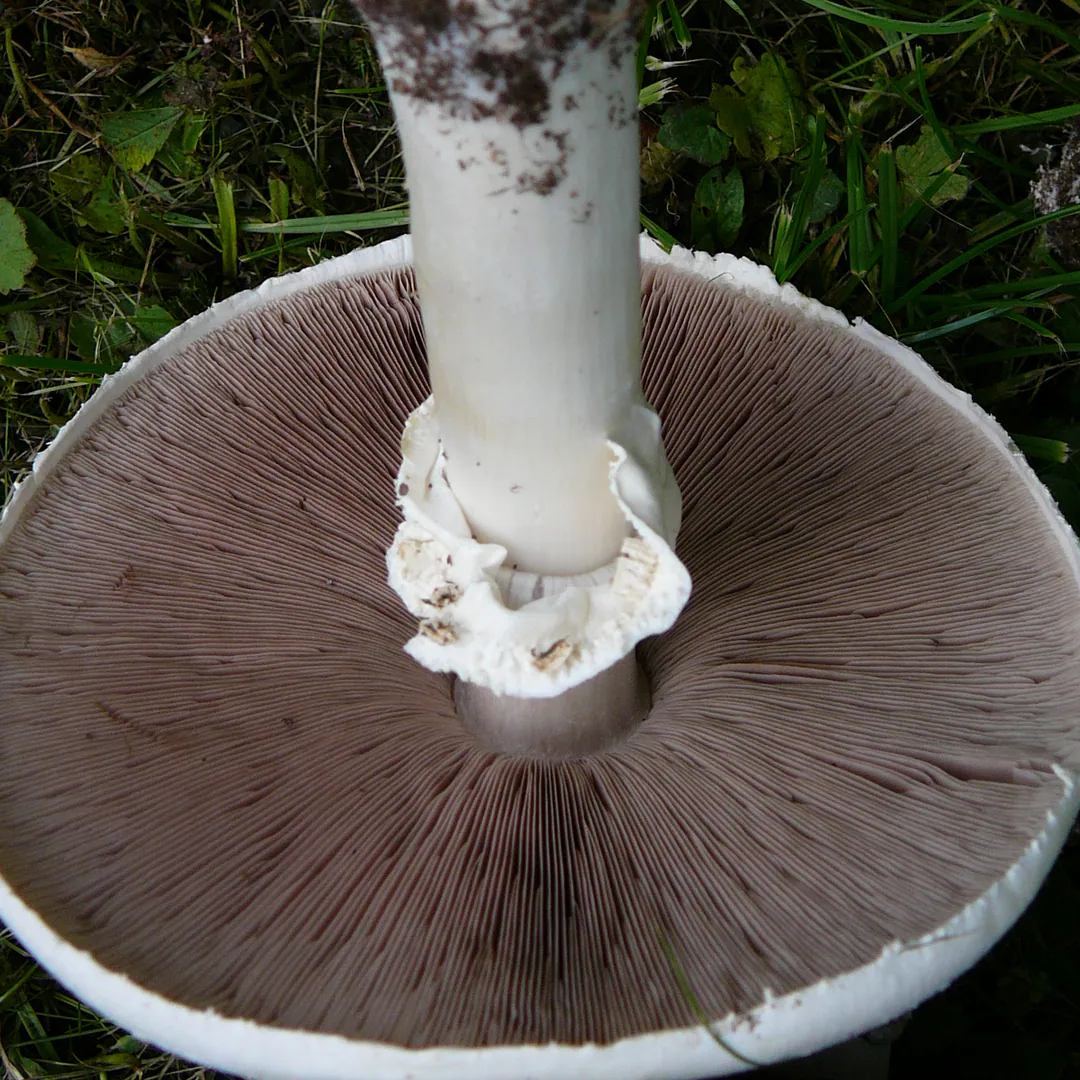
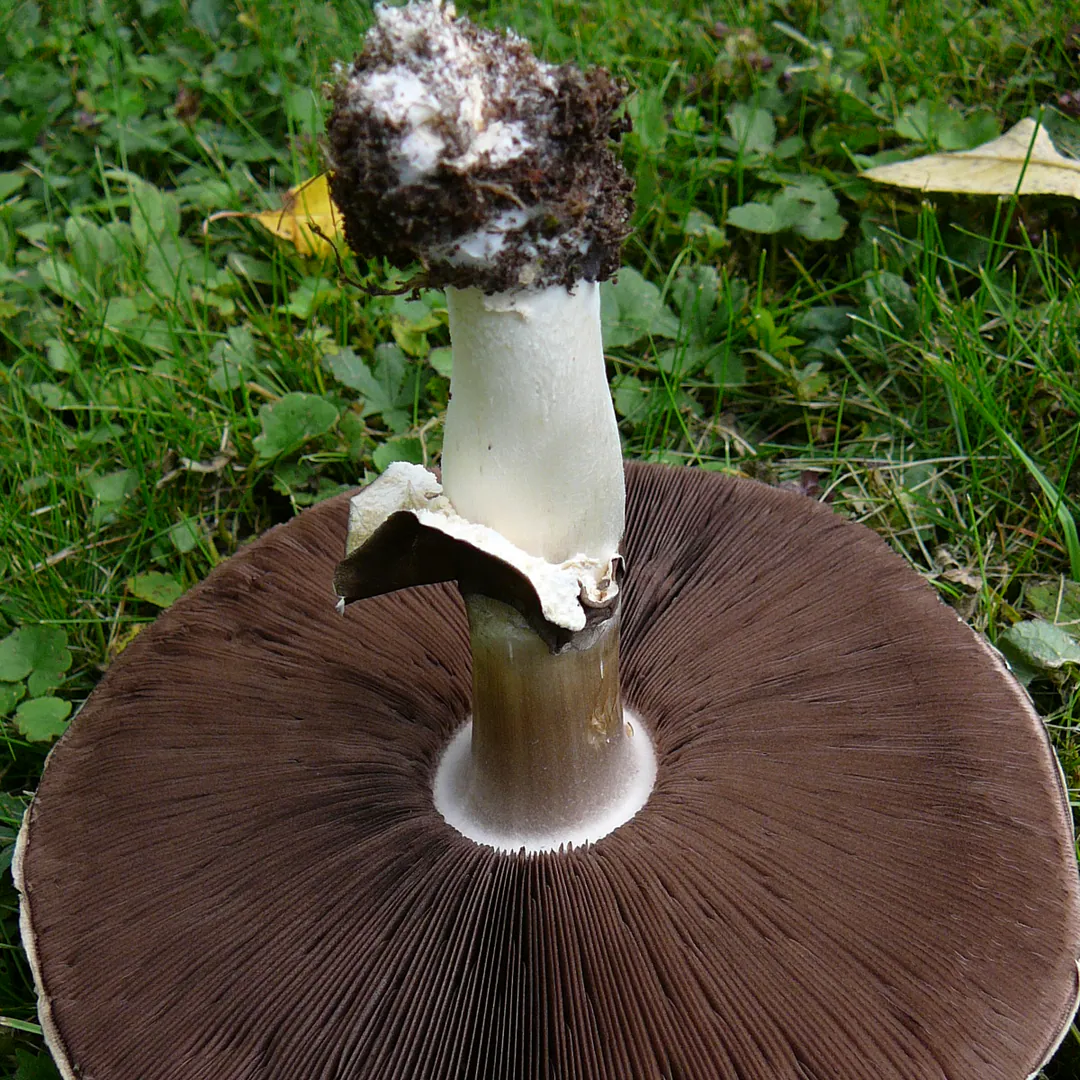
Large two-layered ring; on closed caps its underside shows a cogwheel pattern
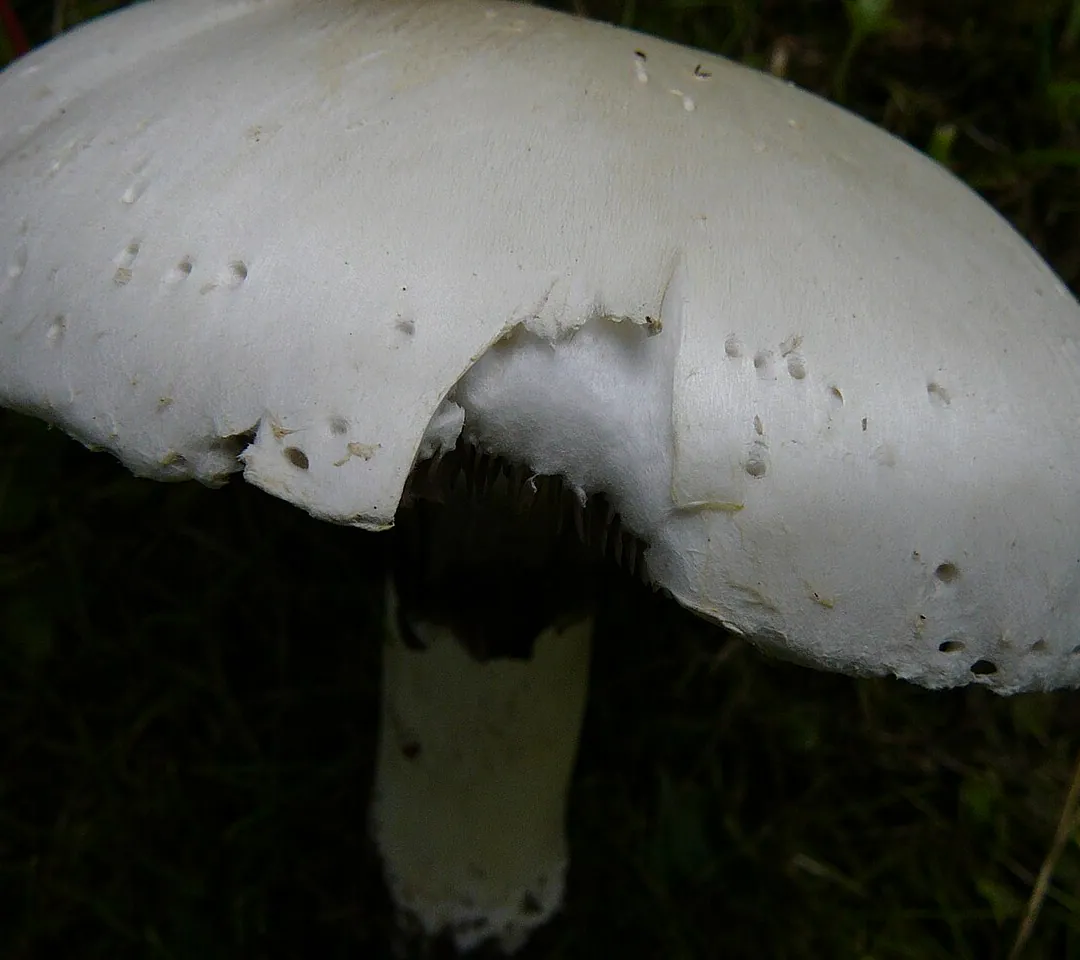
Cap slowly yellows when handled, but the cut stem base does not flash chrome-yellow as in the yellow stainer
Gills pale pinkish-white, then grey to brown and finally dull chocolate; no cup at the base
Whitish, smooth, dry cap 7-20 cm across; near stables and in meadows, often with nettles
The rungs scientists use to place living things by how closely related they are — from broad to narrow.
Not known to be poisonous — still never eat it