Agaricus bisporus
The cultivated mushroom is native to grasslands in Eurasia and North America and is grown in more than 70 countries. It has white and brown forms, and the large mature form is sold as portobello. It is grown on compost.
Rich soil, compost and manure, fruiting from autumn to winter.
Native to grasslands of Eurasia and North America; widespread worldwide and cultivated in at least seventy countries.
Identification suggestions (from the community or from AI) and the information here may be wrong; this app never confirms that anything is safe to eat. Do not consume wild plants, mushrooms or seafood without expert confirmation. Nothing here is medical advice.
Most white shop mushrooms descend from a single white mutant found among brown ones in 1925.
Never eat a wild mushroom without showing it to an expert
No mushroom should be picked for eating based on this app or a photo. Deadly species look very like the ones foragers look for, and symptoms start hours later. If you suspect poisoning, call your local poison centre or emergency number right away (in Türkiye: 114).
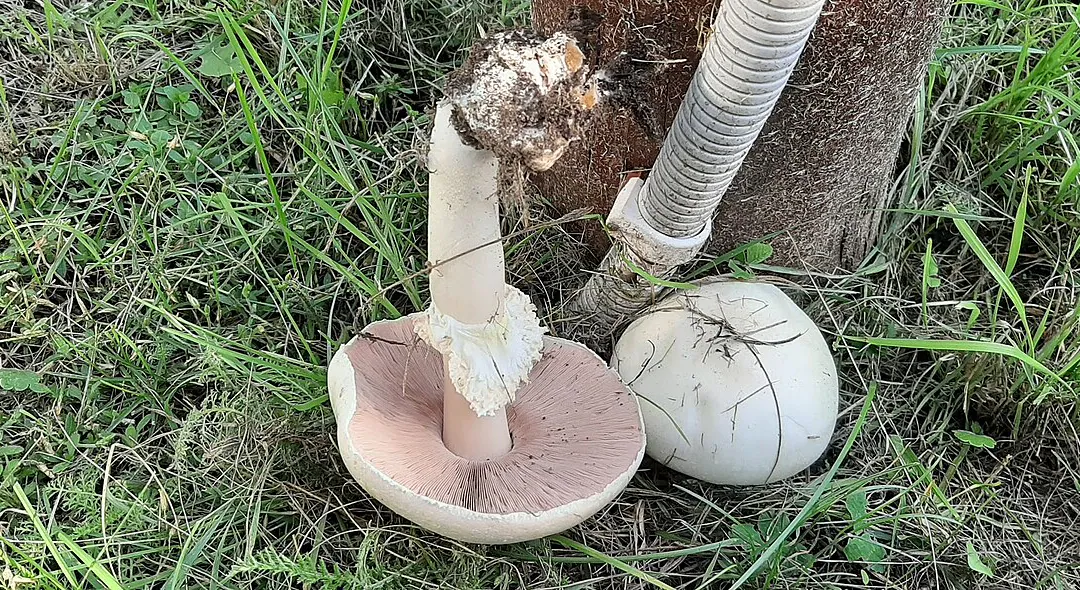
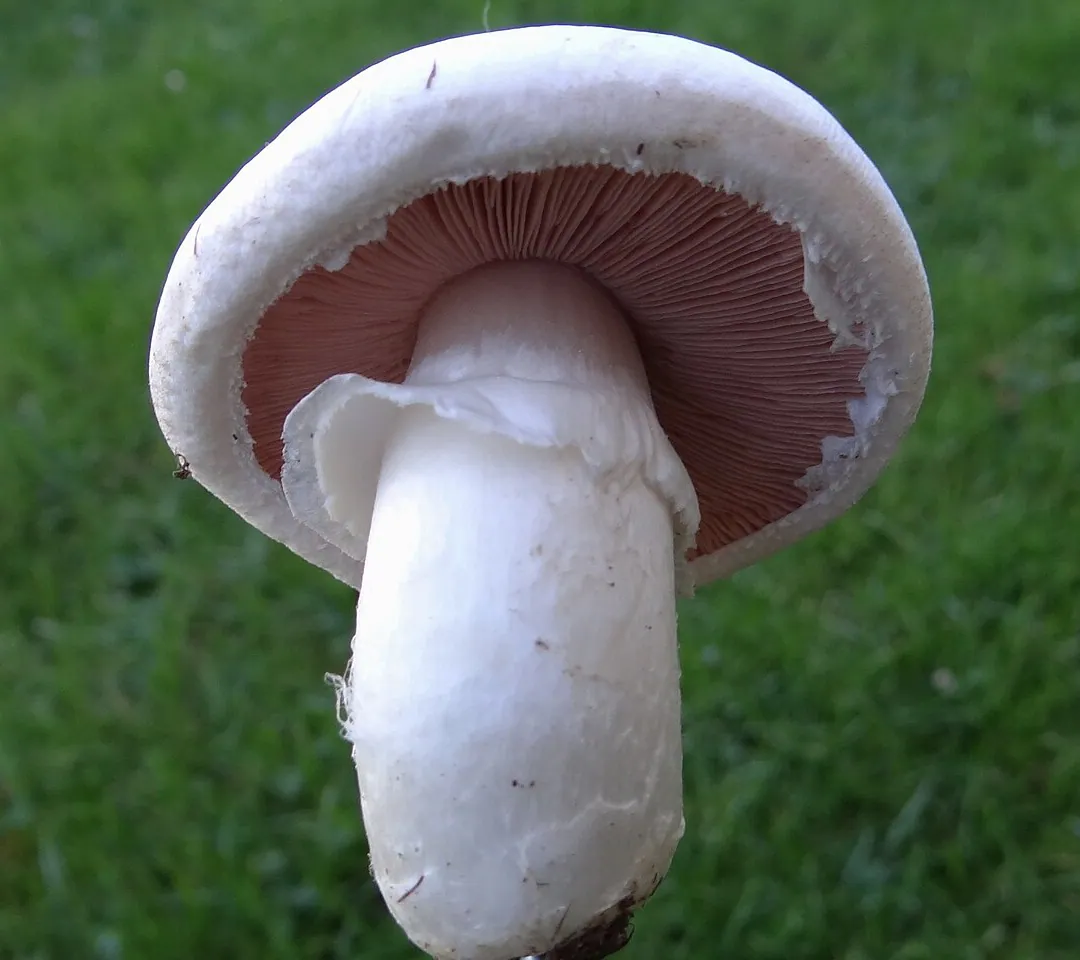
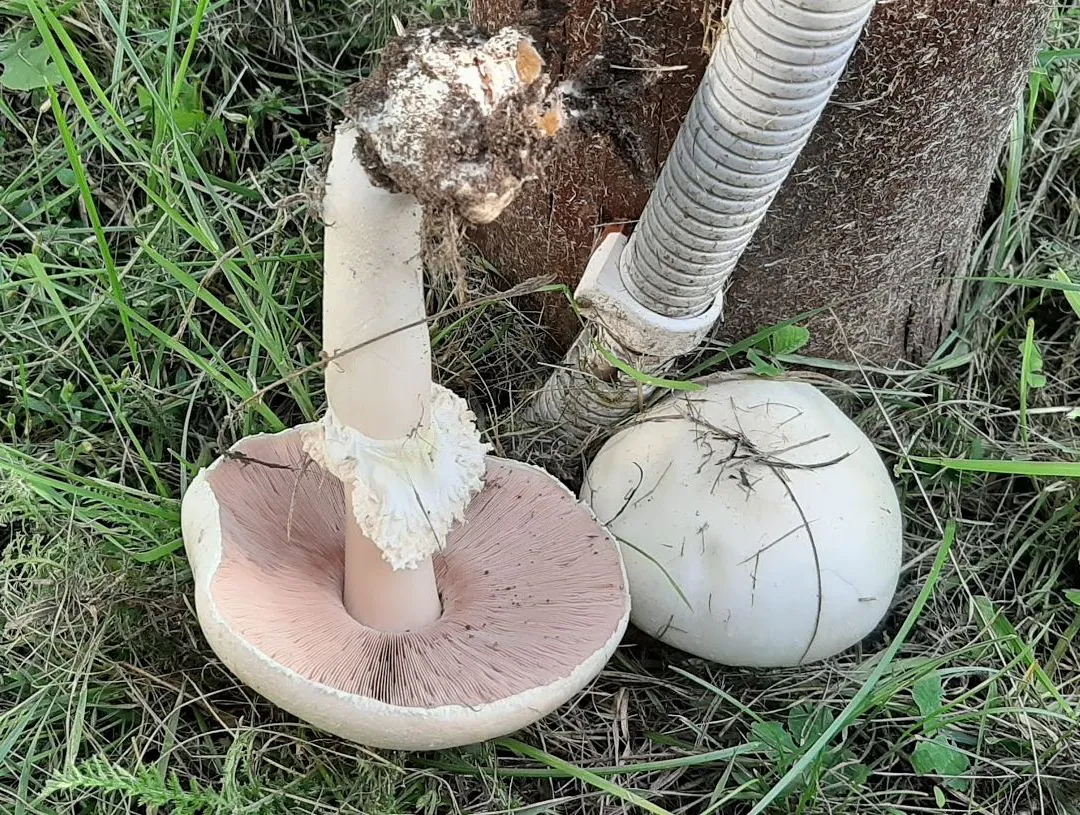
Crowded free gills pink, then red-brown, finally dark brown; destroying angels have pure white gills
Thick, narrow ring on the stem; no cup (volva) at the base
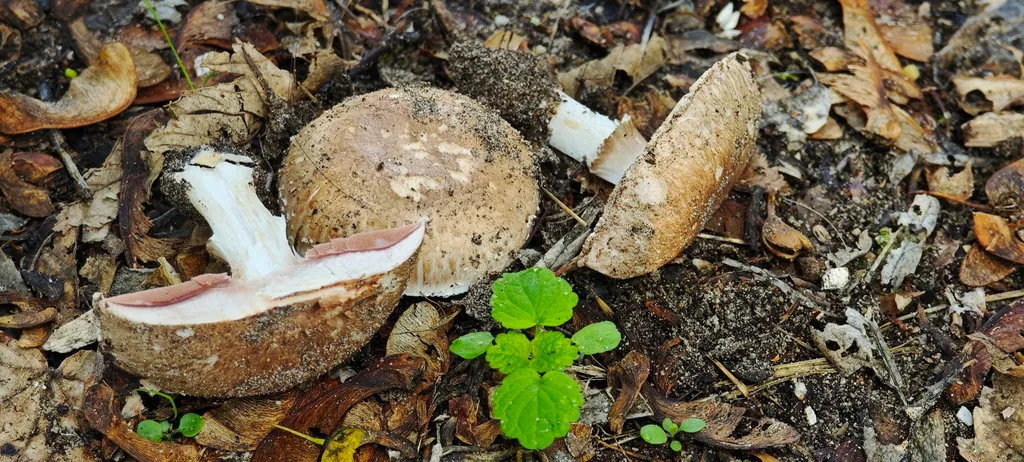
Firm white flesh bruises pale pinkish-red; yellow staining suggests the yellow stainer
Cap white or brown (wild form grey-brown with broad flat scales); 5-10 cm, up to 15 cm when mature
Not known to be poisonous — still never eat it
The rungs scientists use to place living things by how closely related they are — from broad to narrow.